Ivo Rigter Sr.
Founder & Co Owner of BAIV and Tracksandtrade
+31 6 518 22 502 ivosr.rigter@tracksandtrade.com


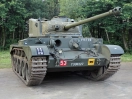
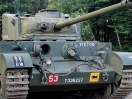




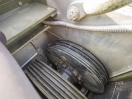


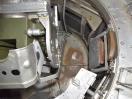


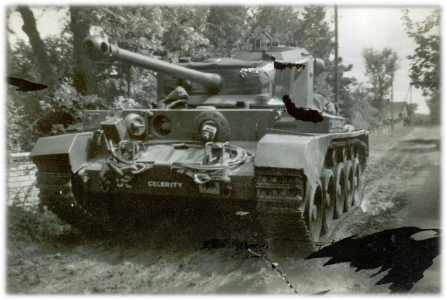
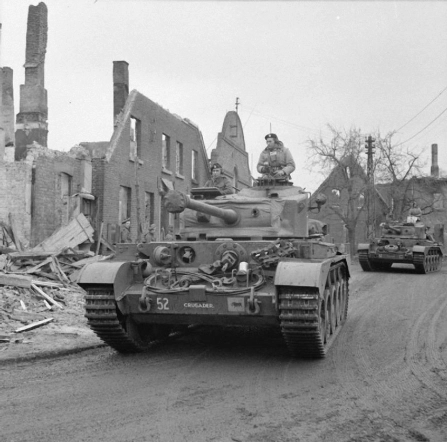
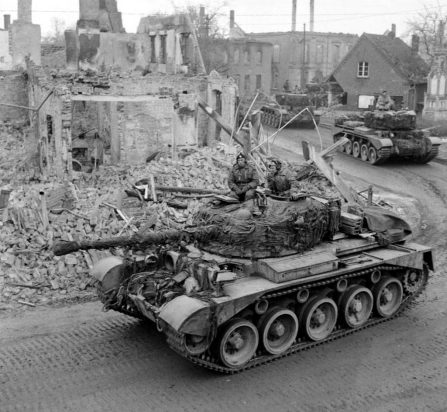
British armor from World War II has become more popular. In this regard, the Comet tanks are sought after as being the finest tanks built by the British in World War II. The Comet was undoubtedly fast, reliable, and well-armed, and was particularly agile off-road. Check the video of 'Victor' at the War and Peace show and it's easy to understand why. This is an older restoration but Victor has been running again in March 2024.
This is an older restoration but the Comet has been made running in March 2024. All thought in running condition, it has currently a clutch issue. It will not hold pressure due to a small leak in the slave cilinder. I will need replacement of the seal. This can be repaired at additional costs. Please contact us for information and conditions.
Older Restoration;
Runs and drives;
Interior needs freshing up;
Damage on left rear fender;
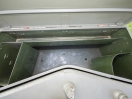
Cut Breech and has a torch cut hole in the high pressure chamber;
Can be sold within the USA without restrictions. In case of export an export license must be applied for.
Points of attention:
Clutch requires maintenance, will not hold hydraulic pressure small leak at slave cilinder, needs seal replacement. So steering is limited at the moment.
Batteries need to be replaced but can be slave started;
Small engine oil leak;
These repairs can be taken care of by BAIV at additional costs. Contact us for more information.
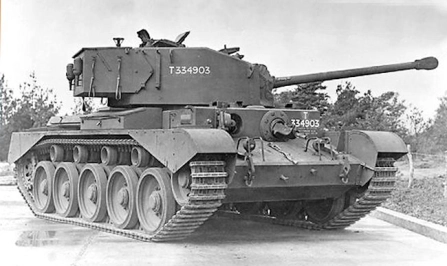
The British Comet was essentially an upgraded Cromwell tank. In 1943, it was realized that a new British tank was needed that had a high-velocity gun that could take on and knock out the new Panther and Tiger tanks, but was also fast and had a low profile. The Churchill tank had good armor but was slow and had a weak gun. The Sherman tank was tall. The Cromwell tank was fast and low but its turret could not take a larger gun.
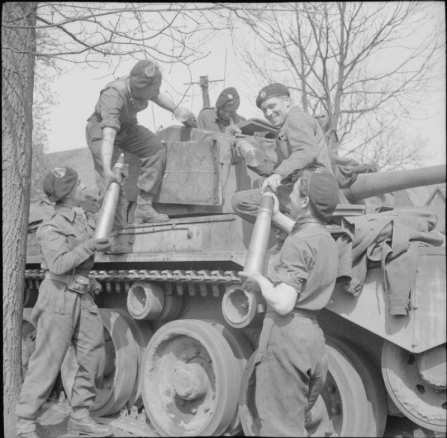
The A43 Centurion tank was under development but it would not be ready until 1945. The British Army needed a stop-gap tank that could quickly be introduced into production. The answer was to fit a new up-armored turret with a high-velocity 77 mm (3.03 in) gun onto late version modified Cromwell chassis. It was called the A.34 Cruiser Tank Comet Mark I Type A.
Design work started in May 1943. The Birmingham Railway Carriage and Wagon Company was the design parent of the British Cromwell Tank and the A.34 Cruiser Tank Comet. Other companies were involved in the construction of this AFV, the biggest being English Electric, Fowlers, Leyland and Metropolitan-Cammell.
The British tank designers had used the Christie suspension system on most of their cruiser tanks used in action during World War Two. The Comet tank was the last to use this system. It gave a fast and smooth ride compared to other tank suspension systems.
Production was dispersed around Britain because of the threat of German bombing. Orders for 3,000 Comet tanks were issued and they were to use chassis numbers in the range T334901 to T337900. The end of the war resulted in the early cancellation of part of this order. Only 1,186 were produced. Only 26 were recorded as lost in action during WW2. Not all Comet tanks used the same components. They were built at different factories around Britain with separate supply chains. Some underwent battlefield modifications.
The British A.34 Cruiser Tank Comet Mk.I Type A was used in North West Europe during 1945. After the war, Comet tanks were deployed to the Canal Zone in Egypt and amongst those which were keeping the peace in Palestine. By 1949 Comets were starting to be replaced by Centurion tanks. Comets remained in regular British Army Service in Berlin until 1957 and British Hong Kong until 1959.

Ivo Rigter Sr.
Founder & Co Owner of BAIV and Tracksandtrade
+31 6 518 22 502 ivosr.rigter@tracksandtrade.com