Ivo Rigter Sr.
Founder & Co Owner of BAIV and Tracksandtrade
+31 6 518 22 502 ivosr.rigter@tracksandtrade.com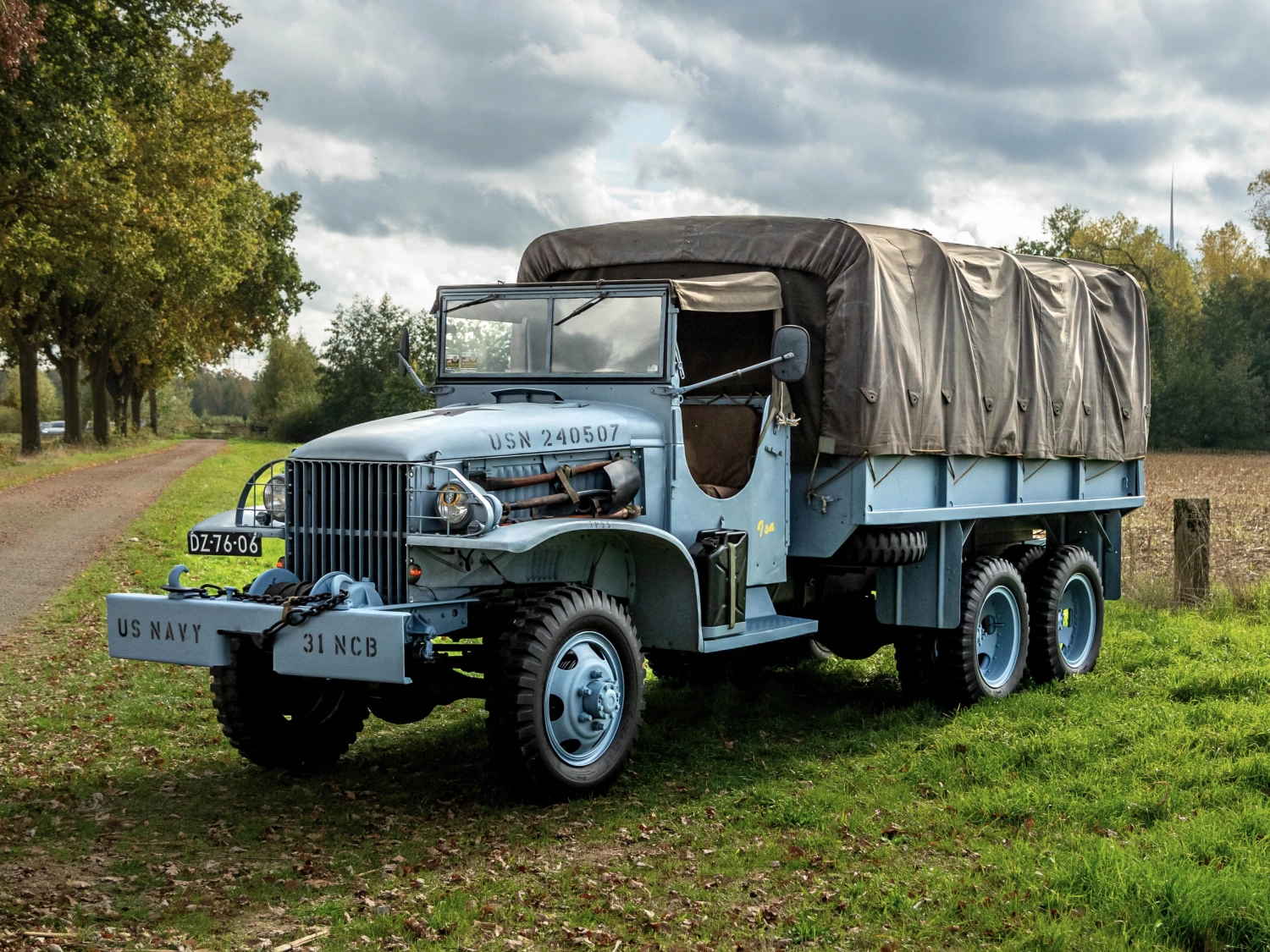
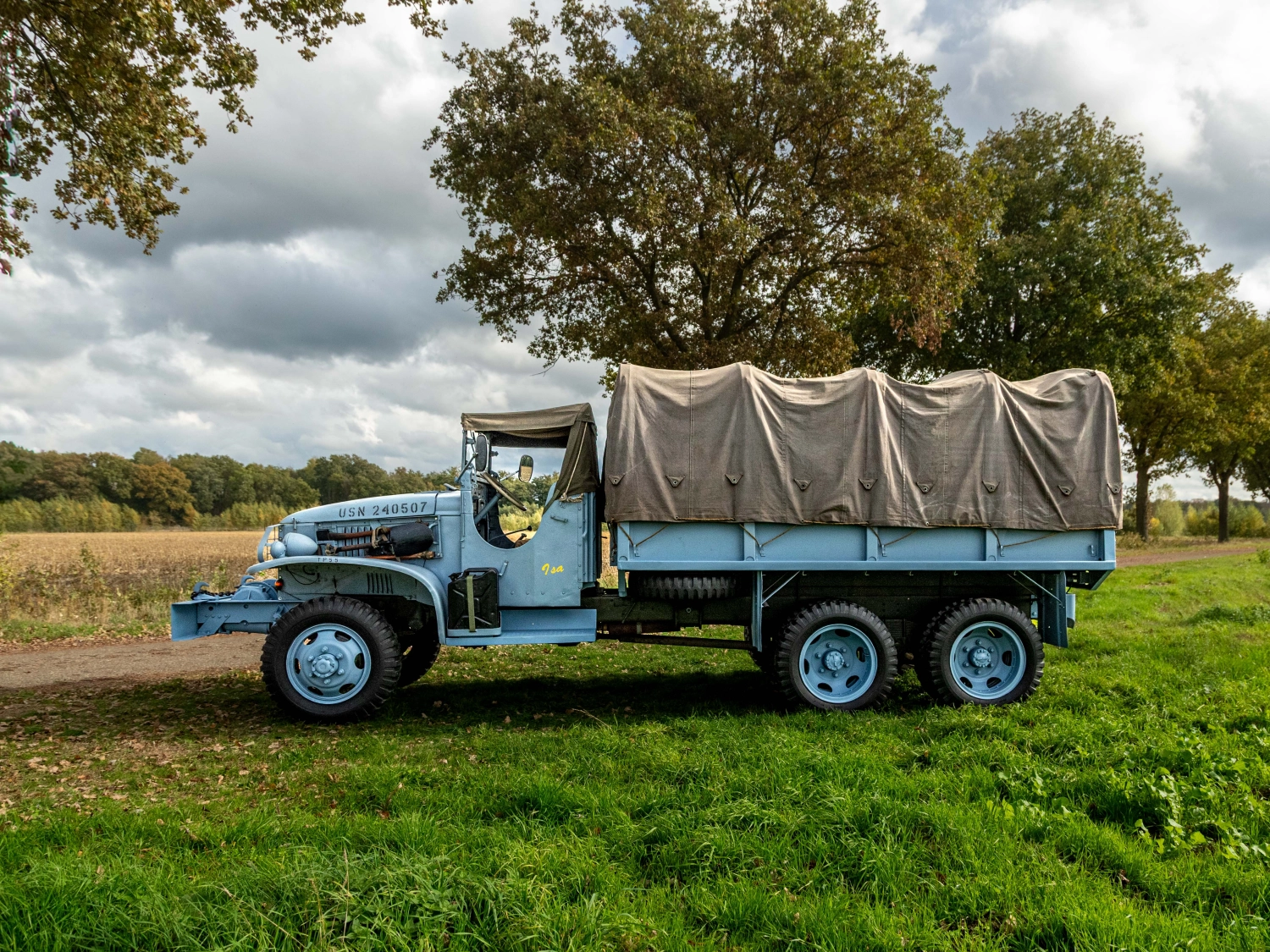
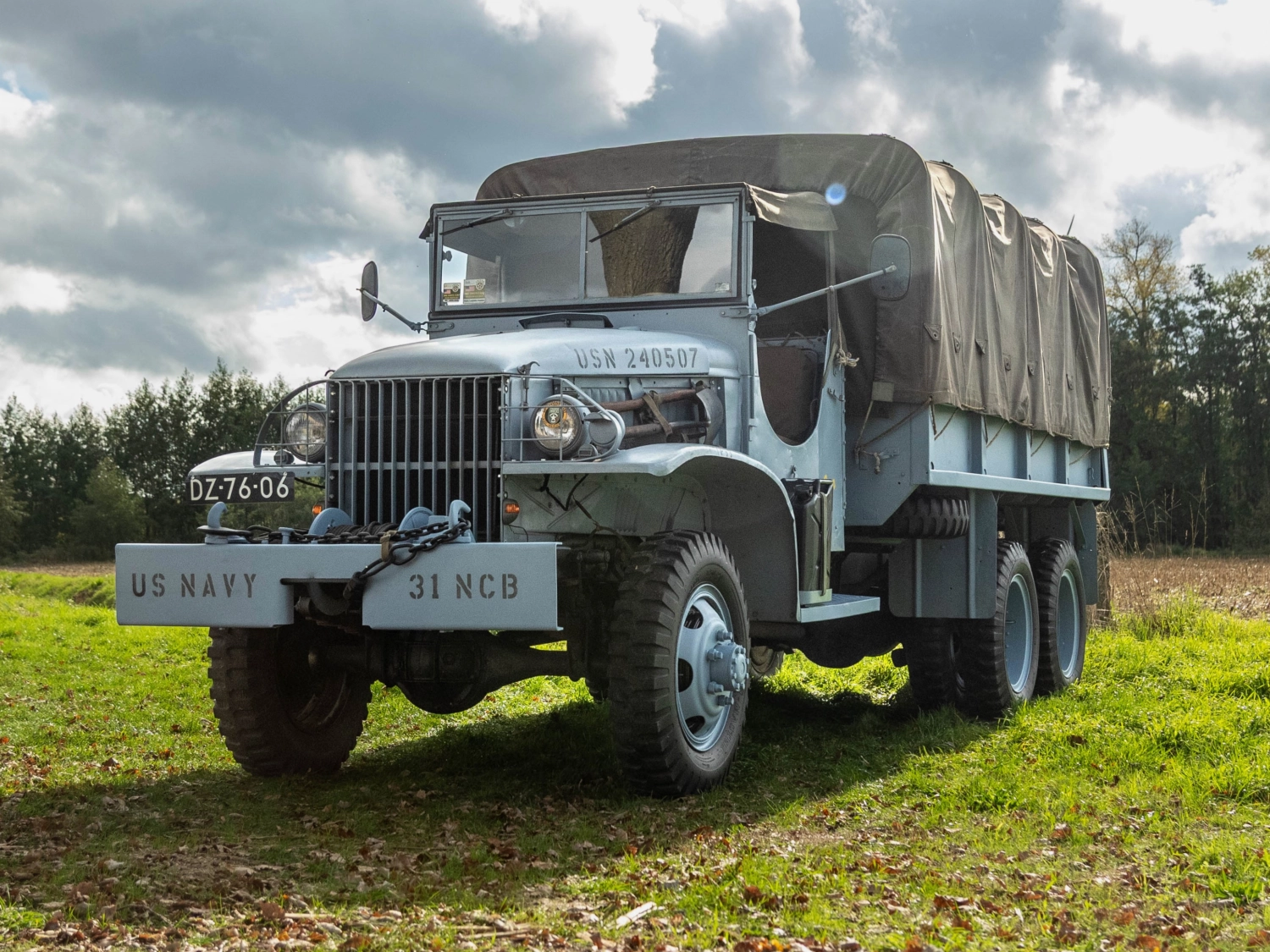
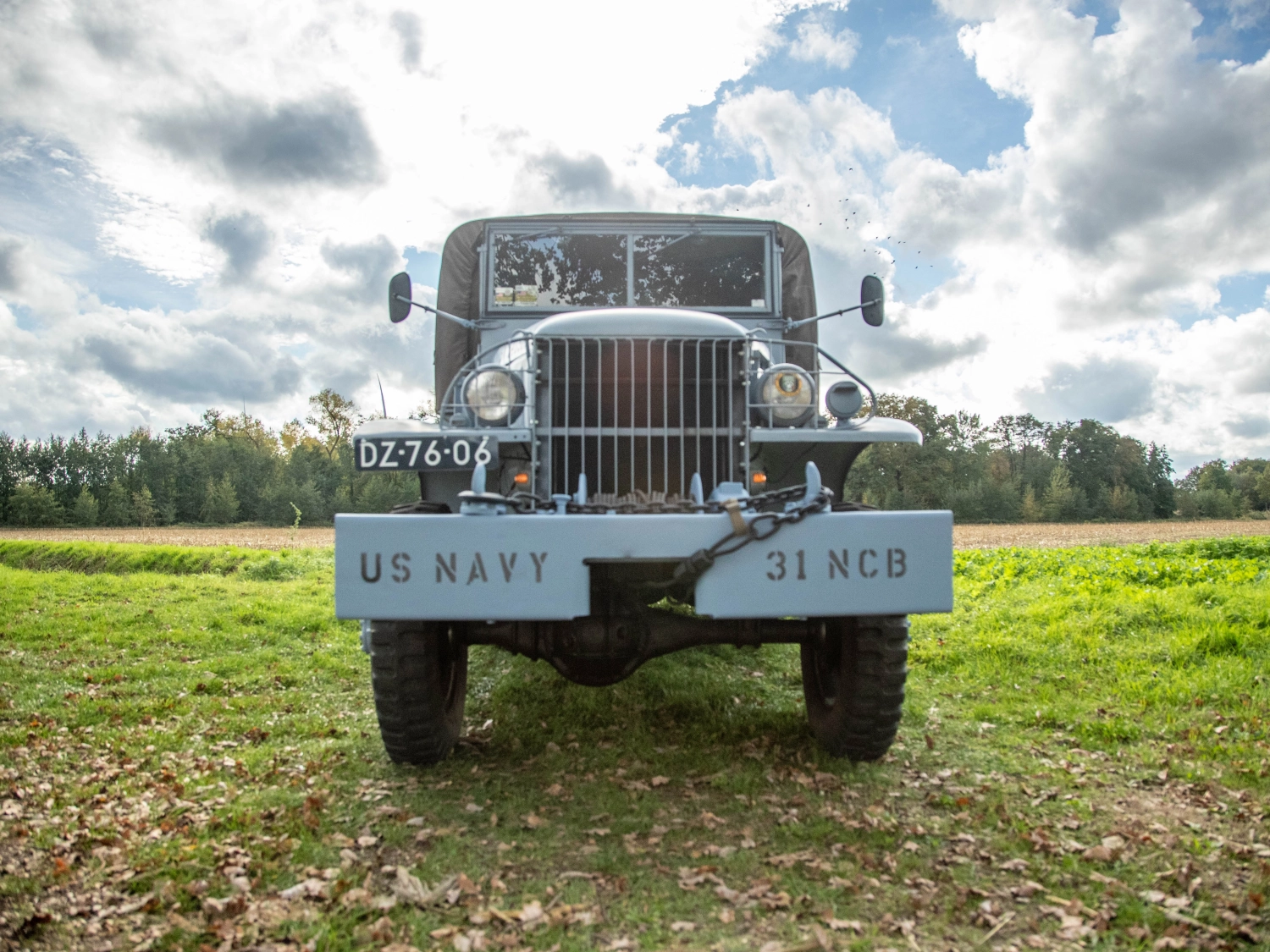
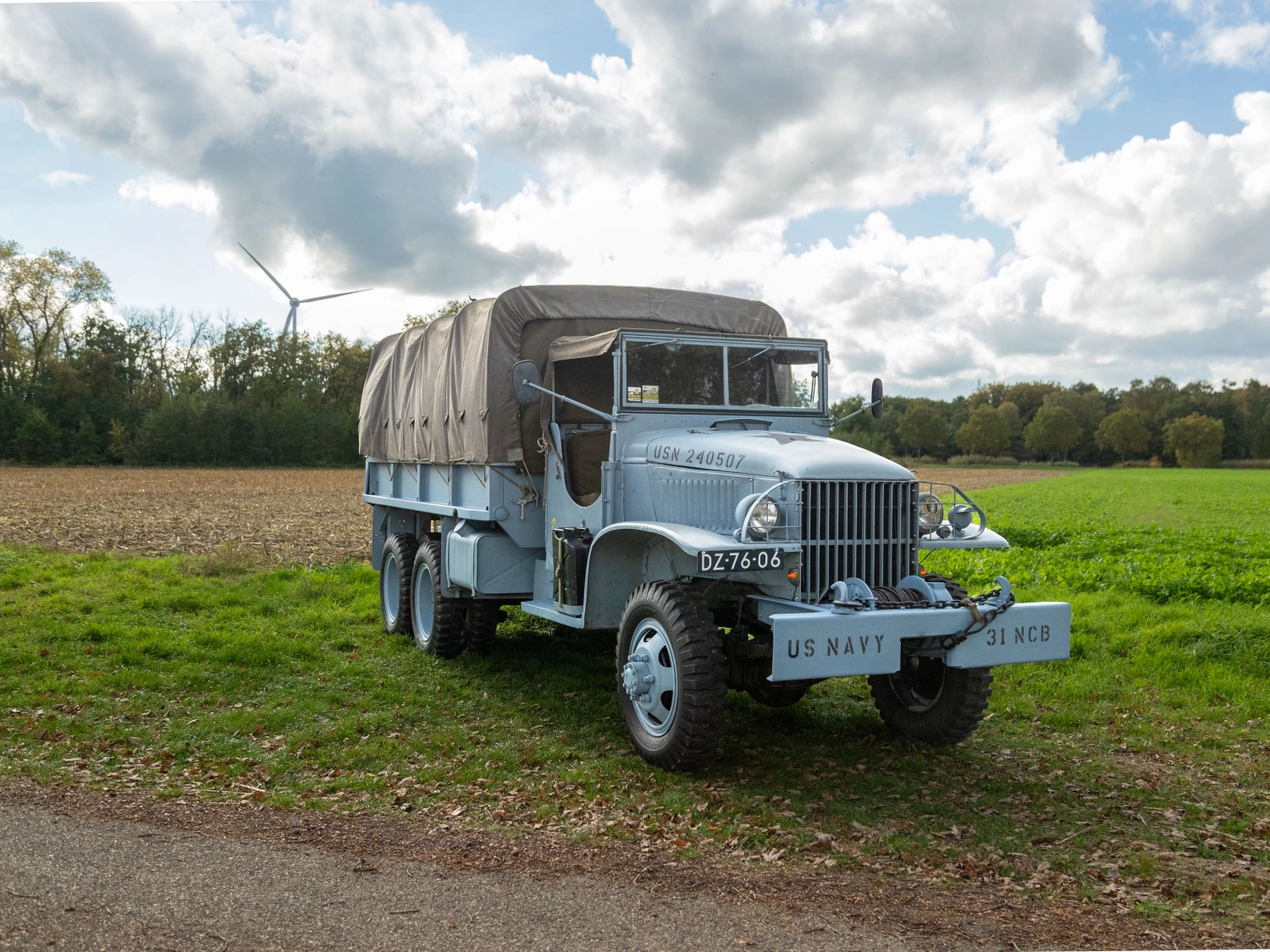
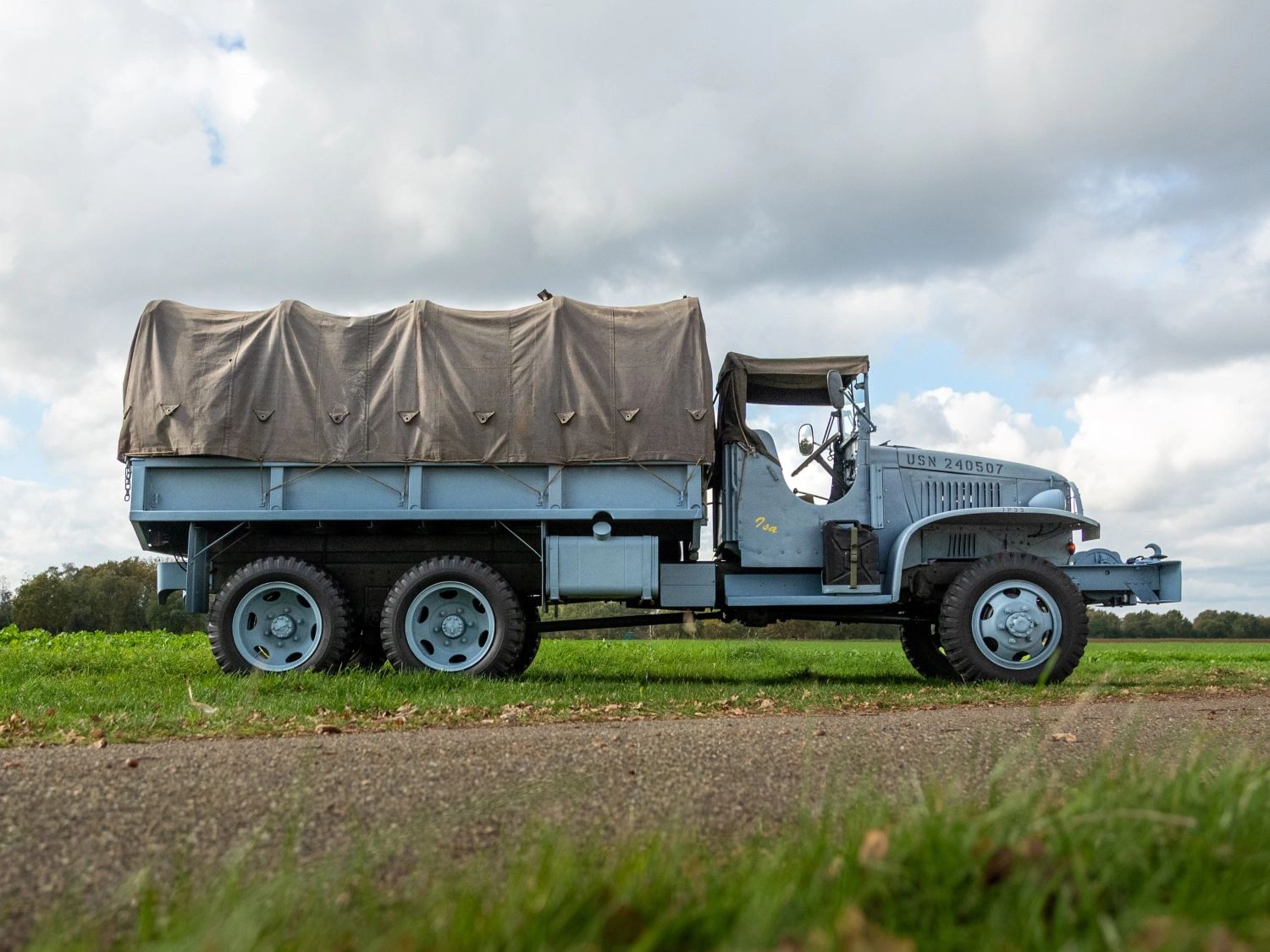
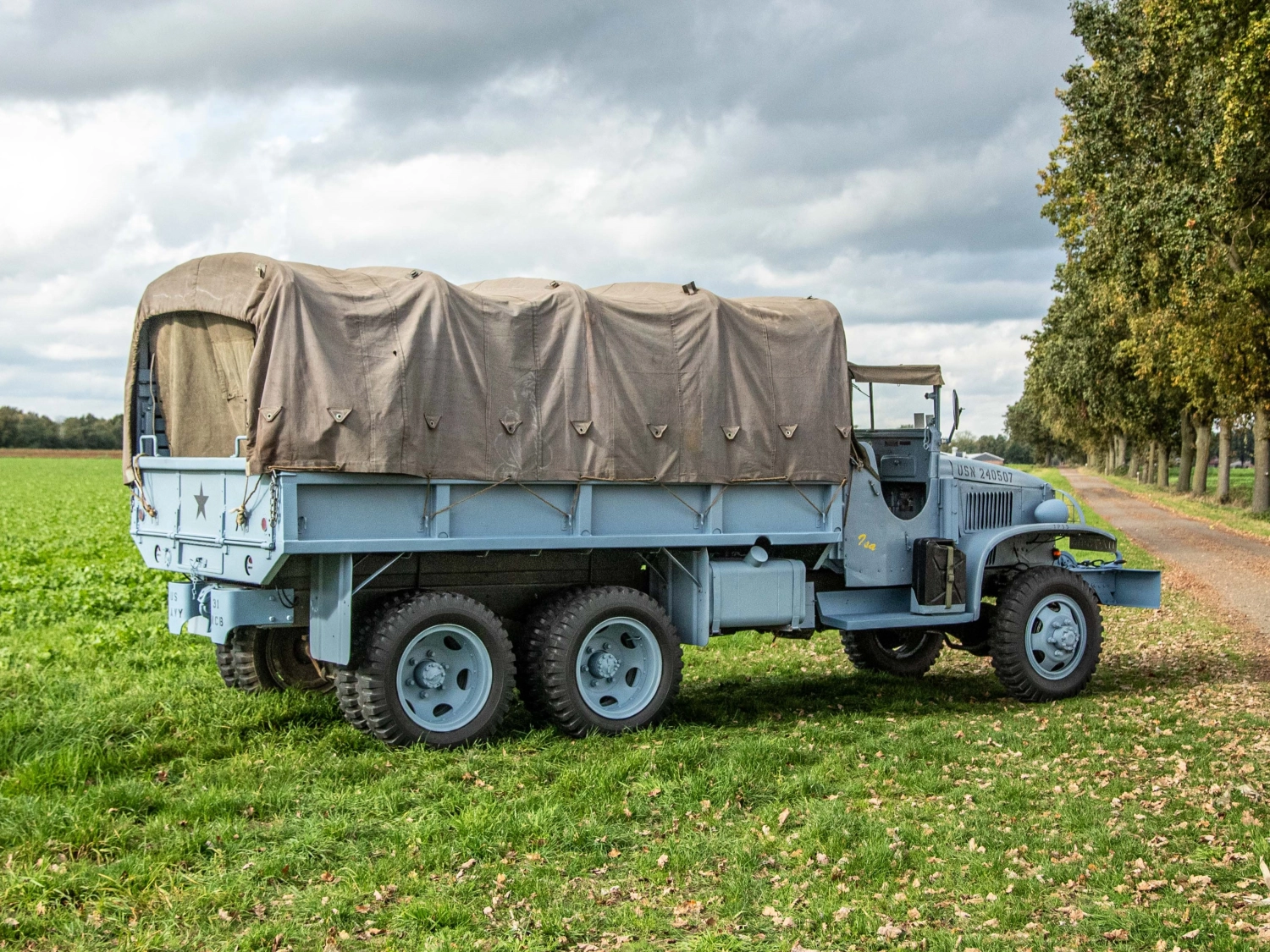
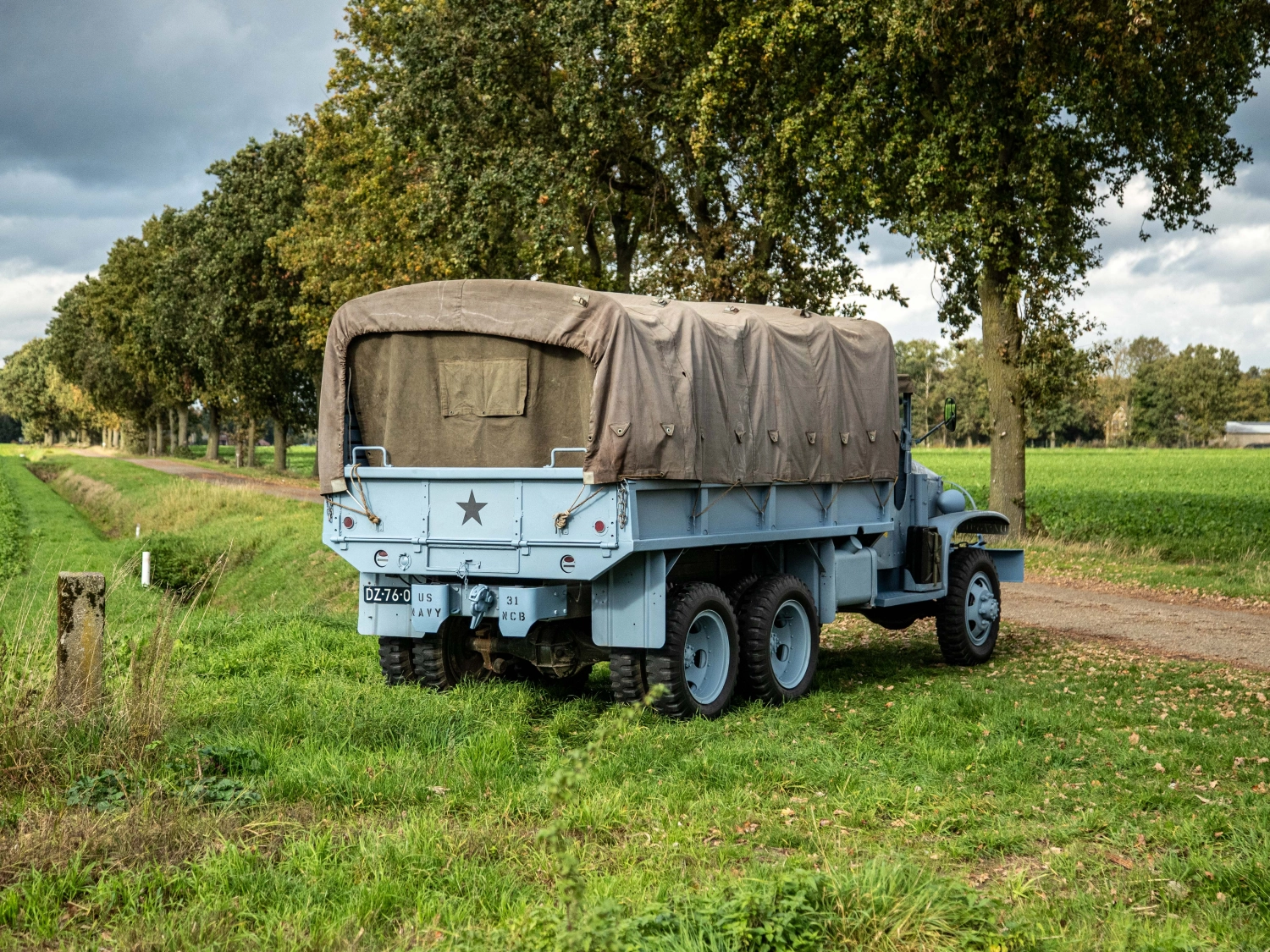
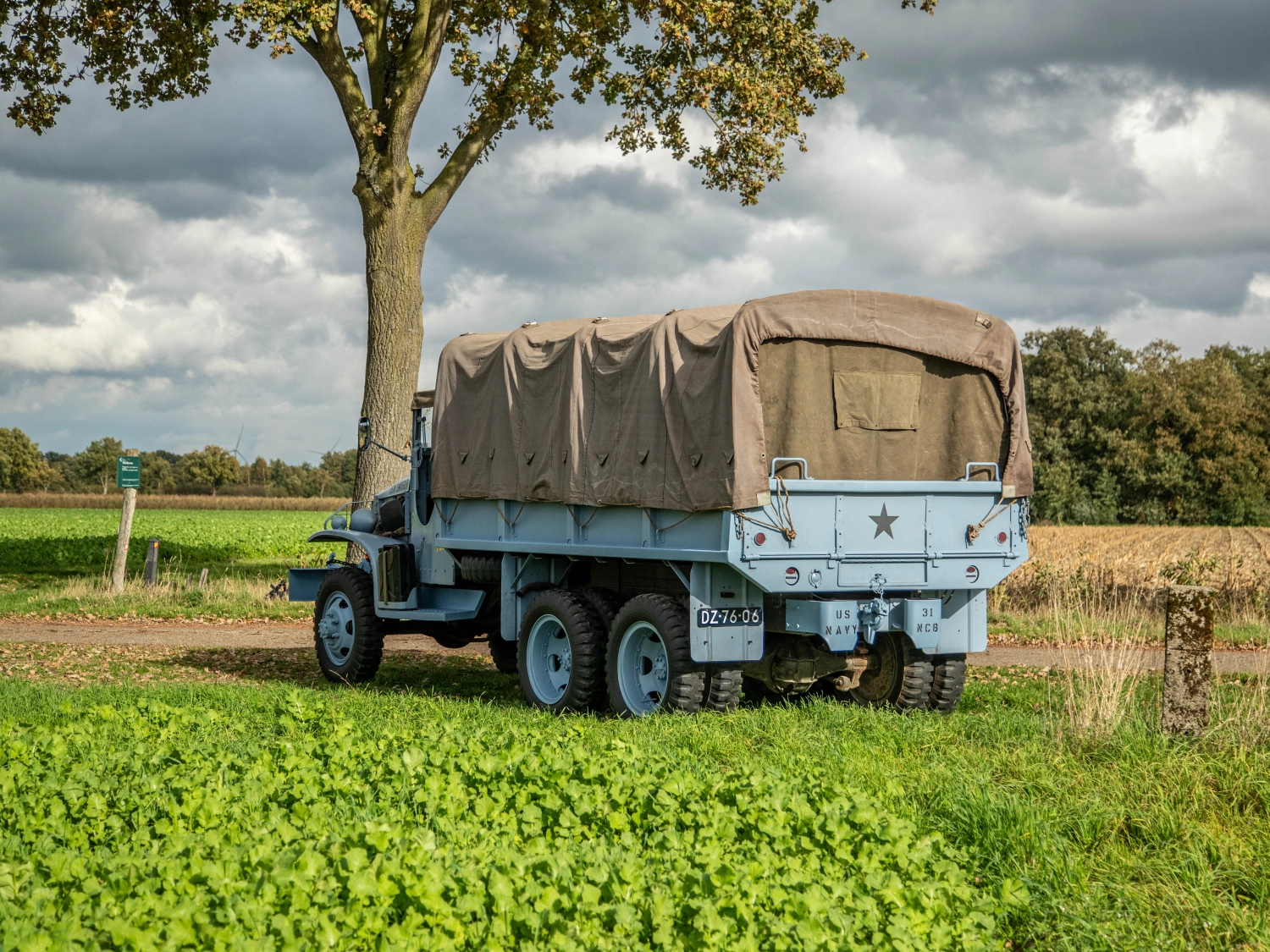
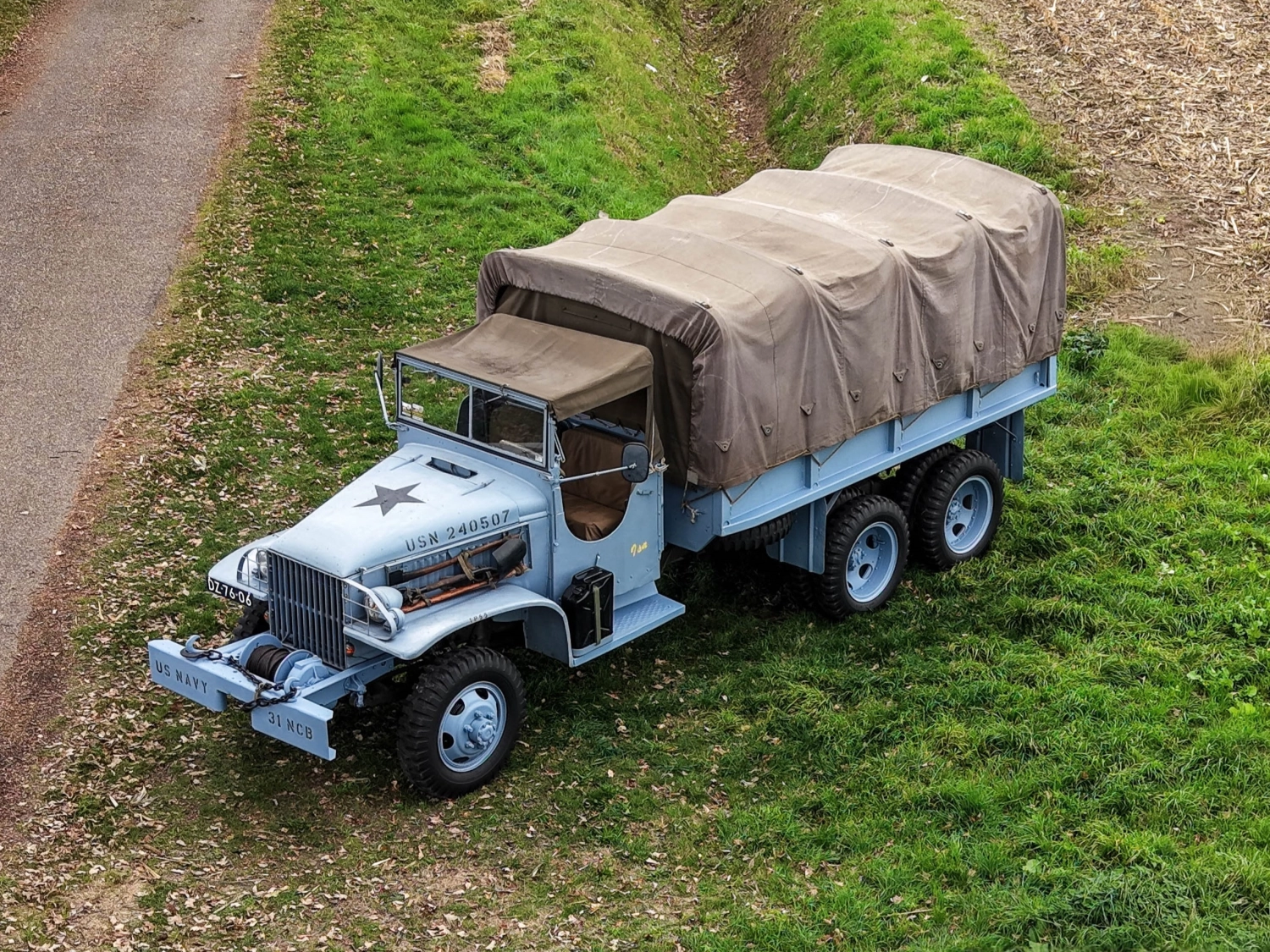
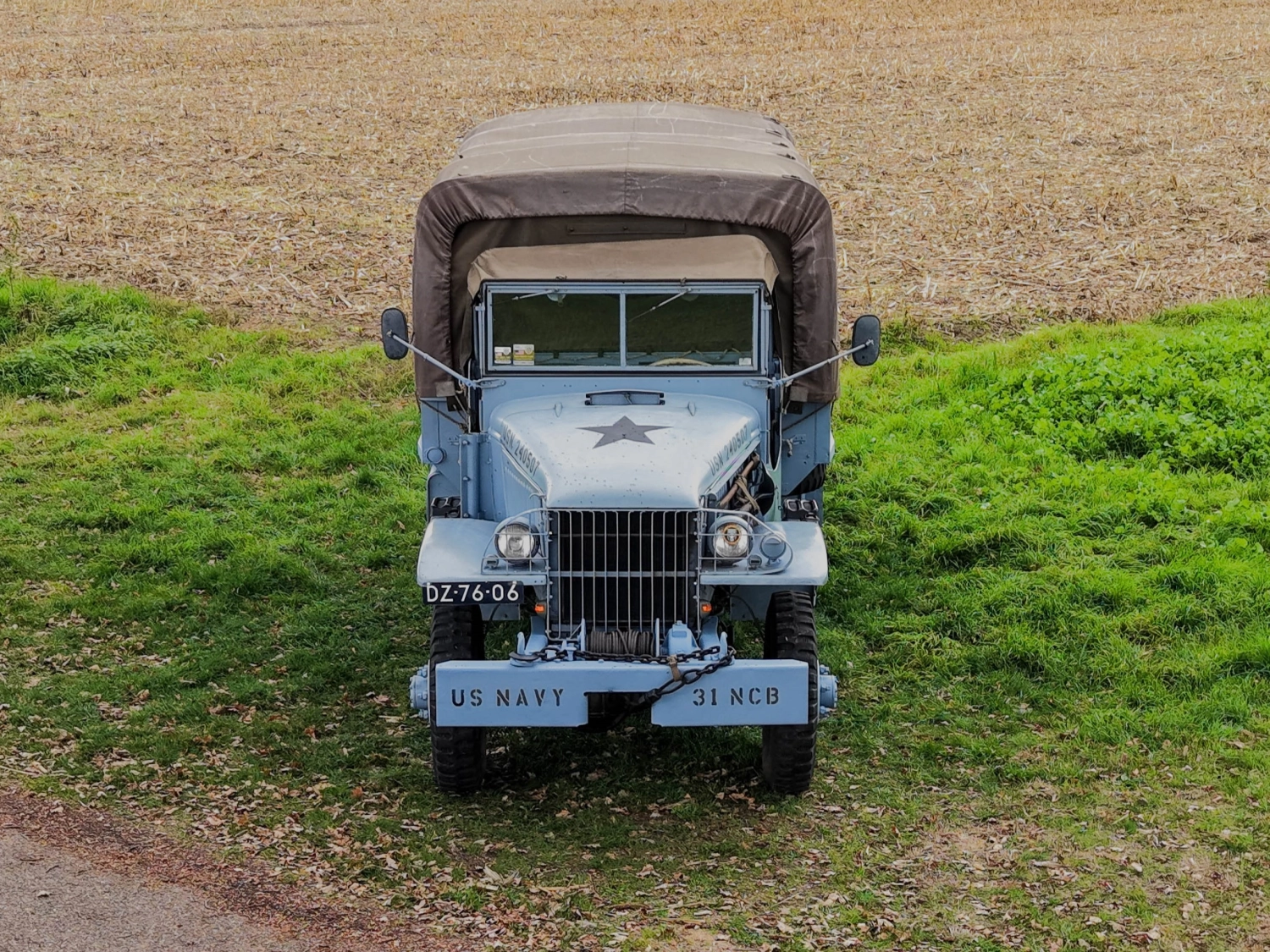
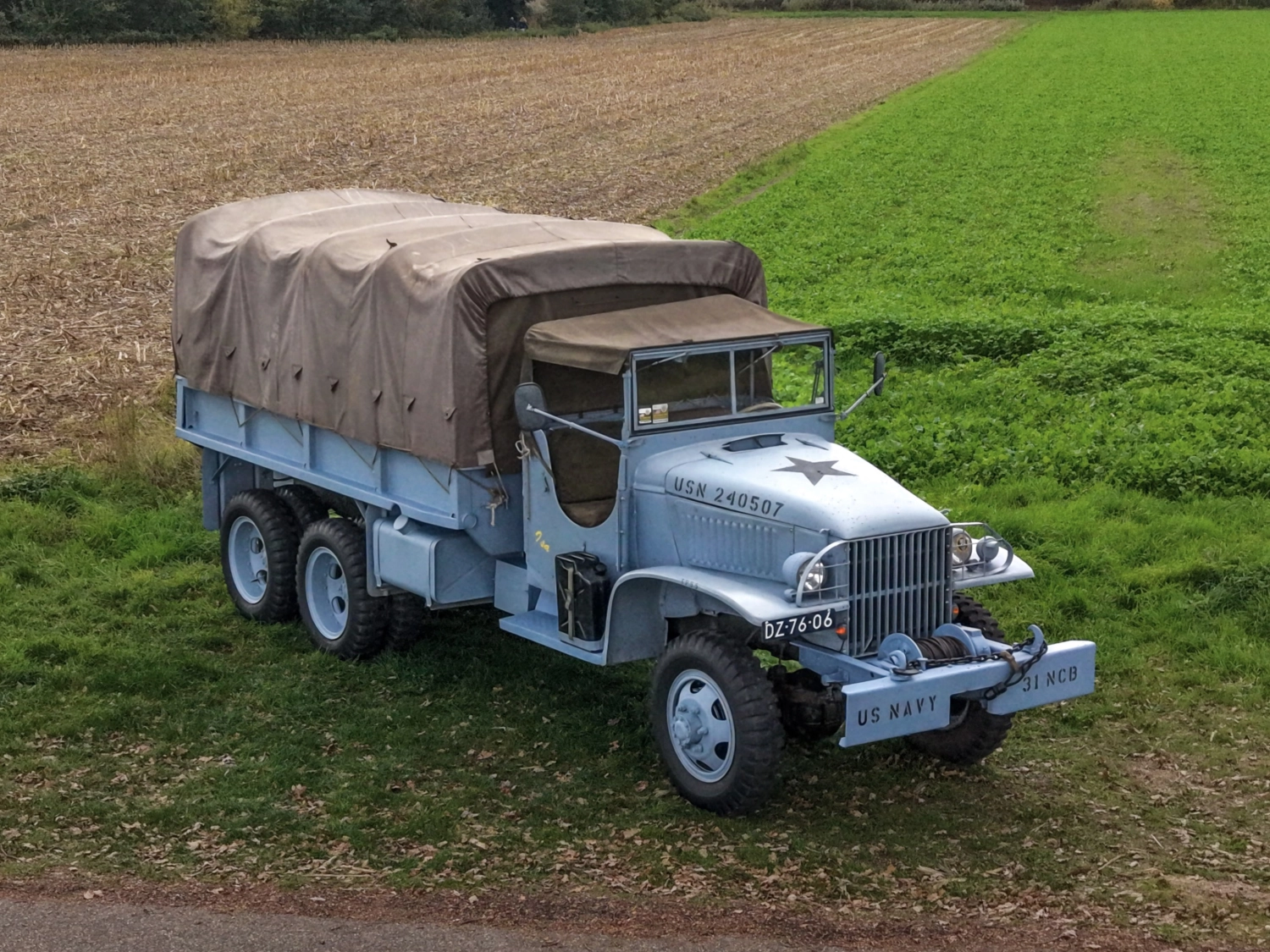
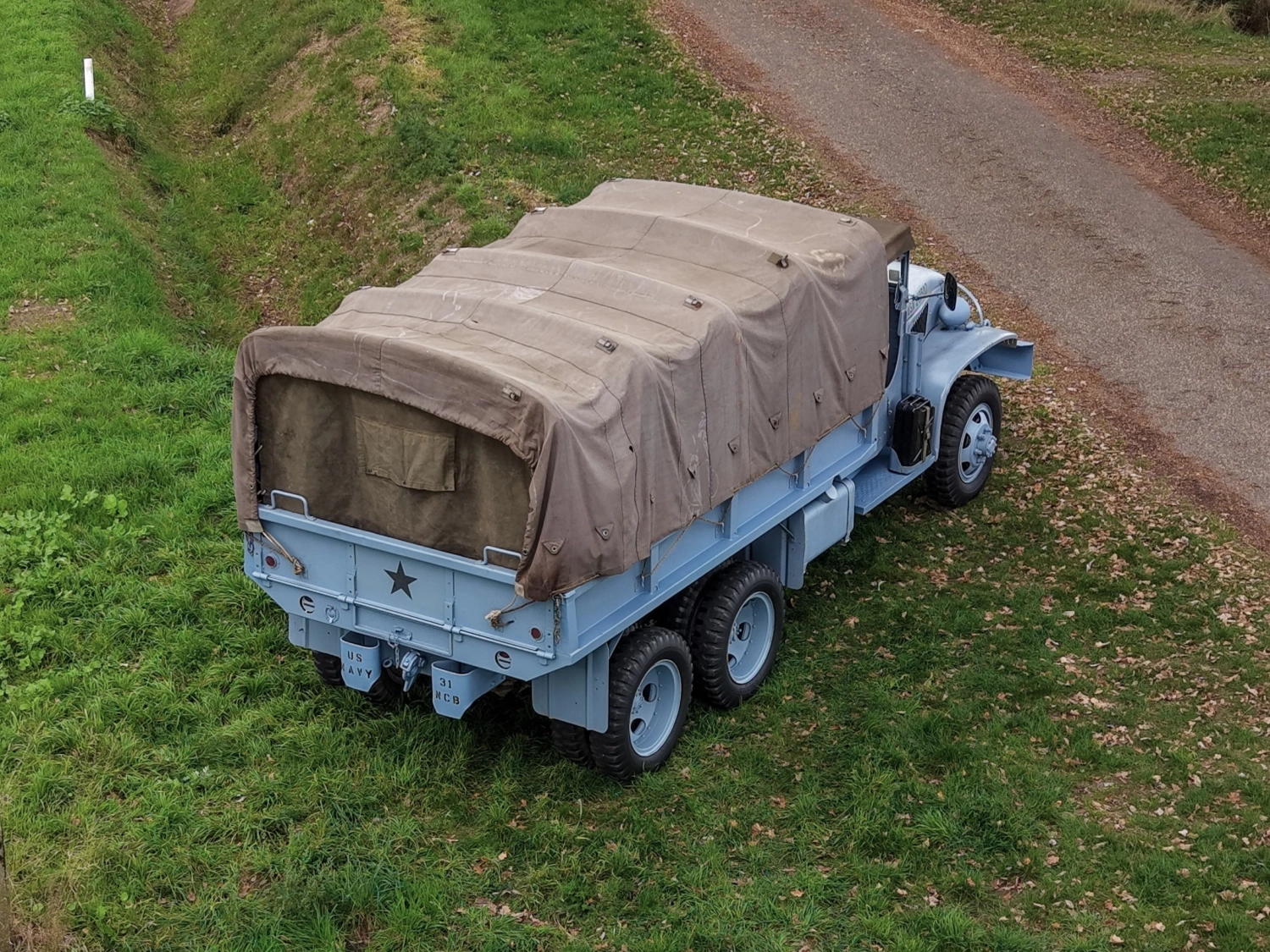
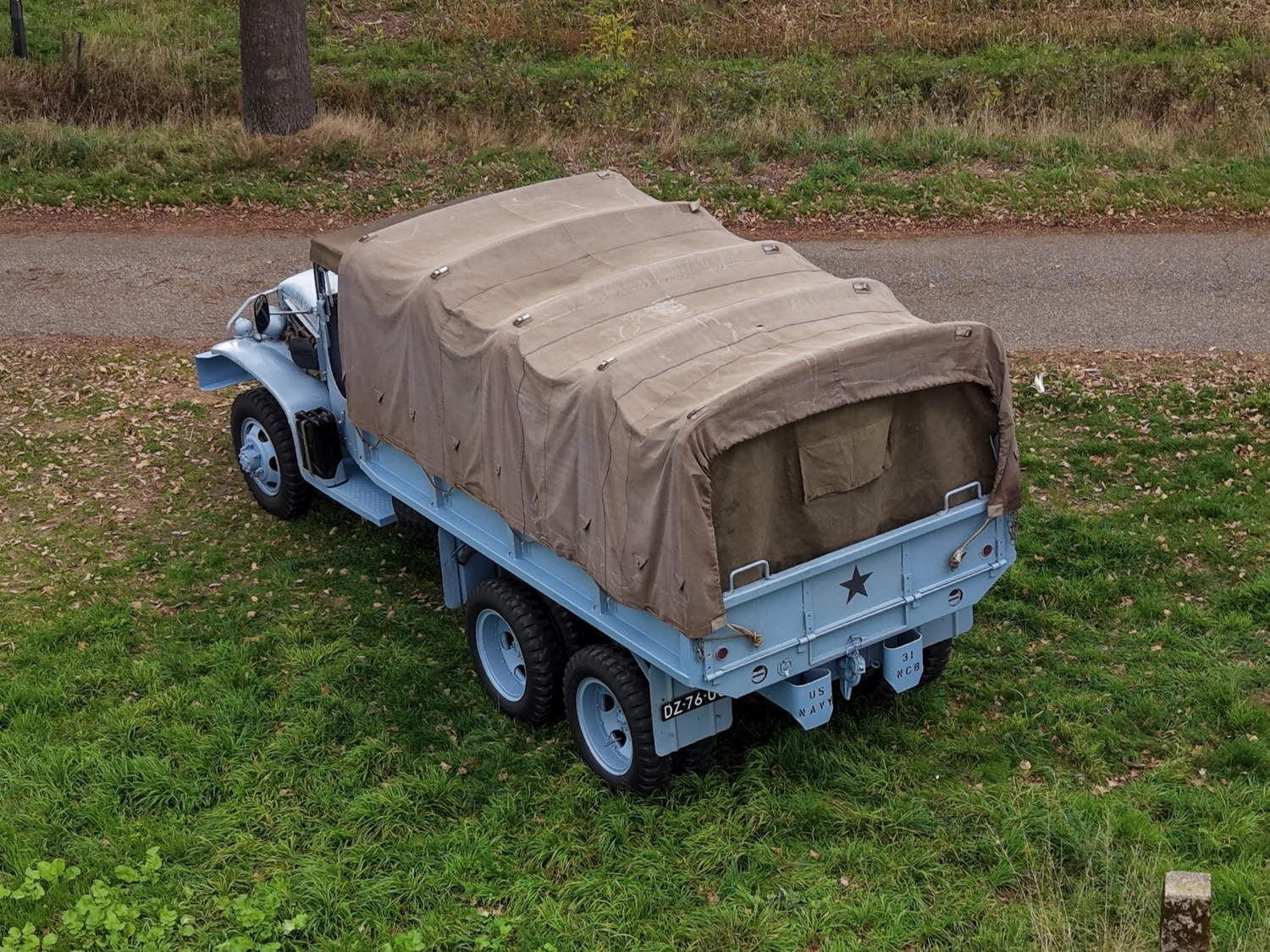
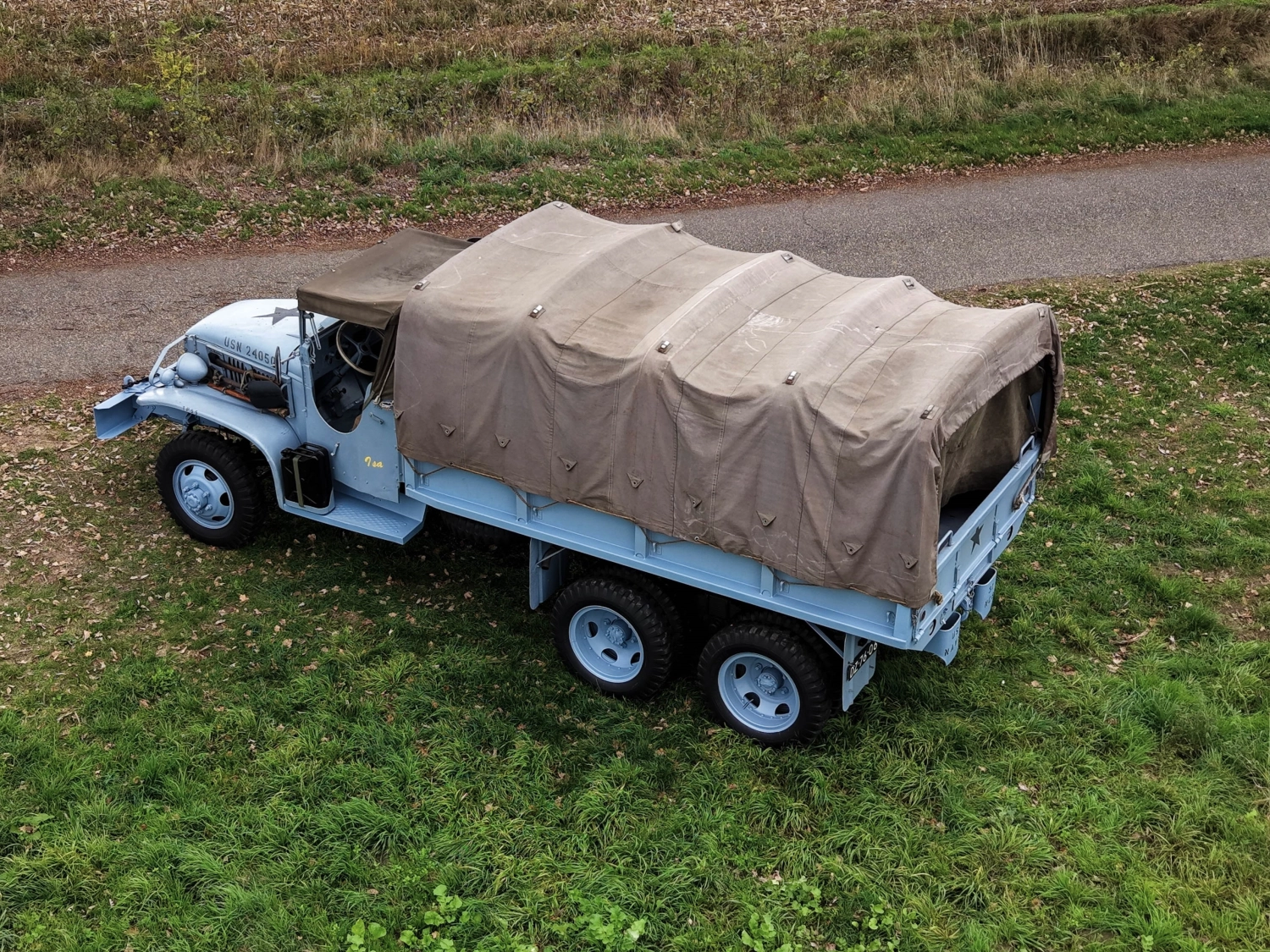
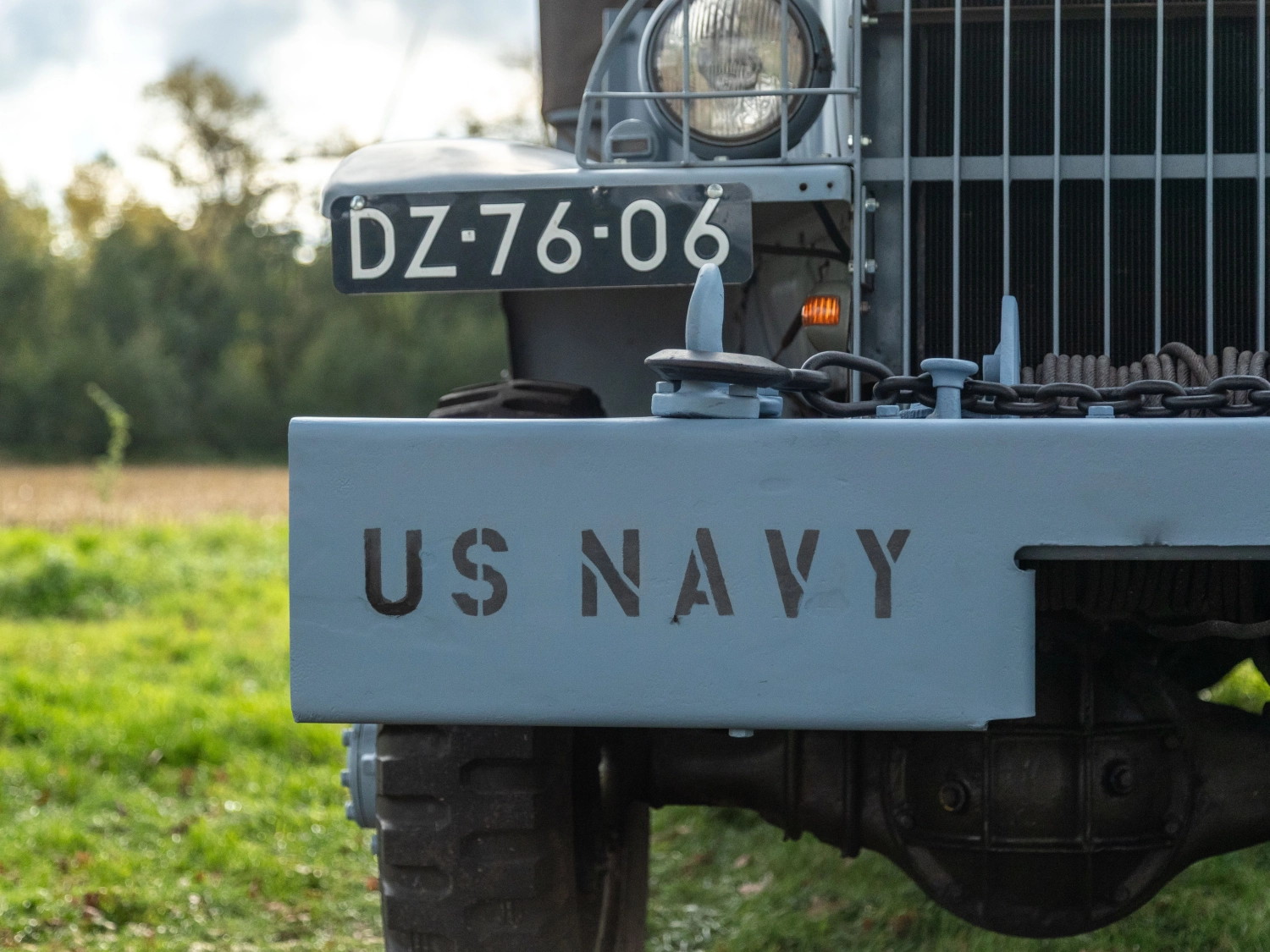
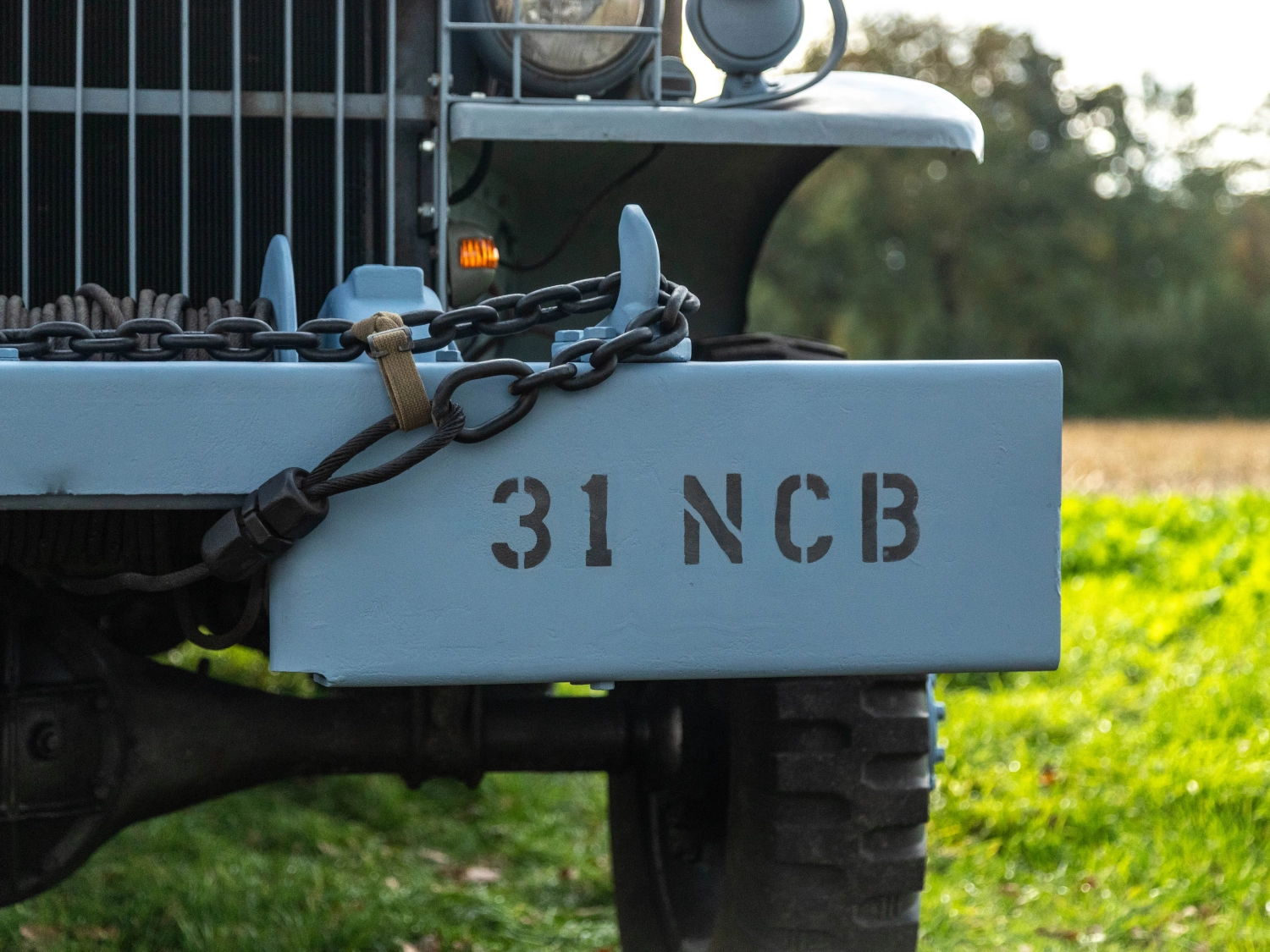
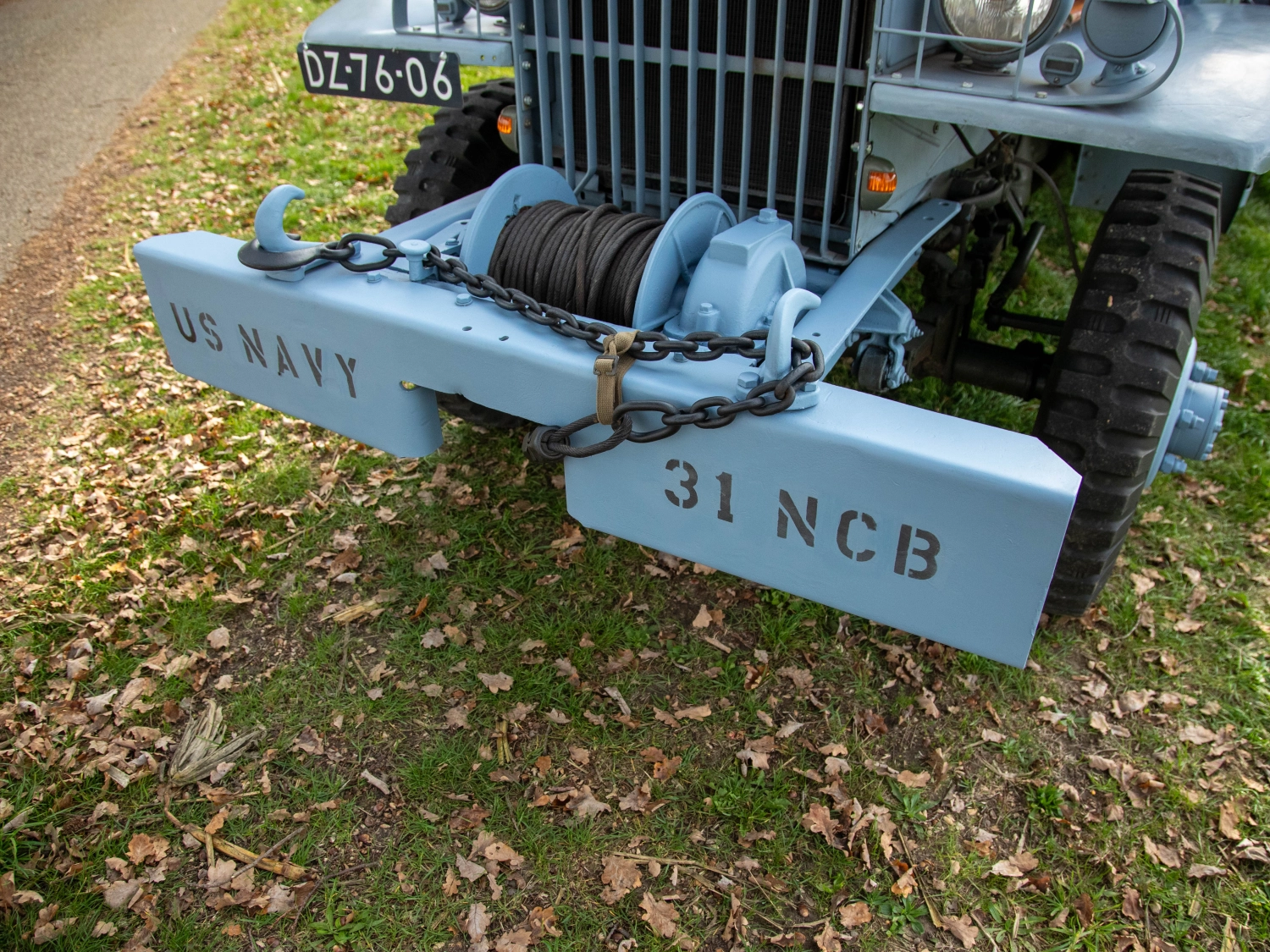
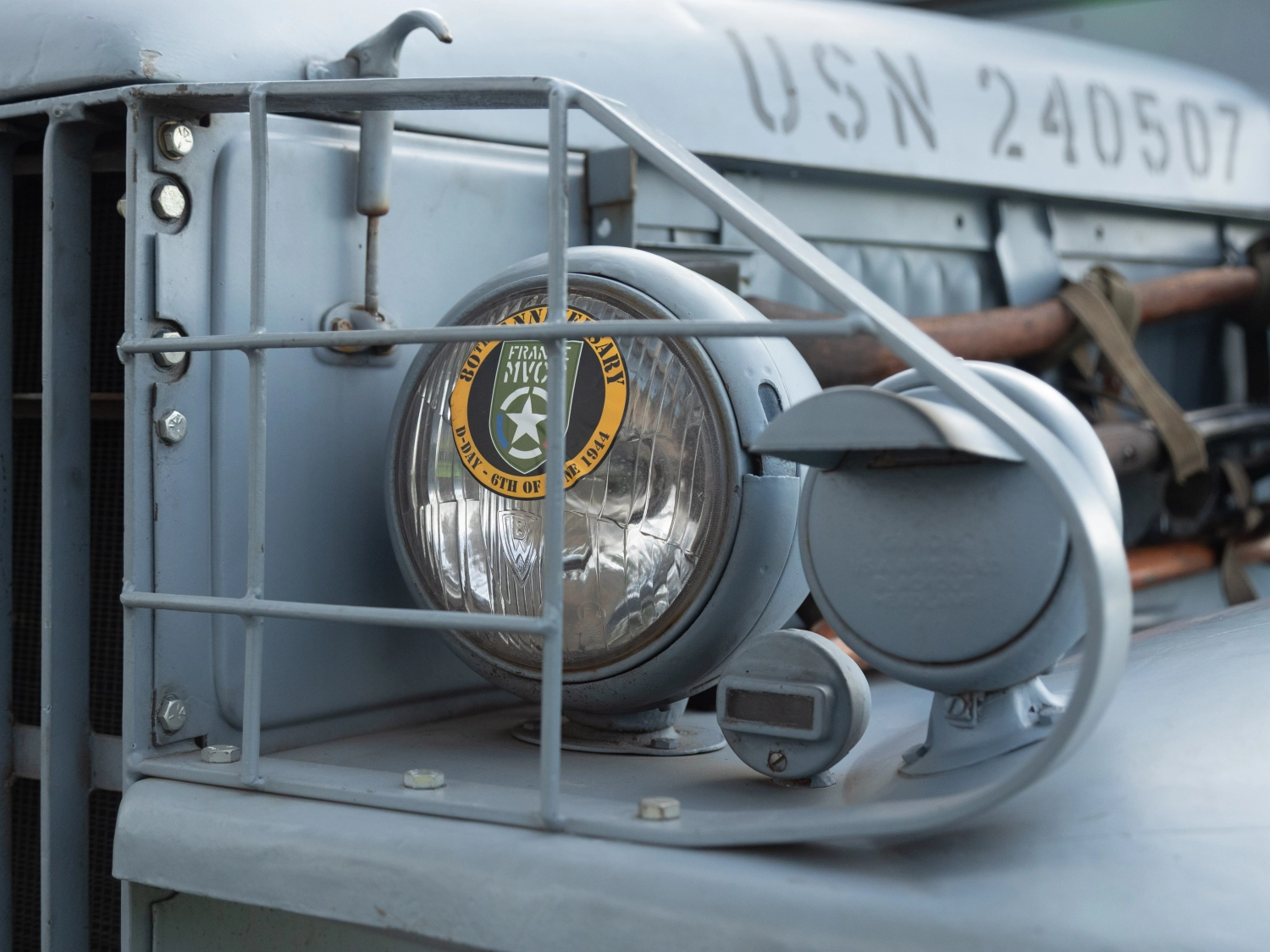
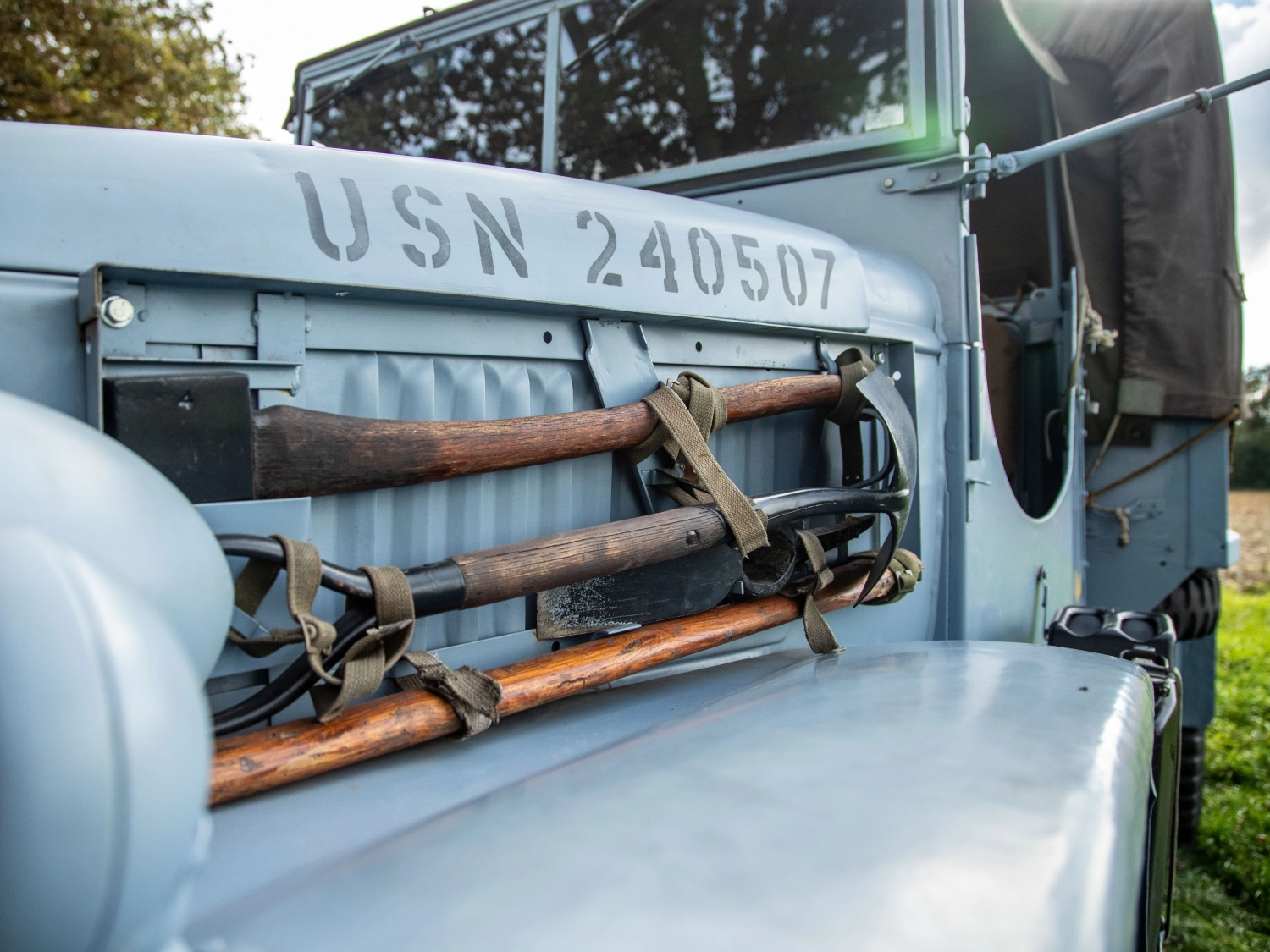
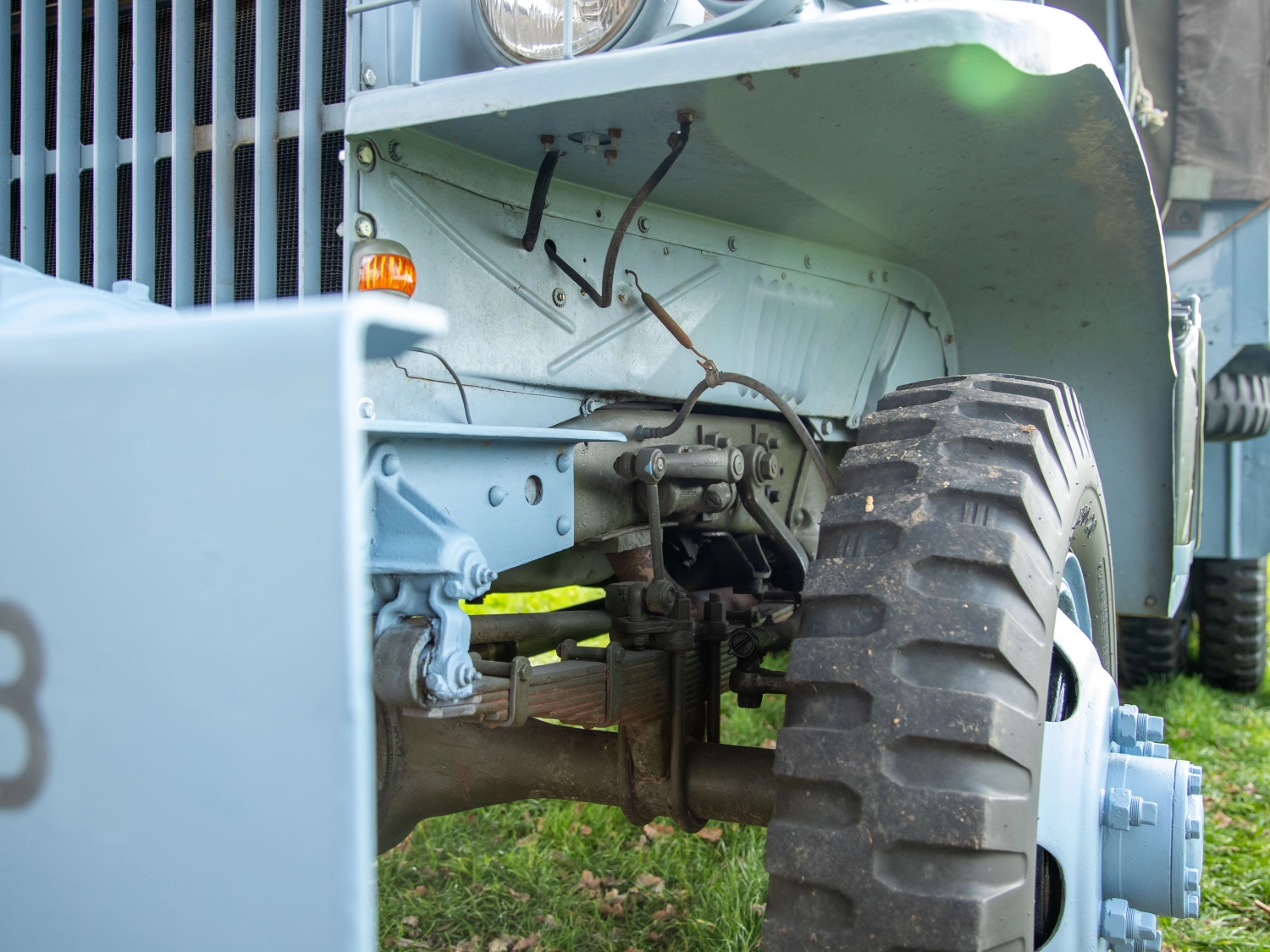
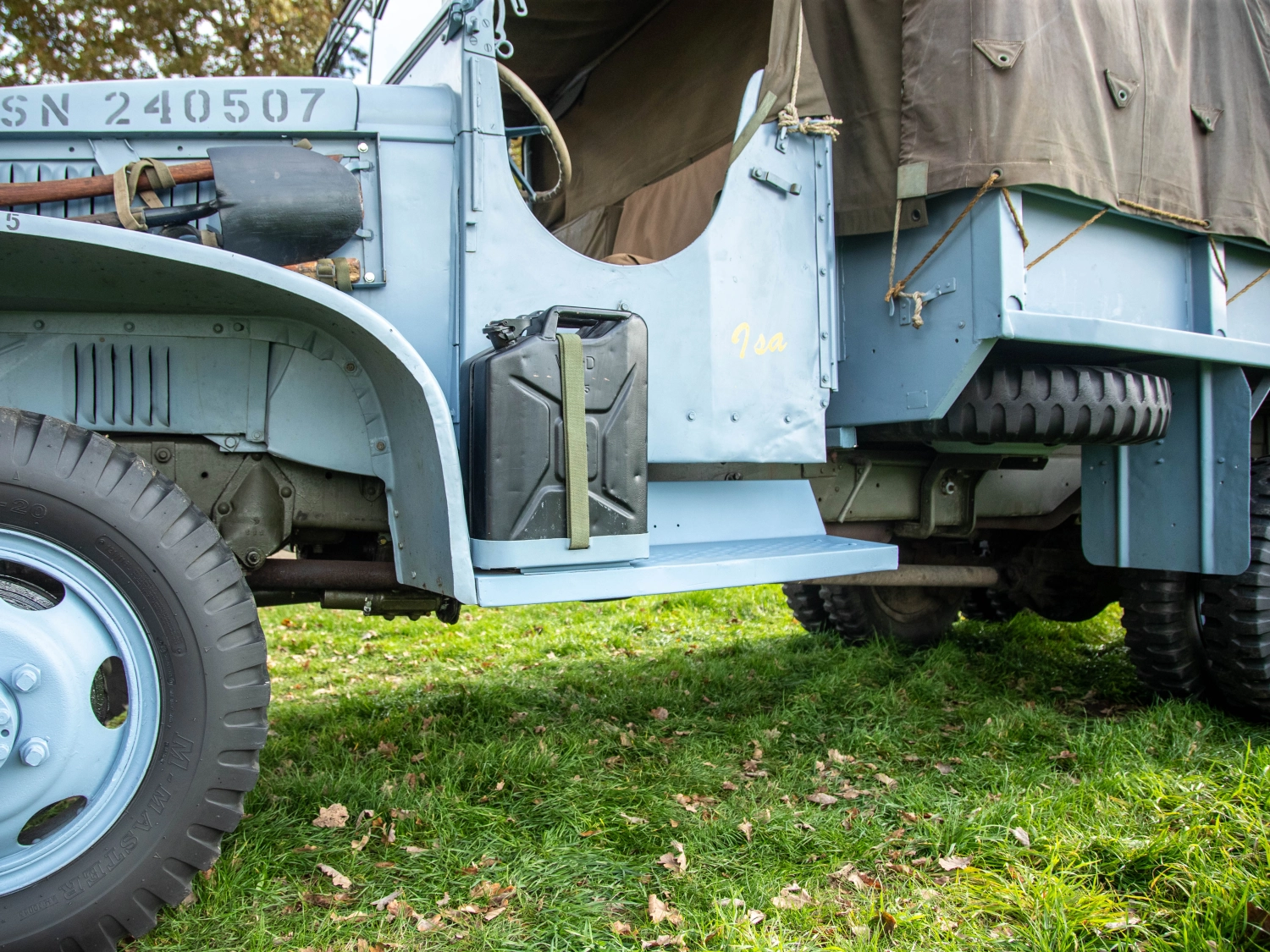
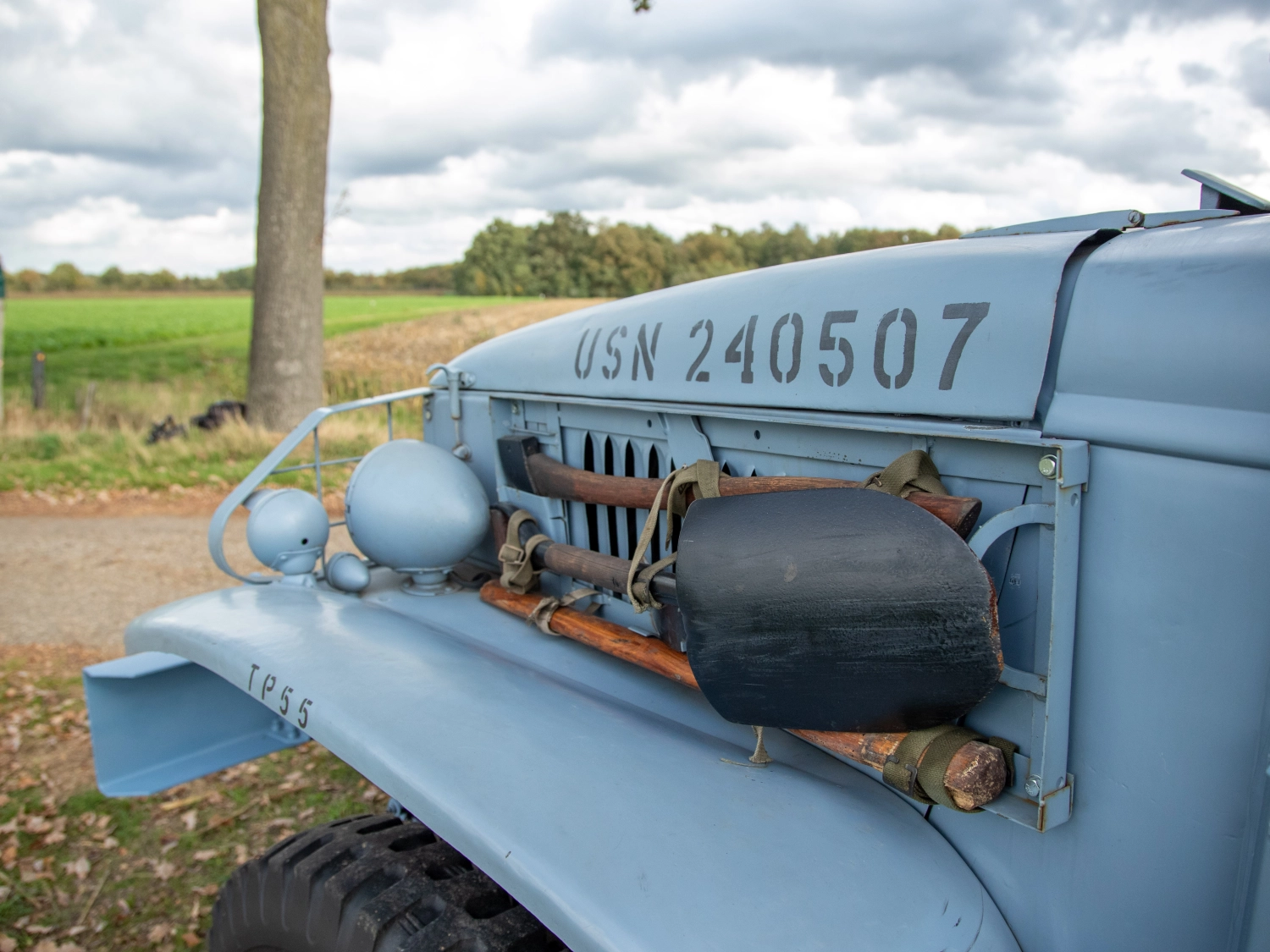
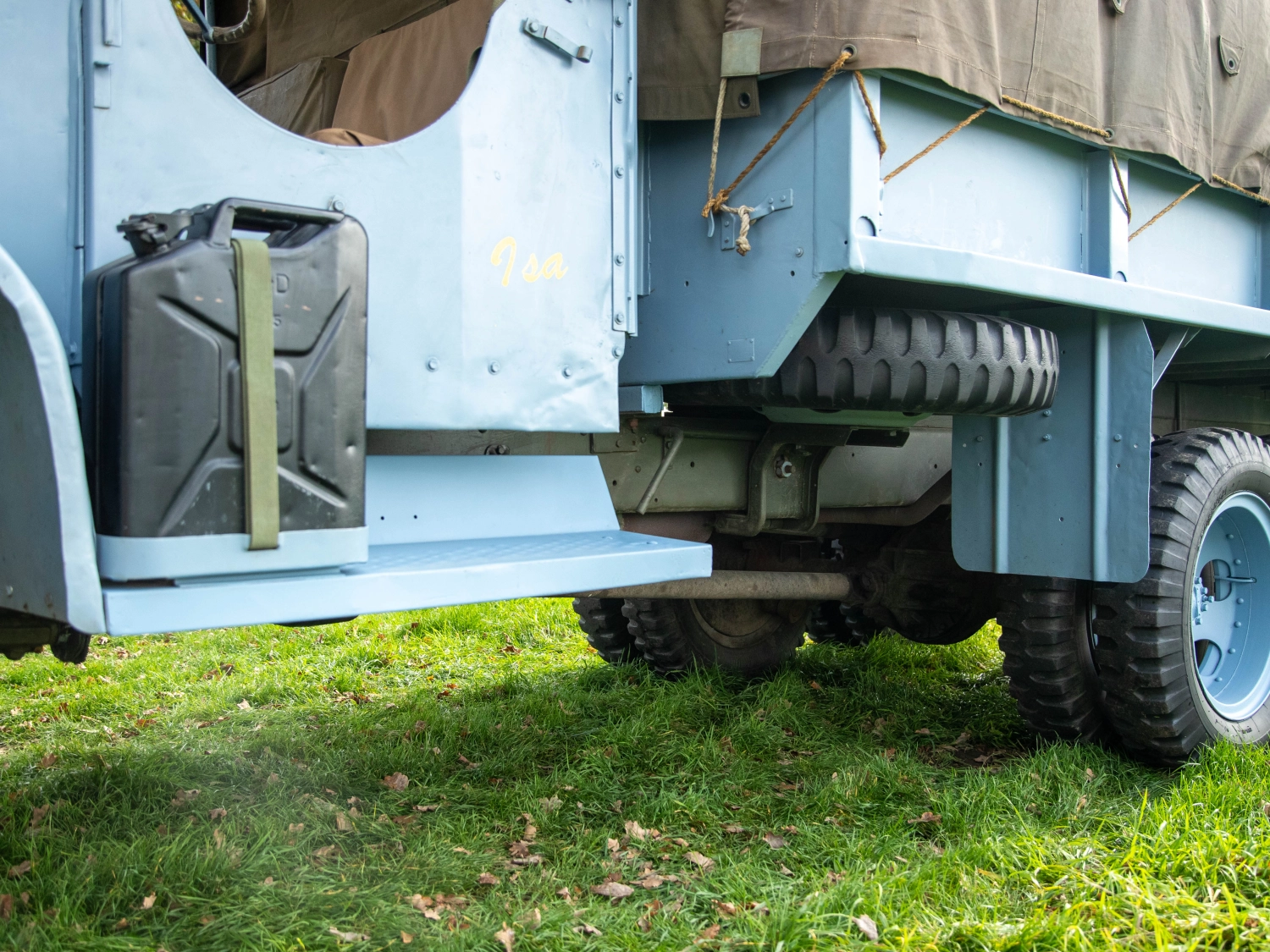
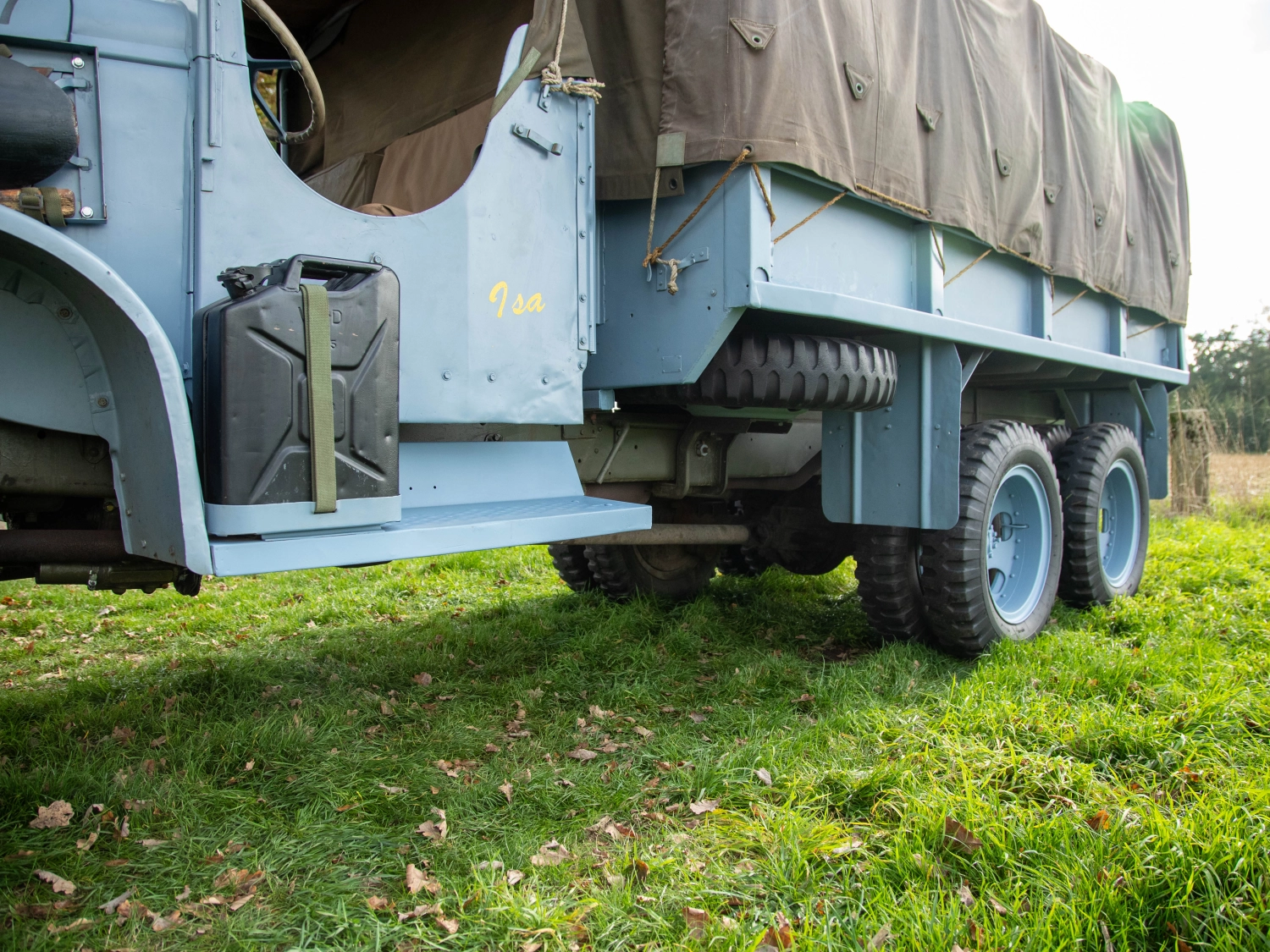
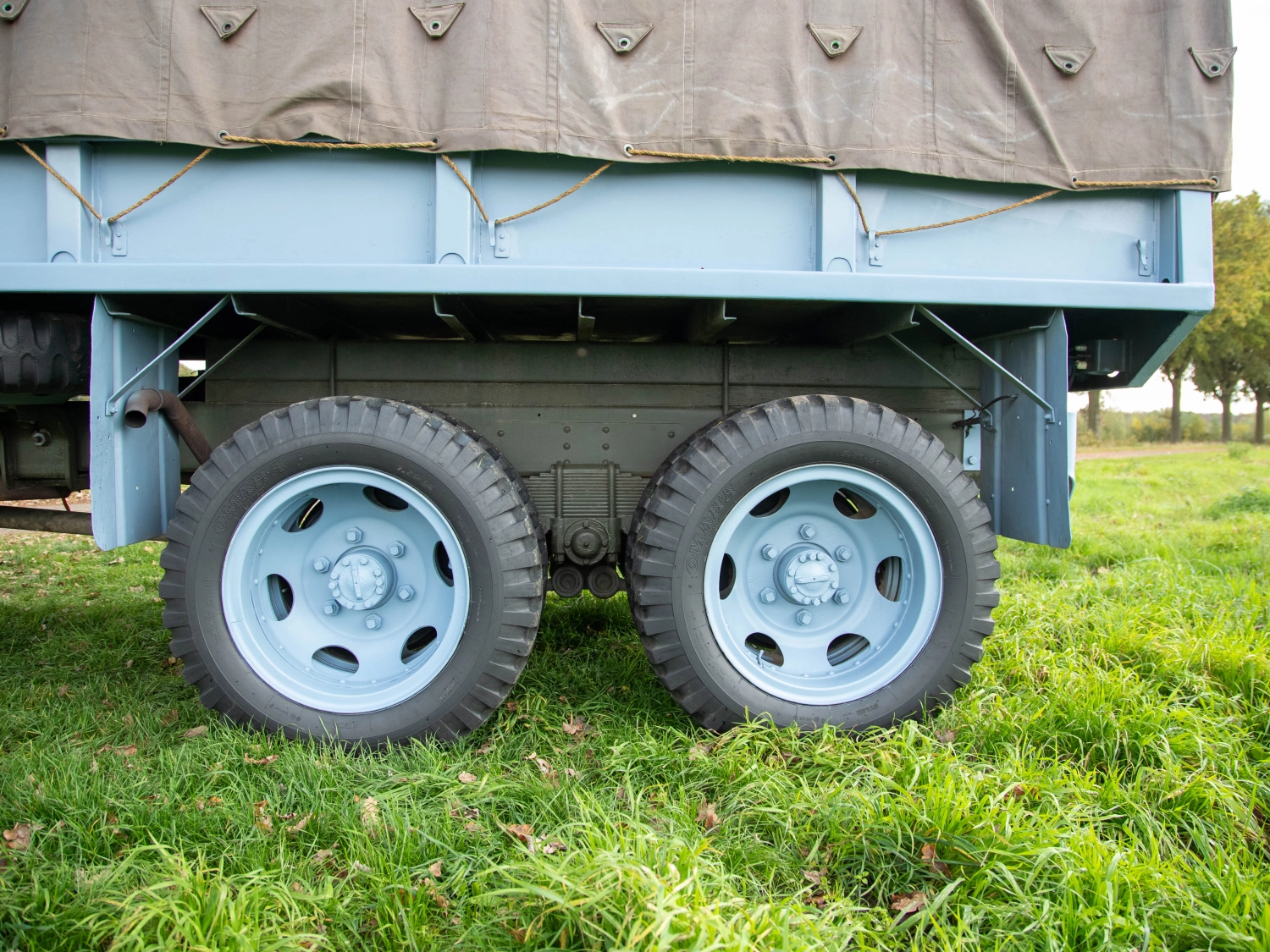
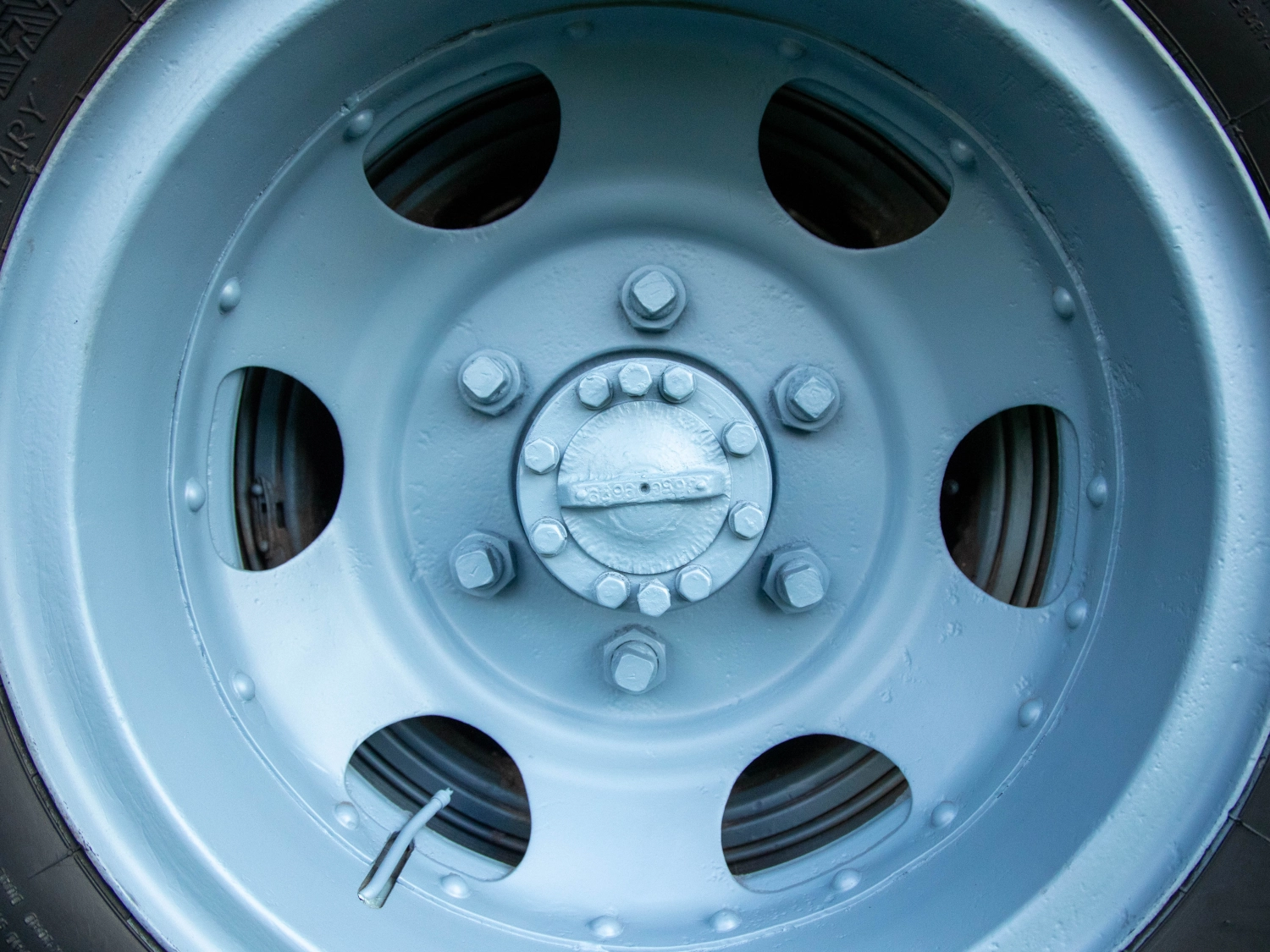
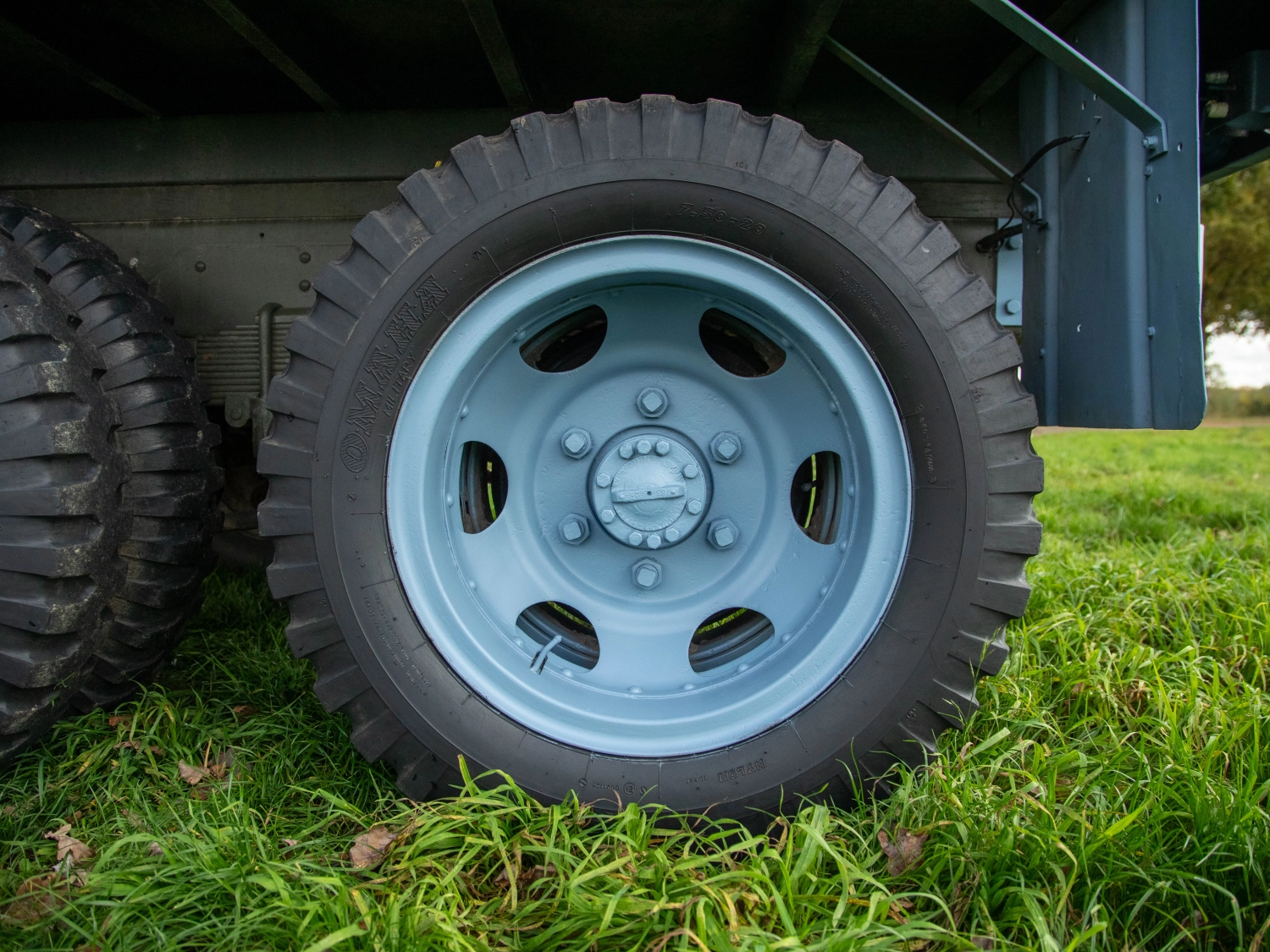
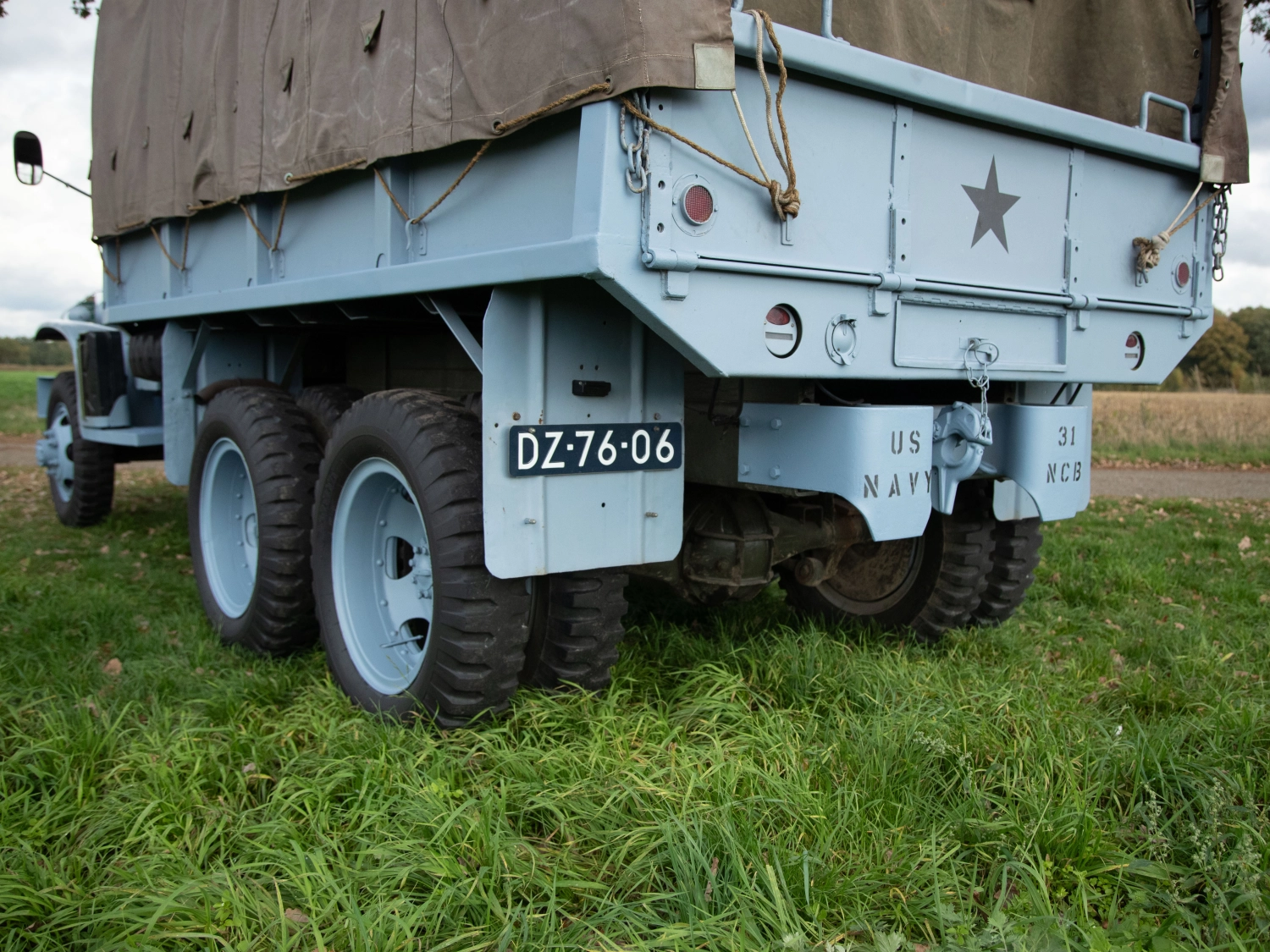
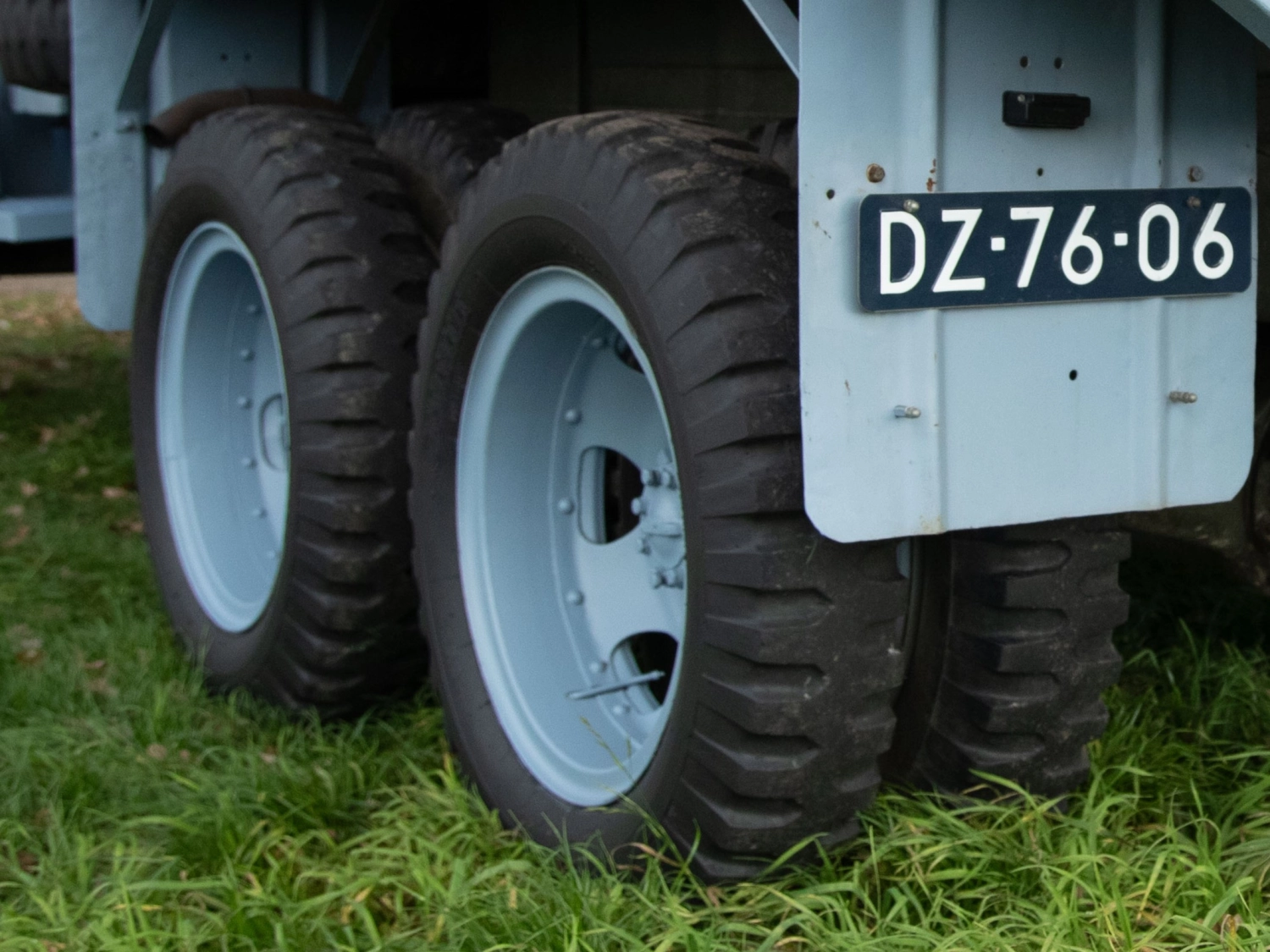
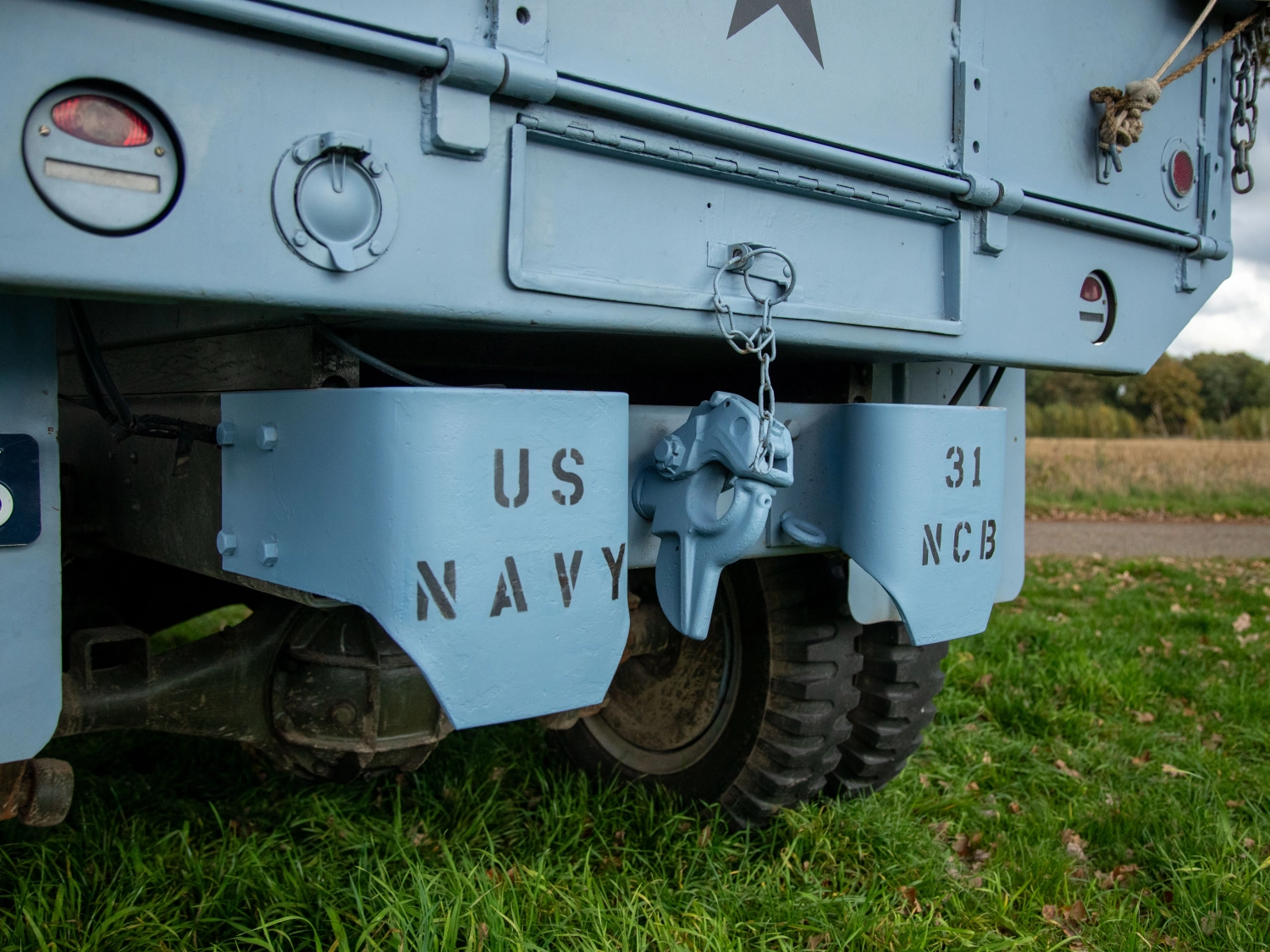
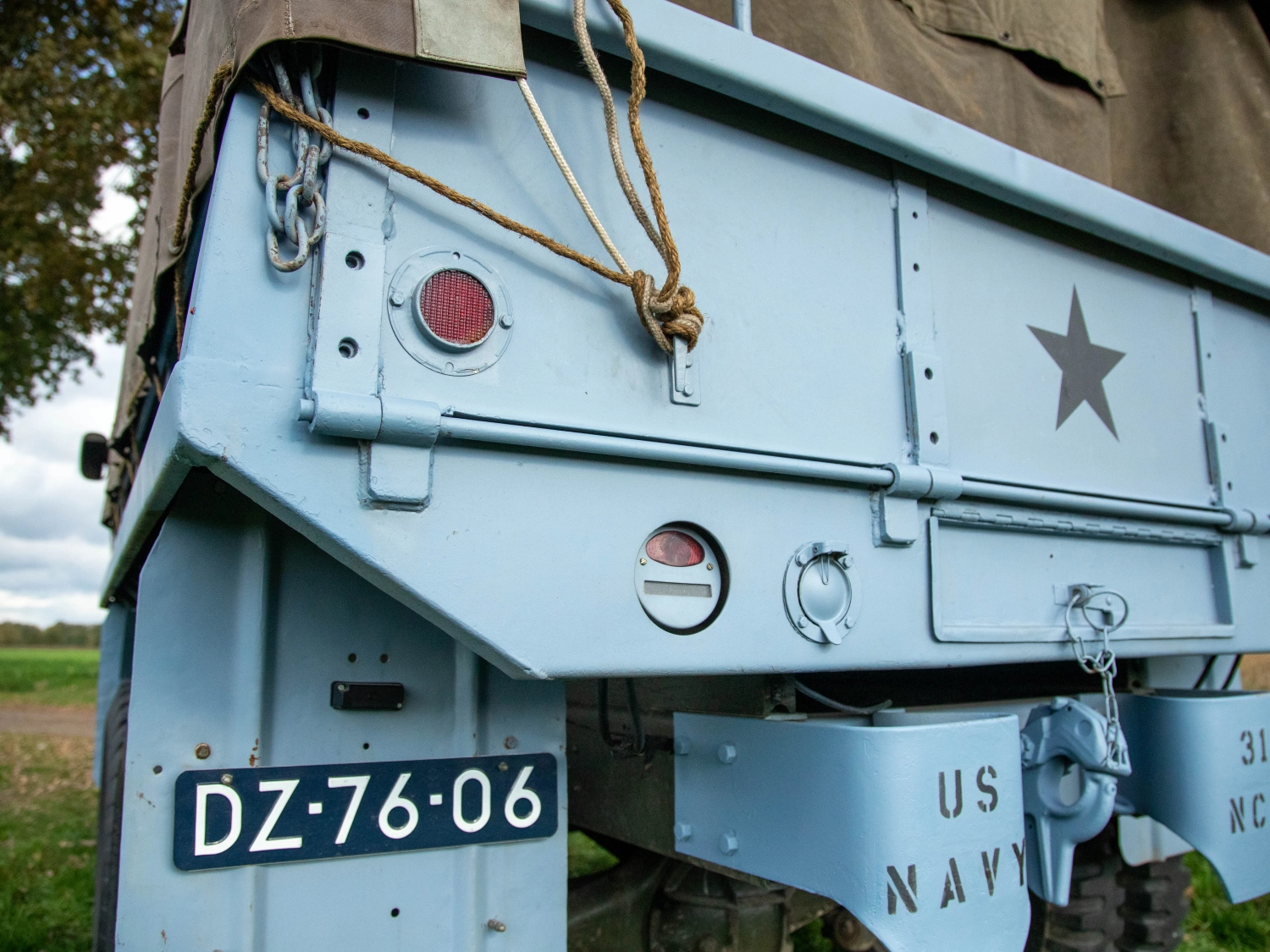
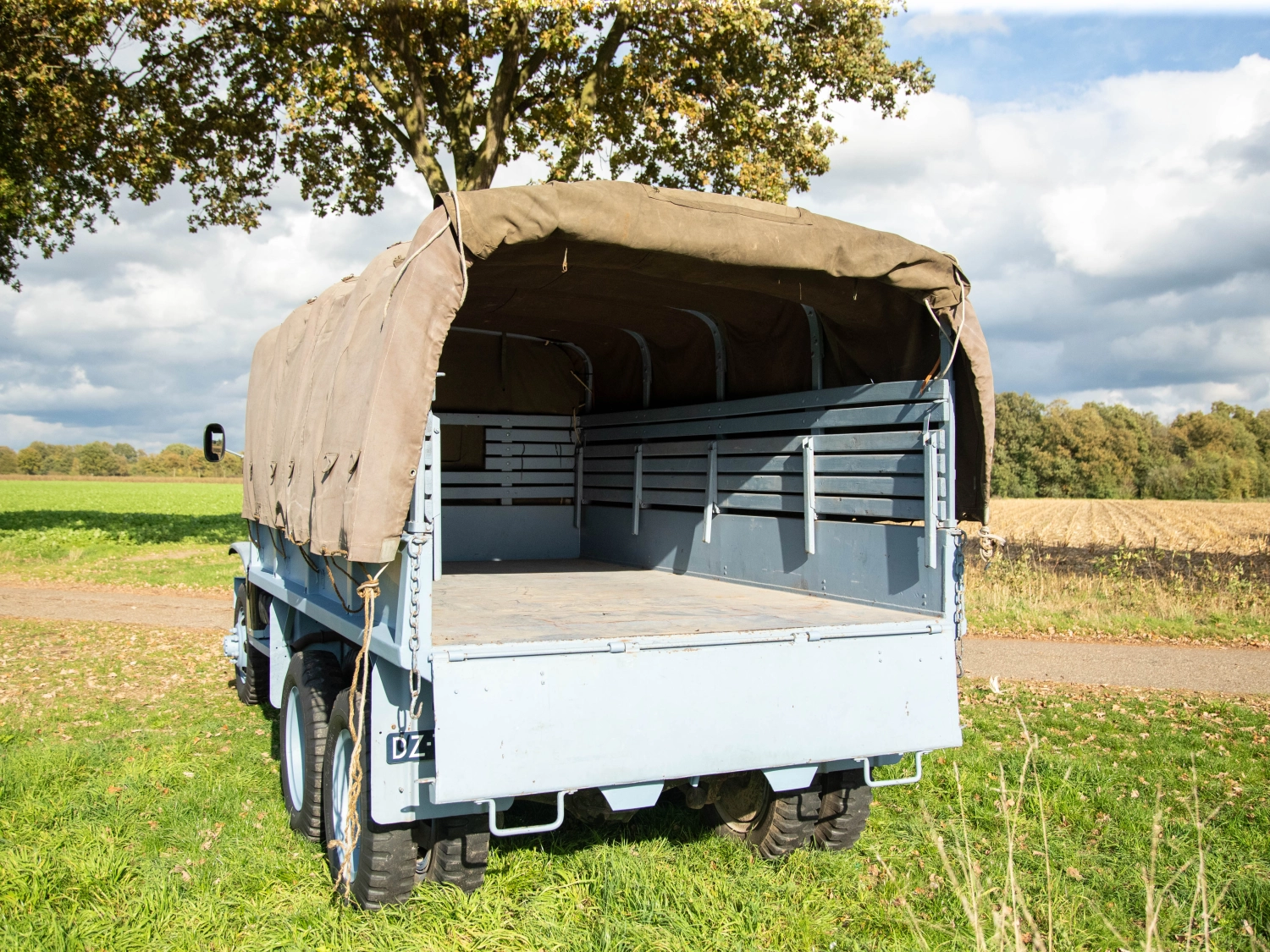
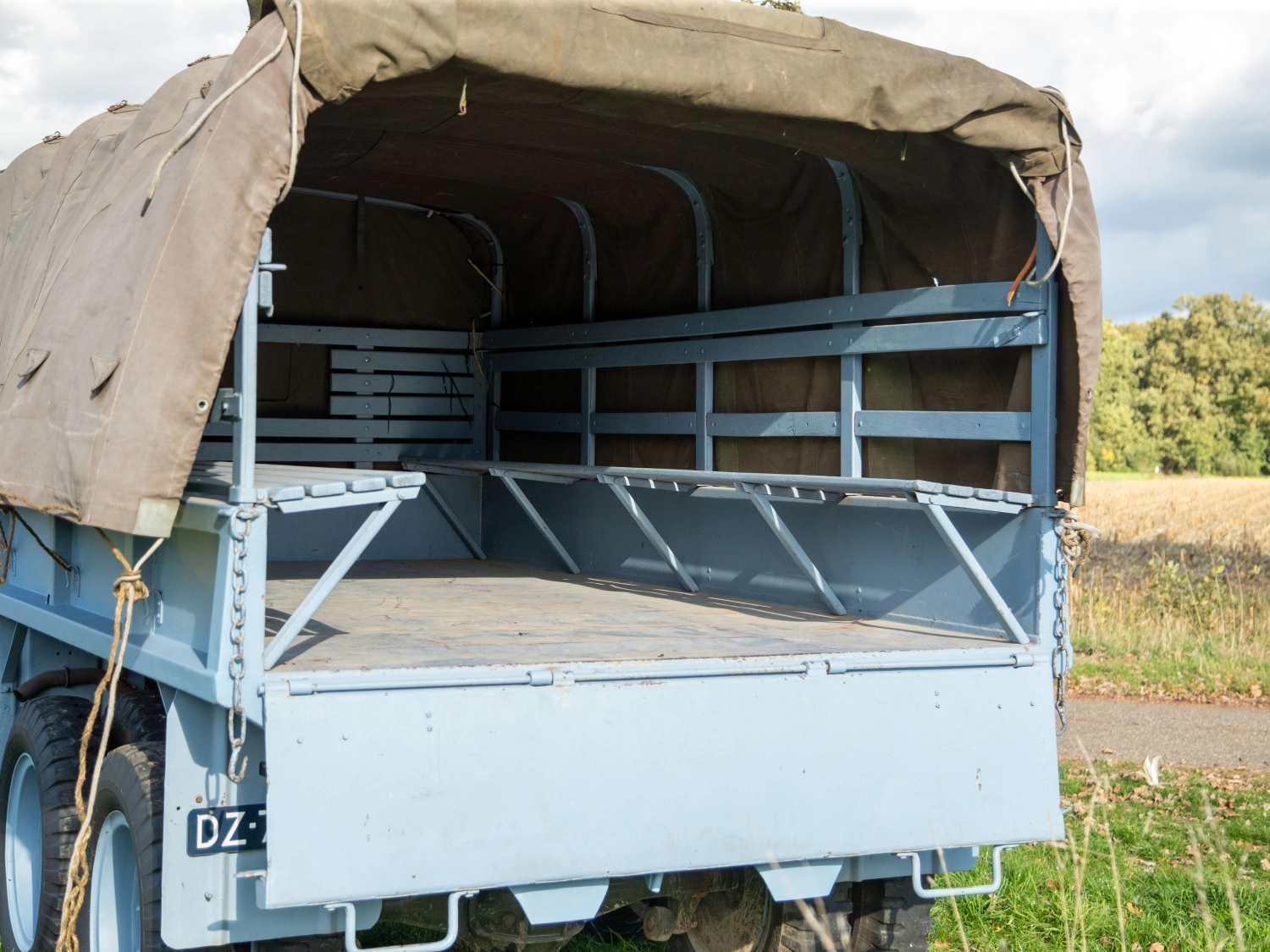
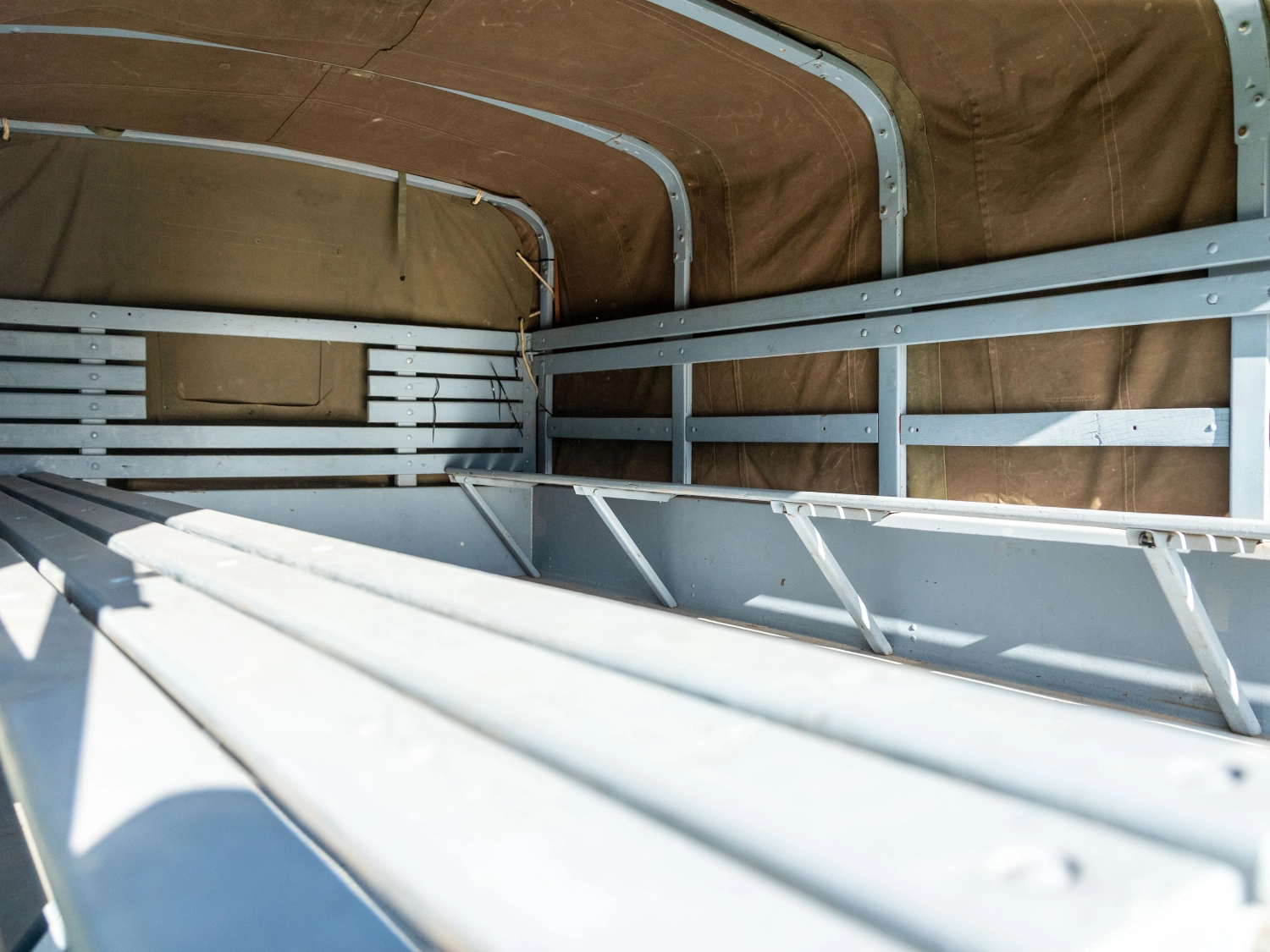
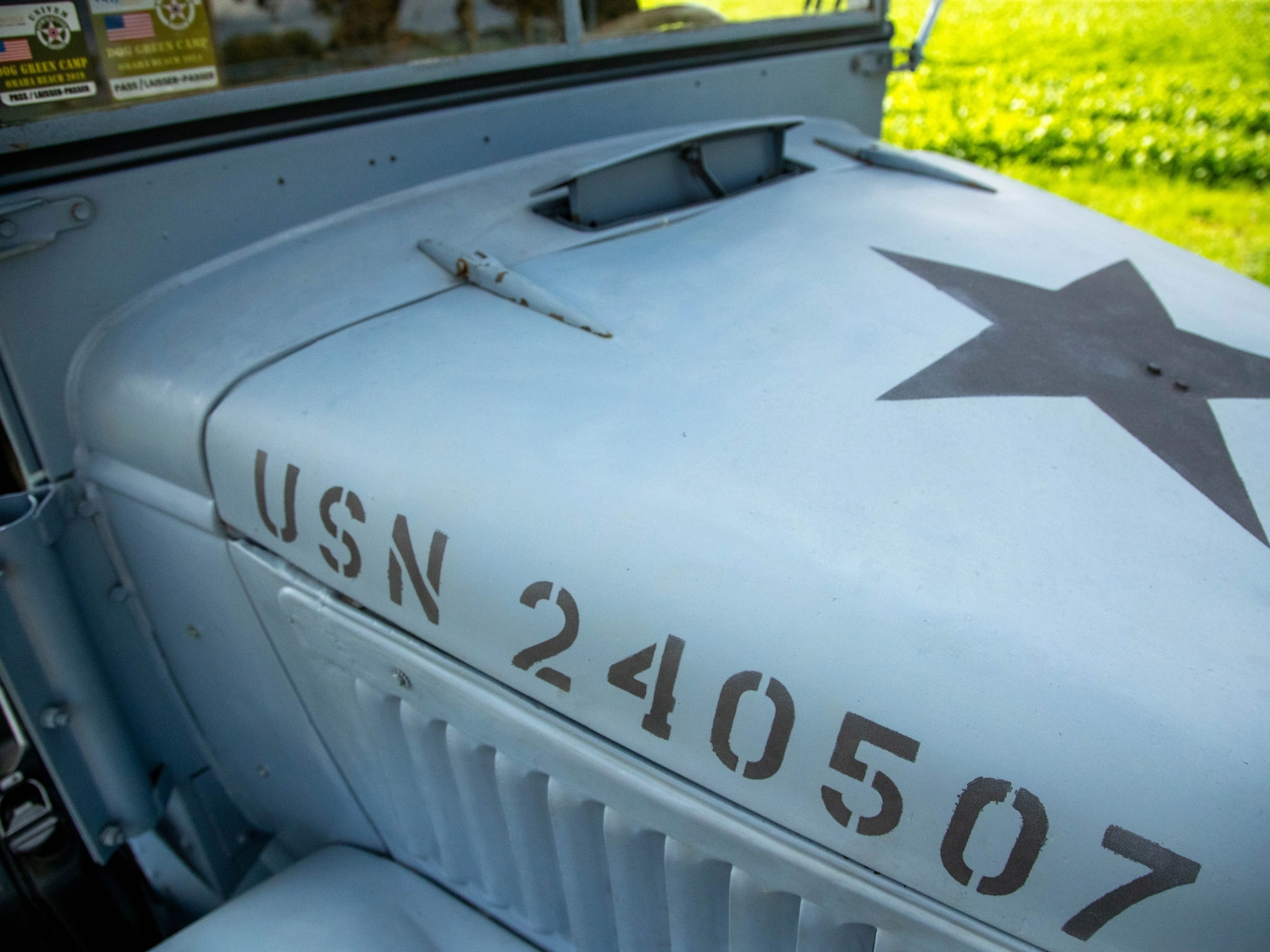
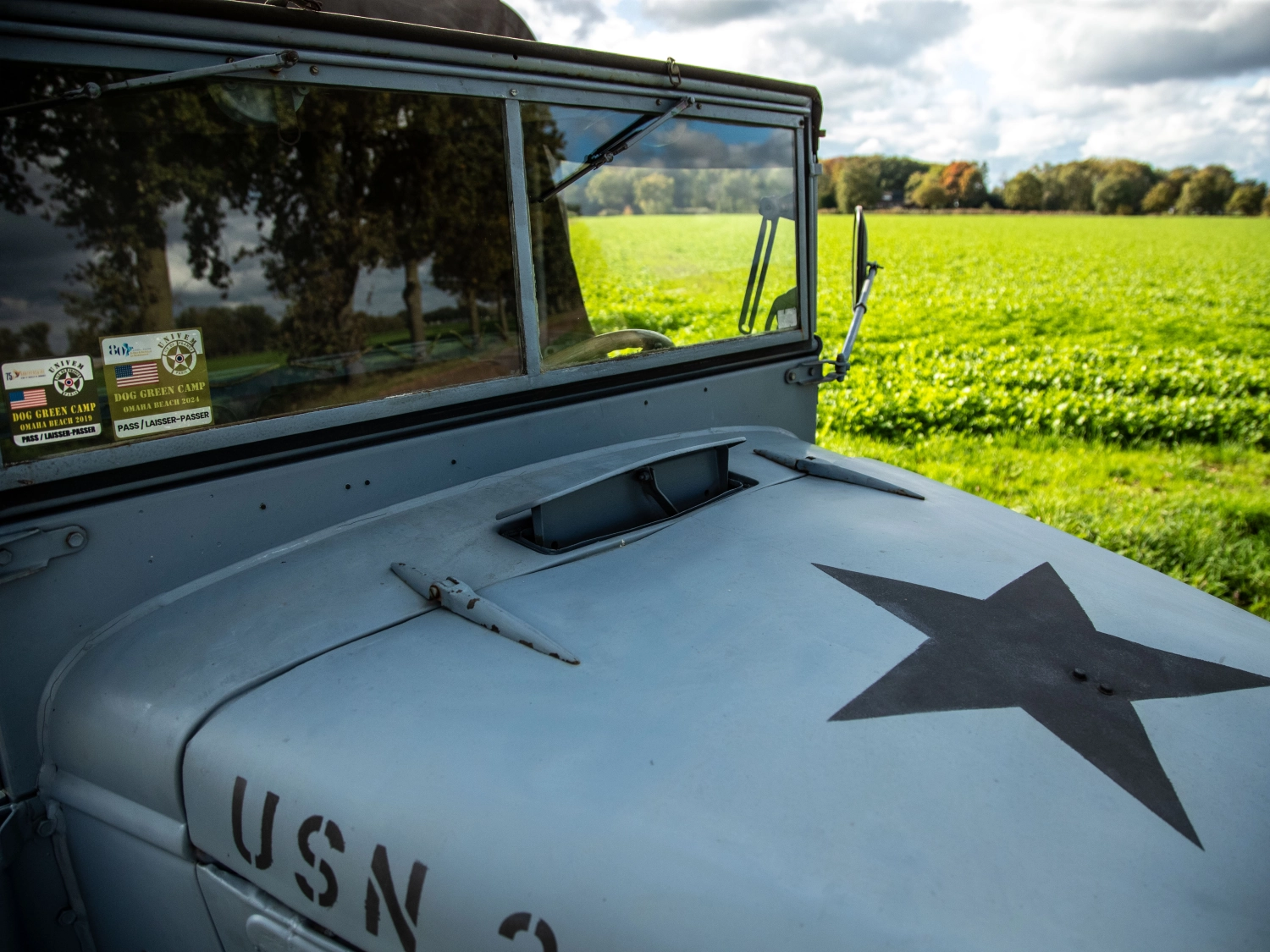
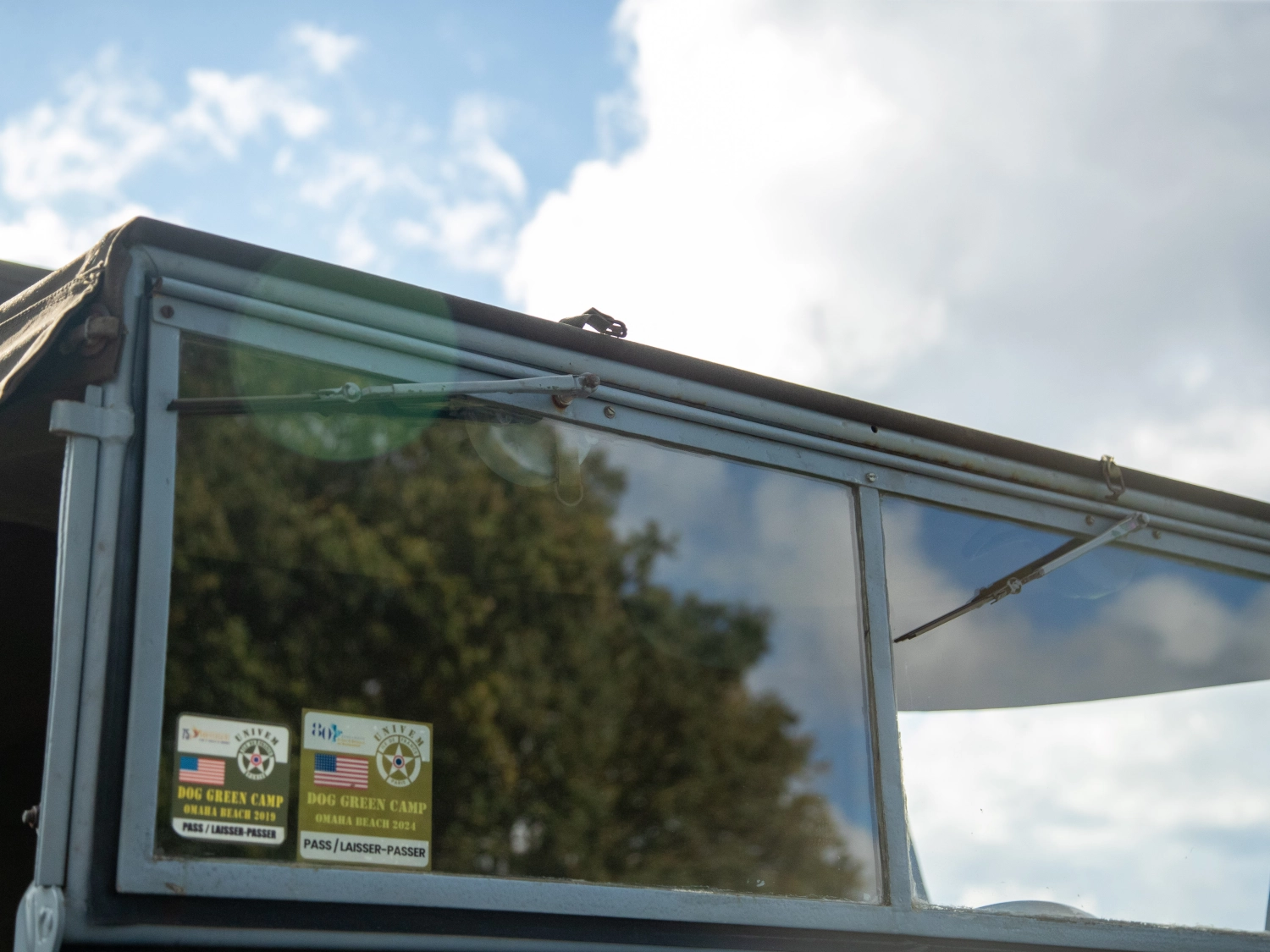
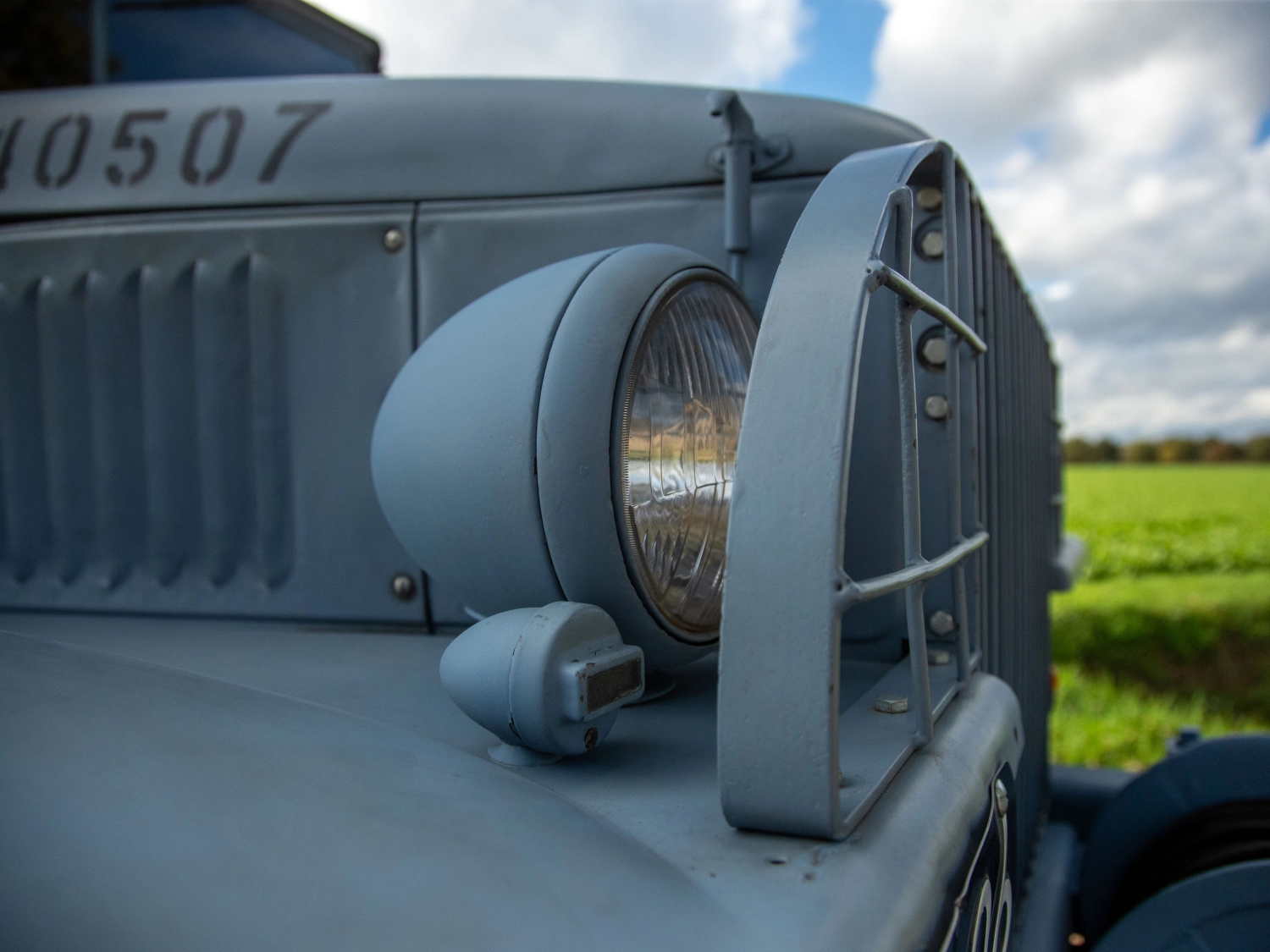
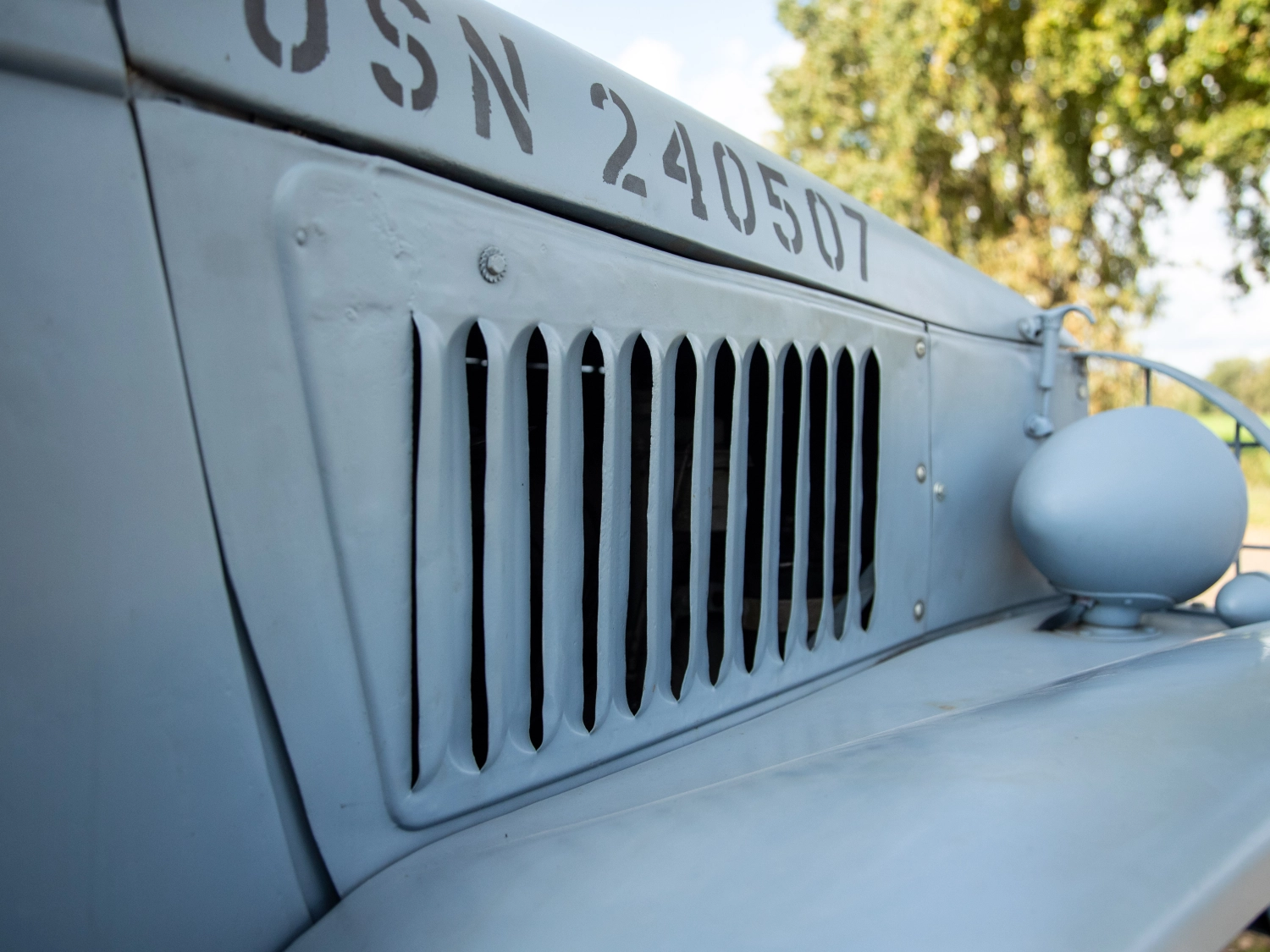
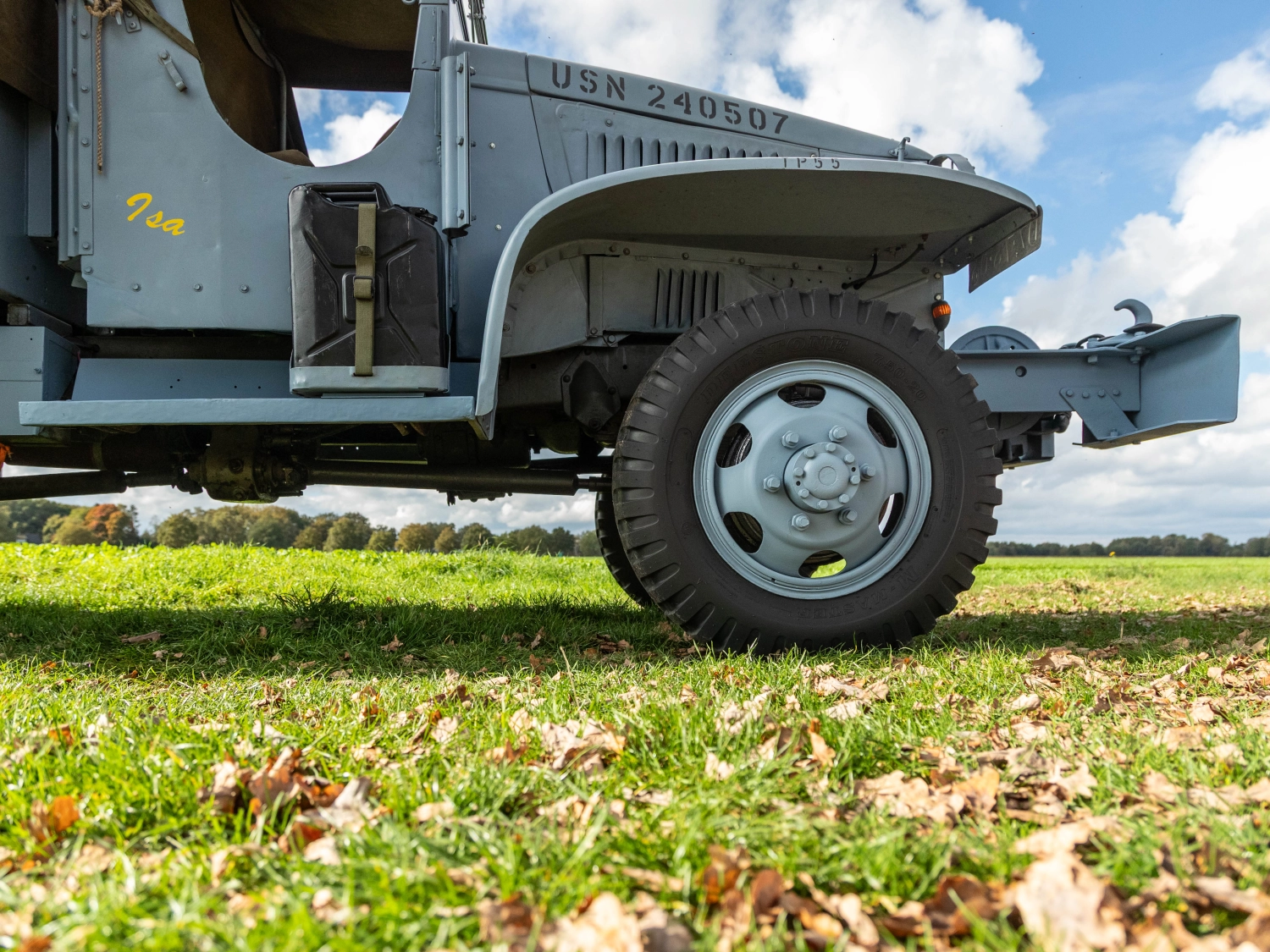
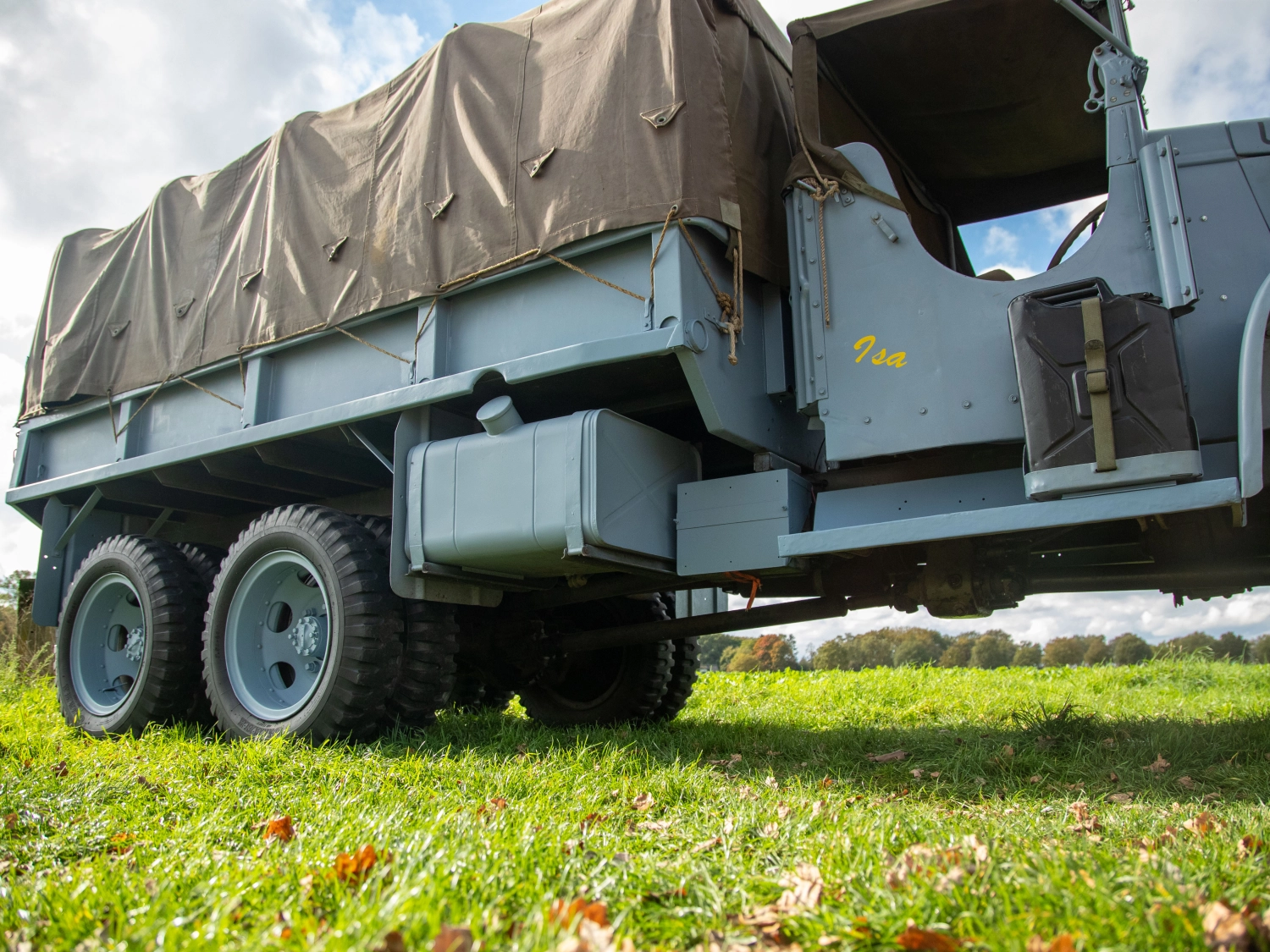
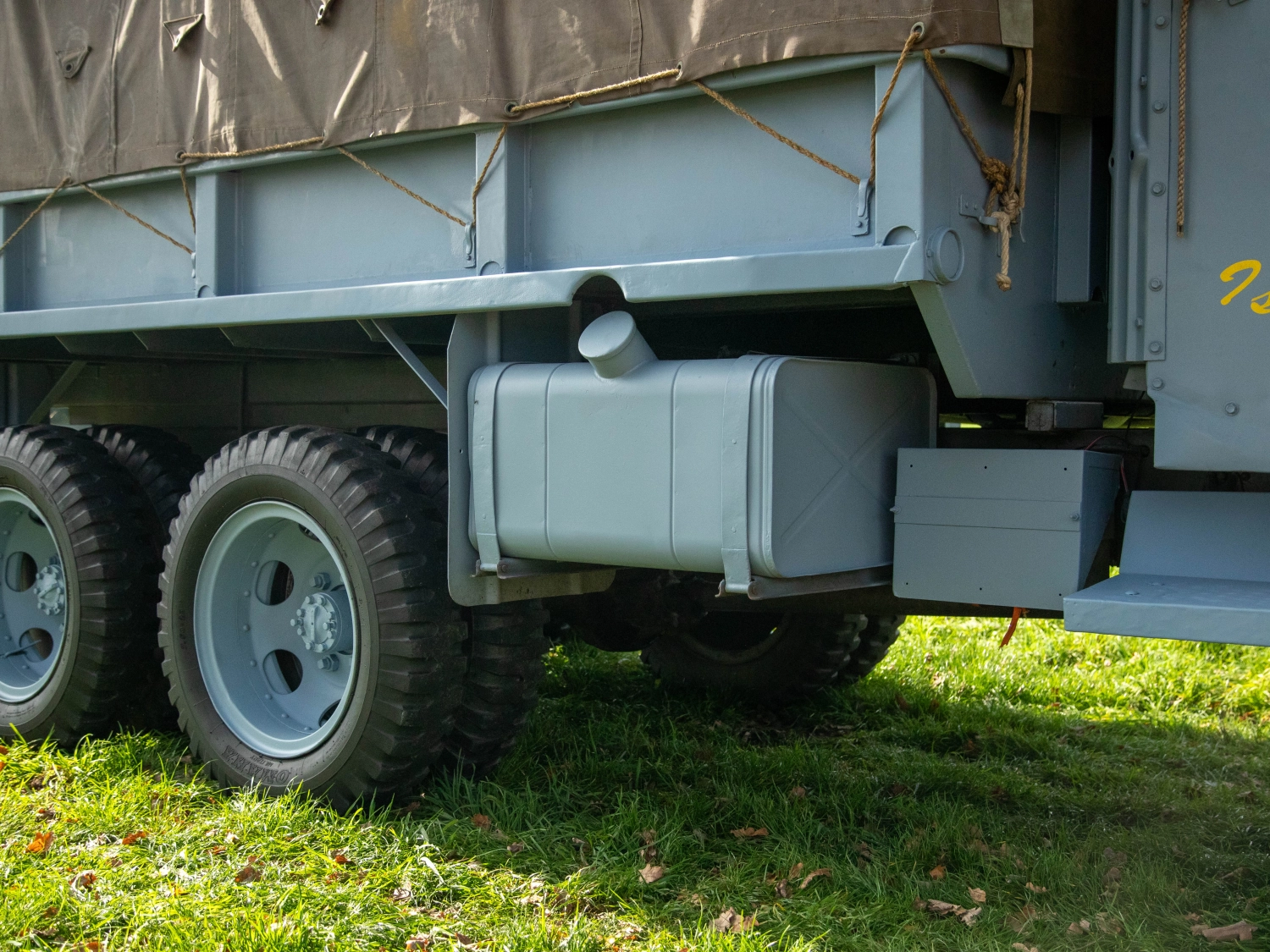
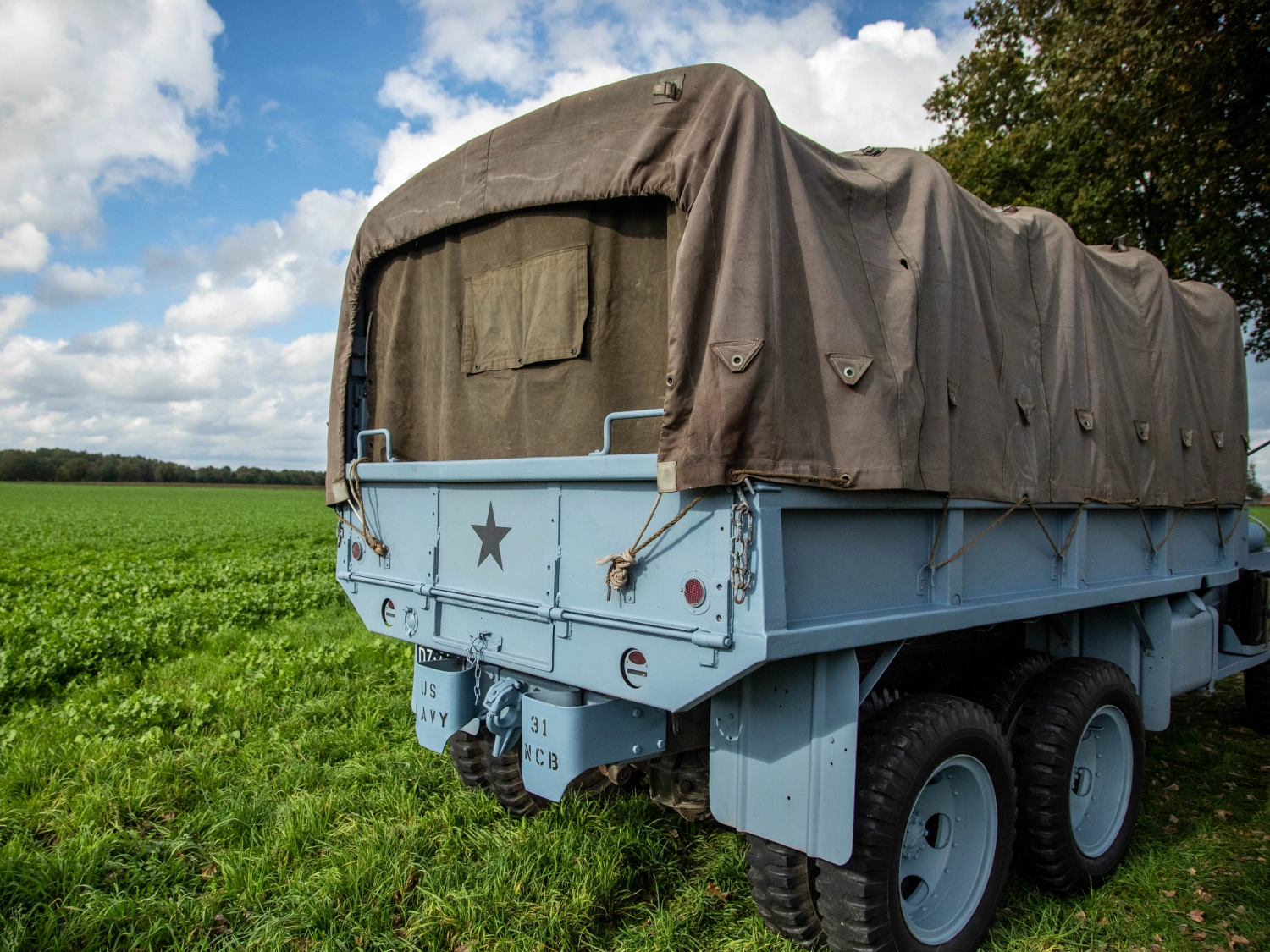
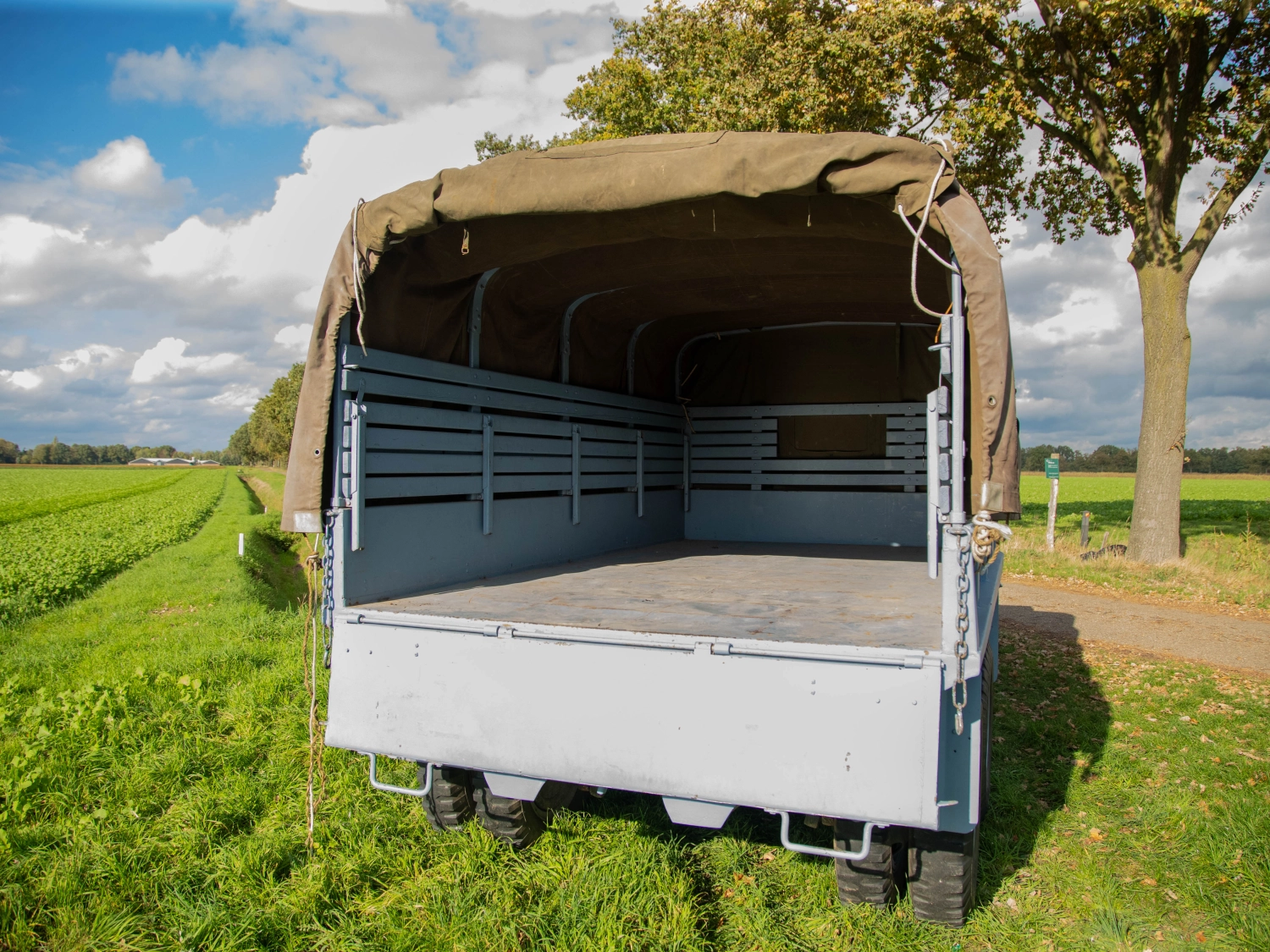
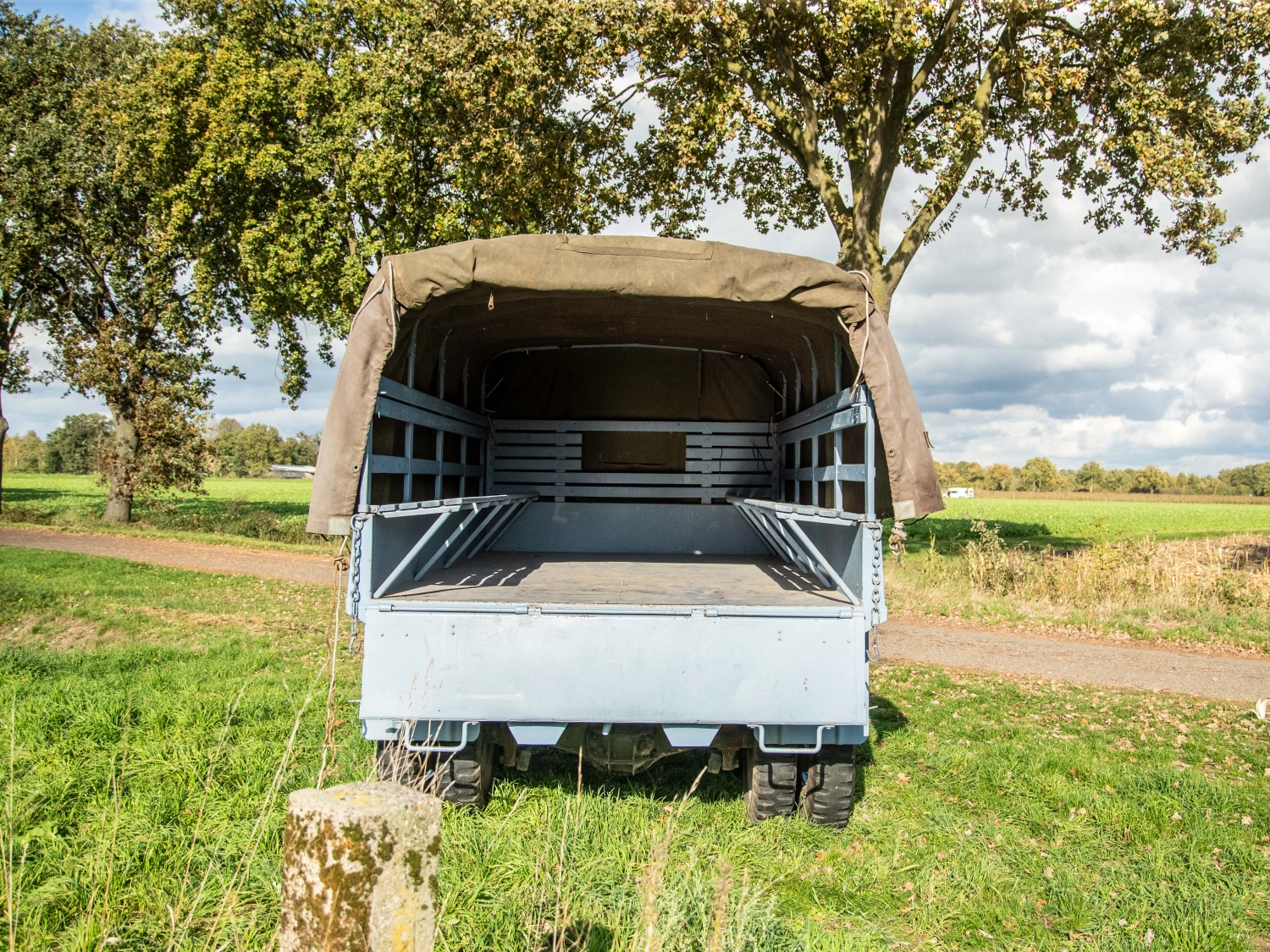
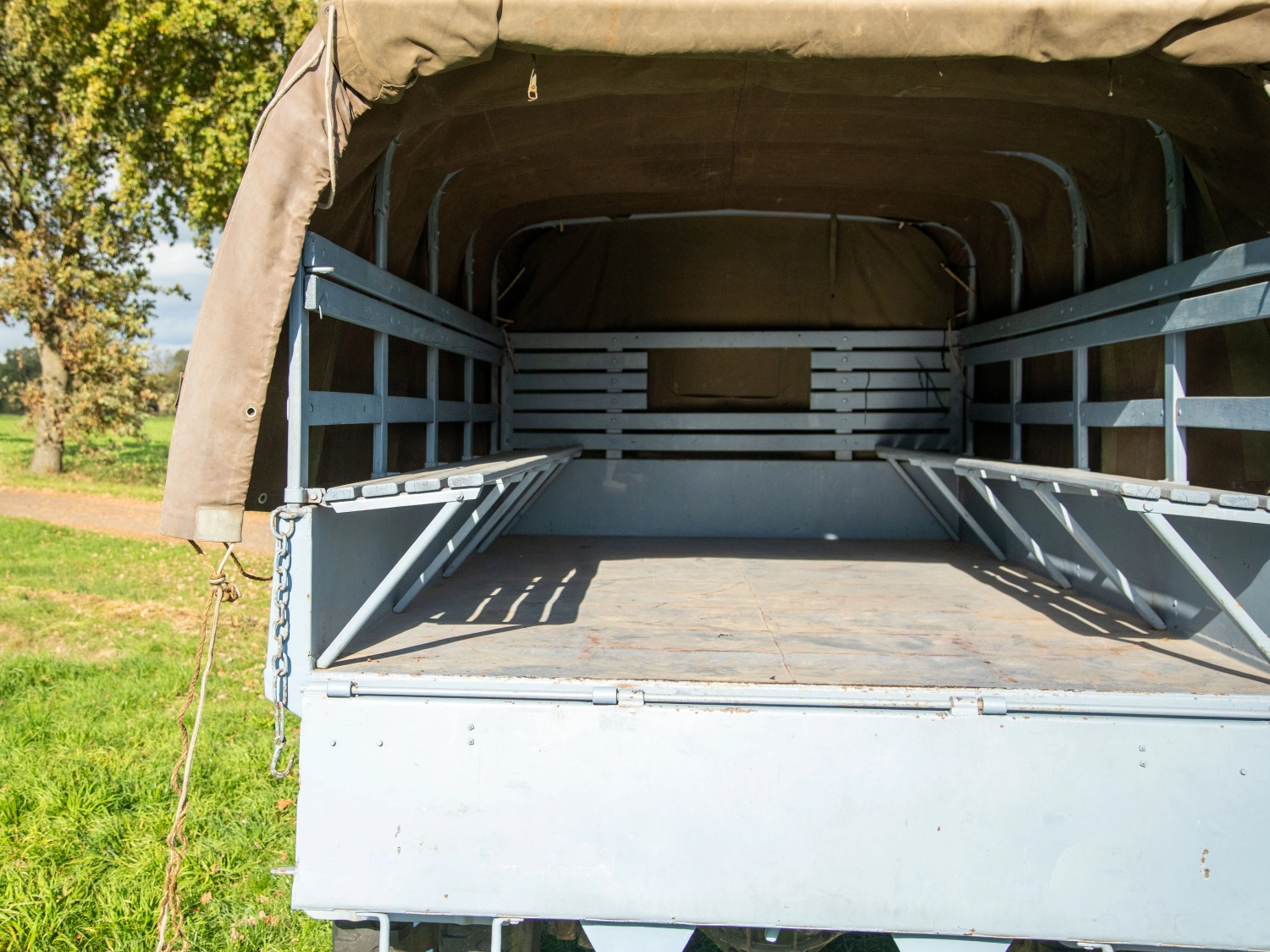
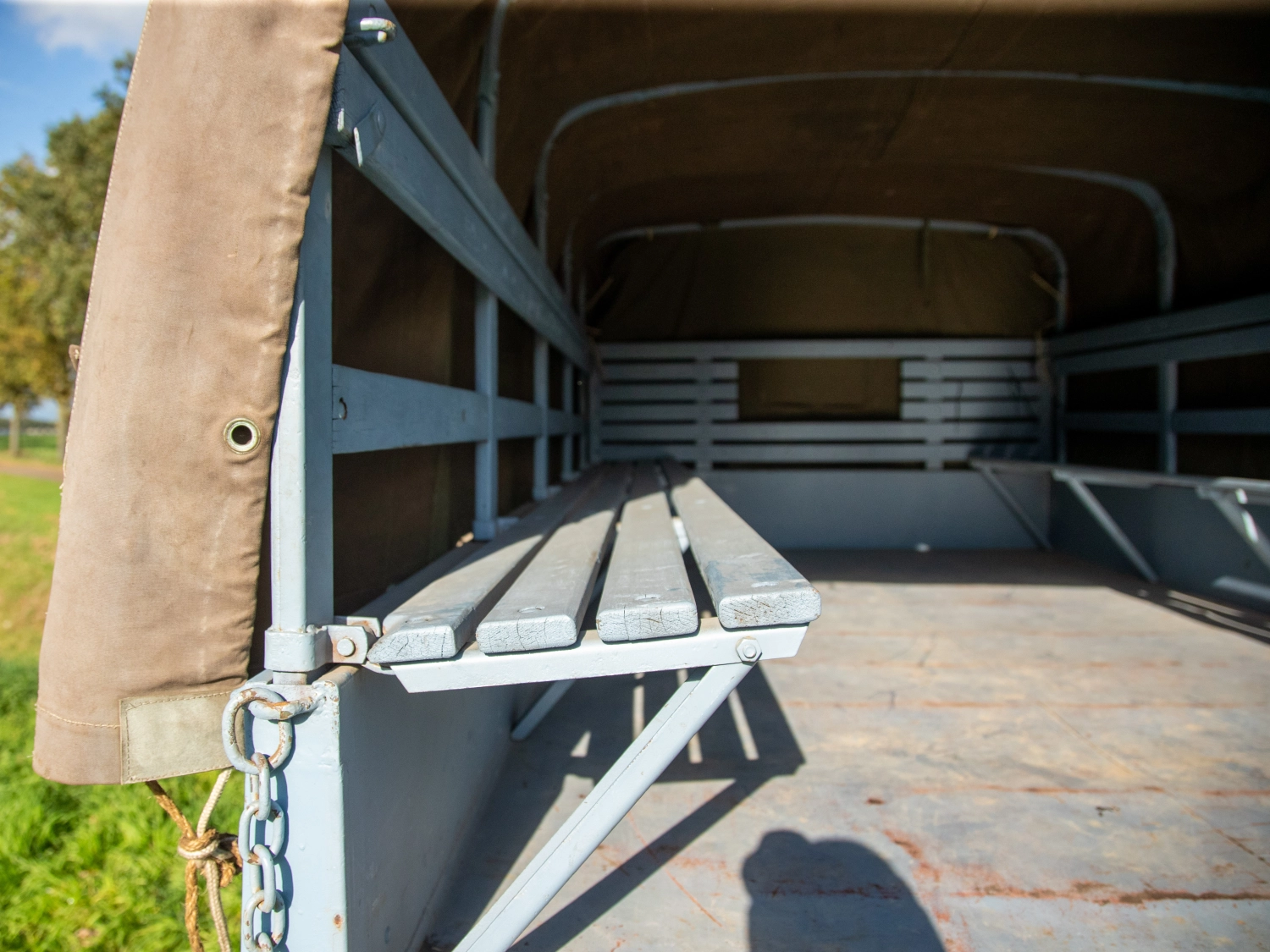
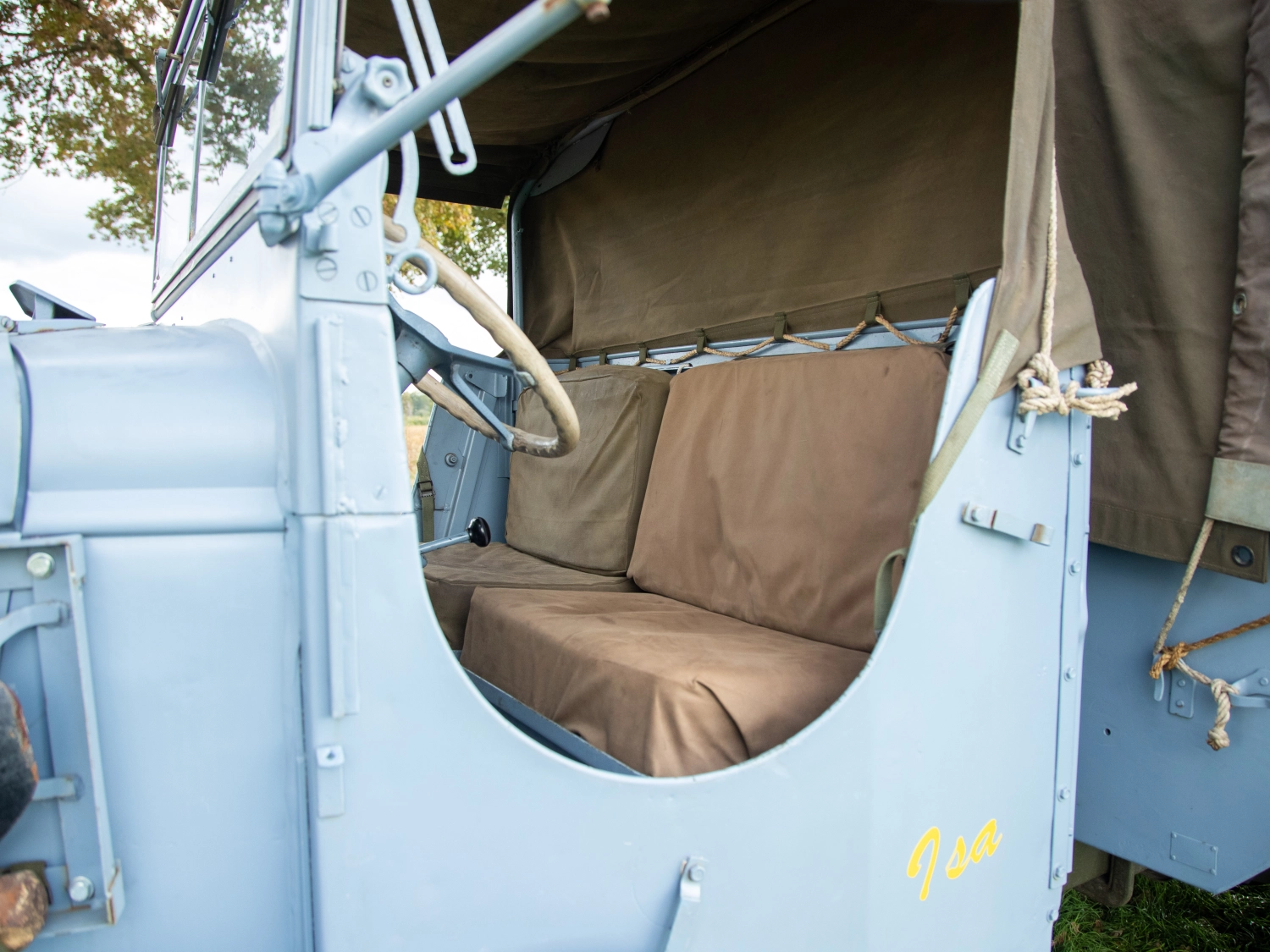
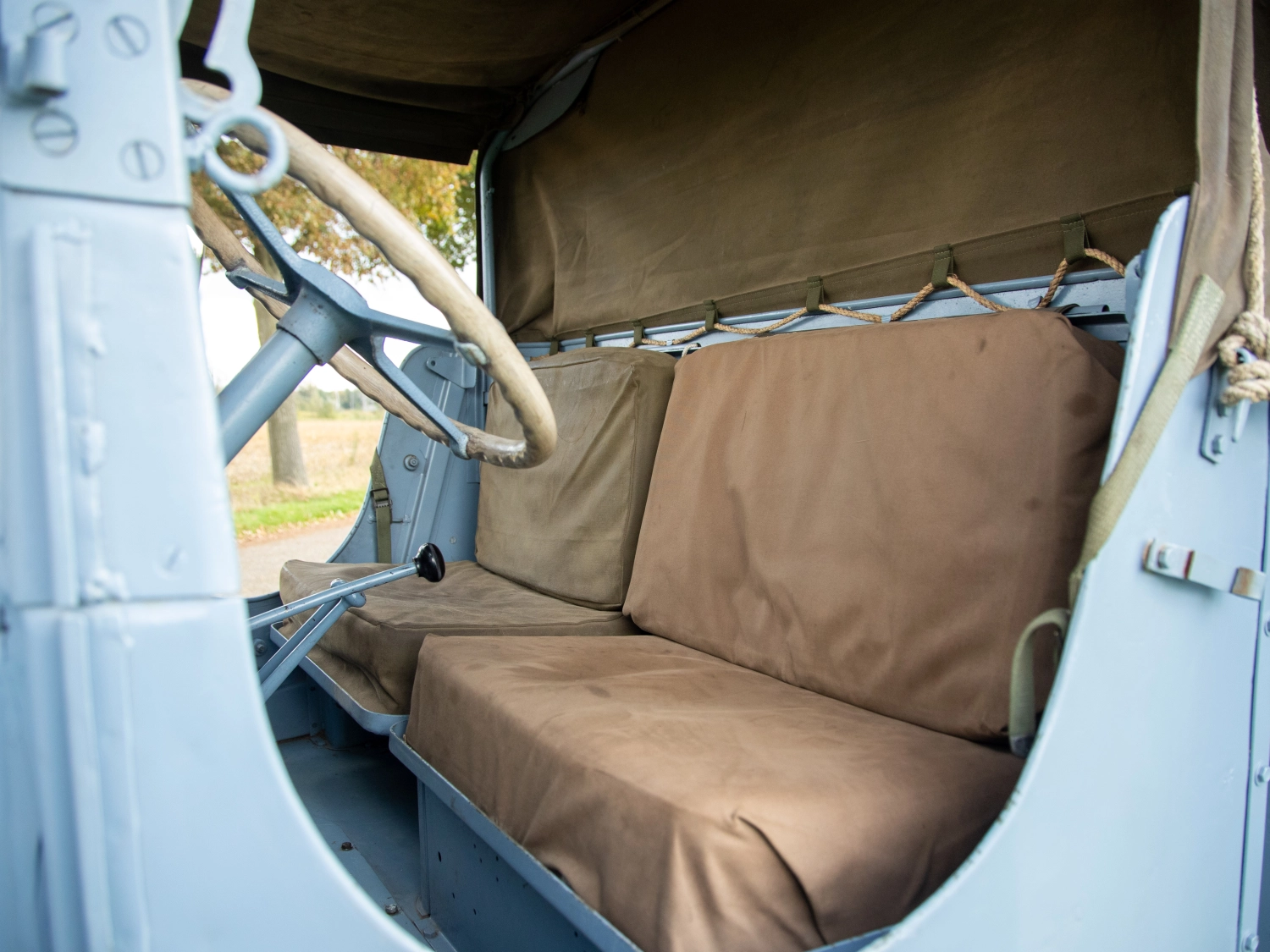
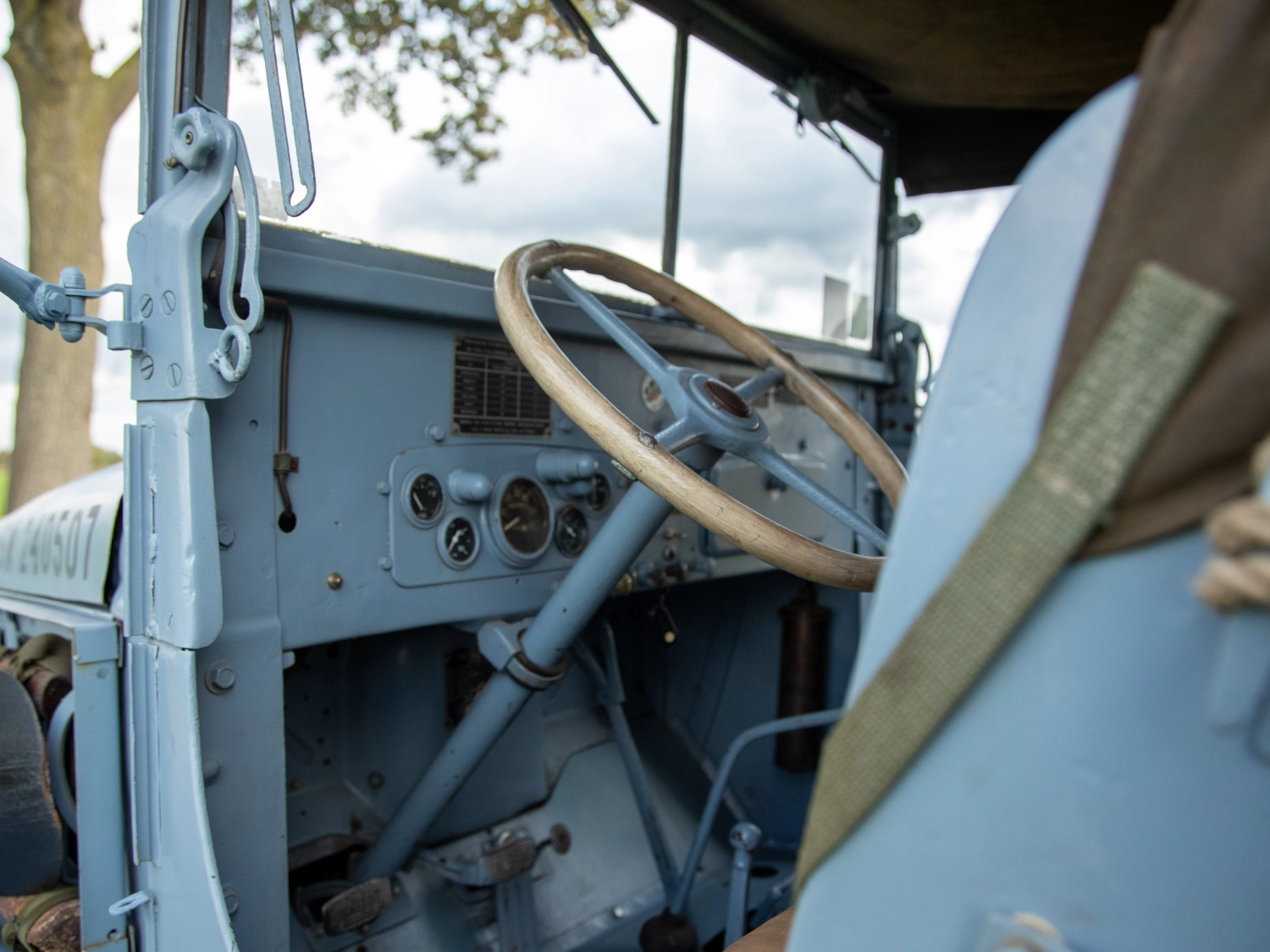
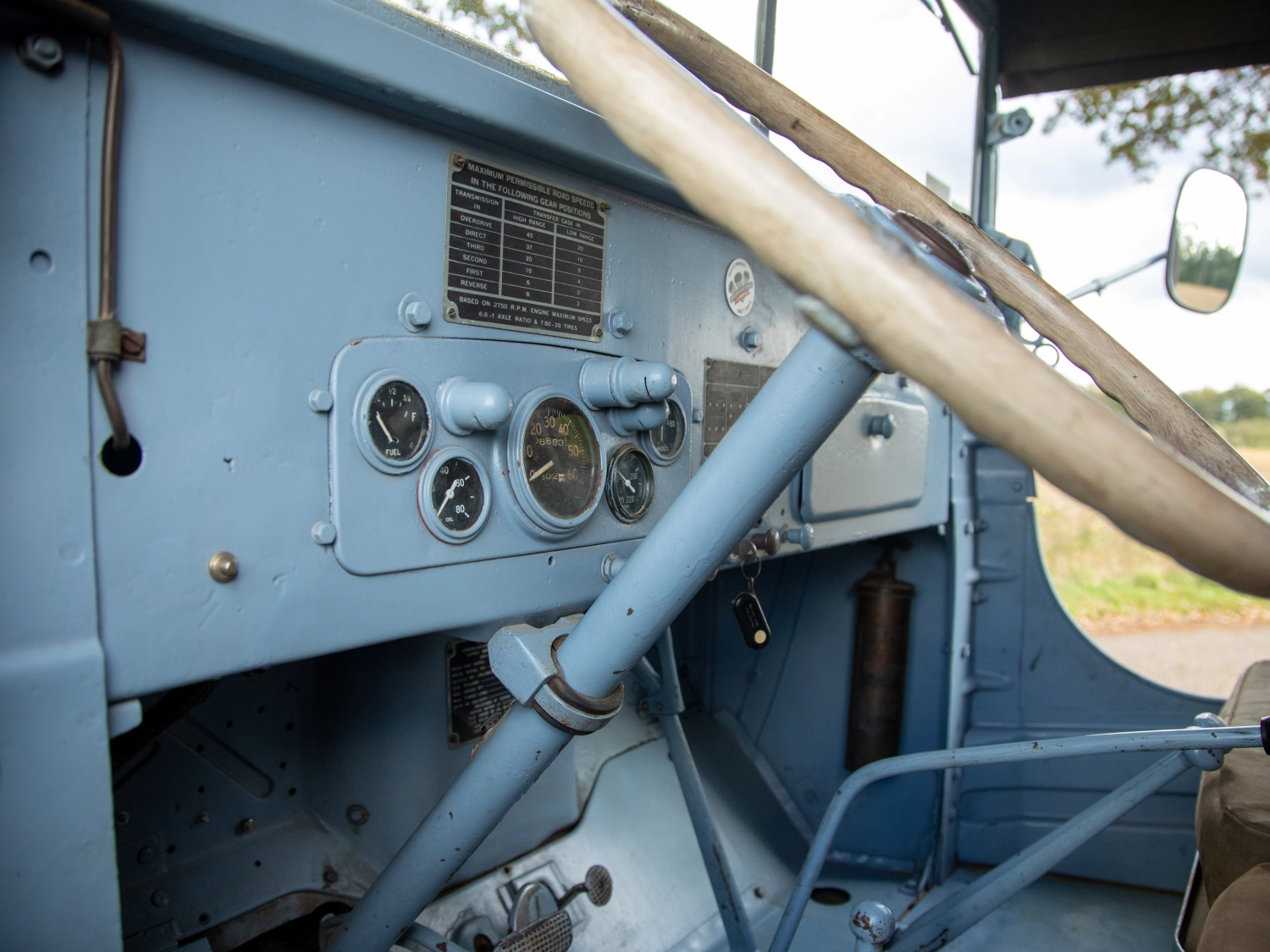
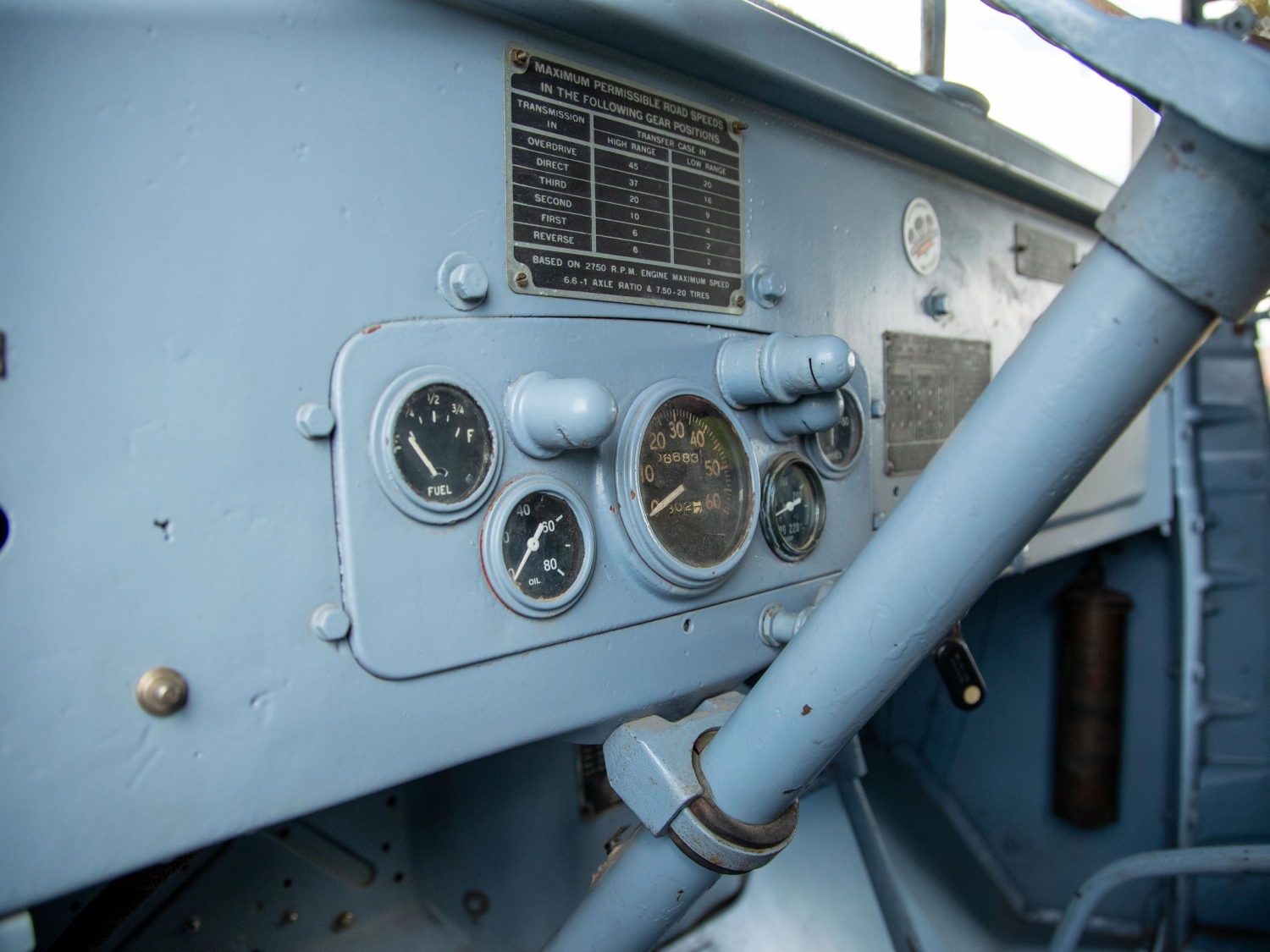
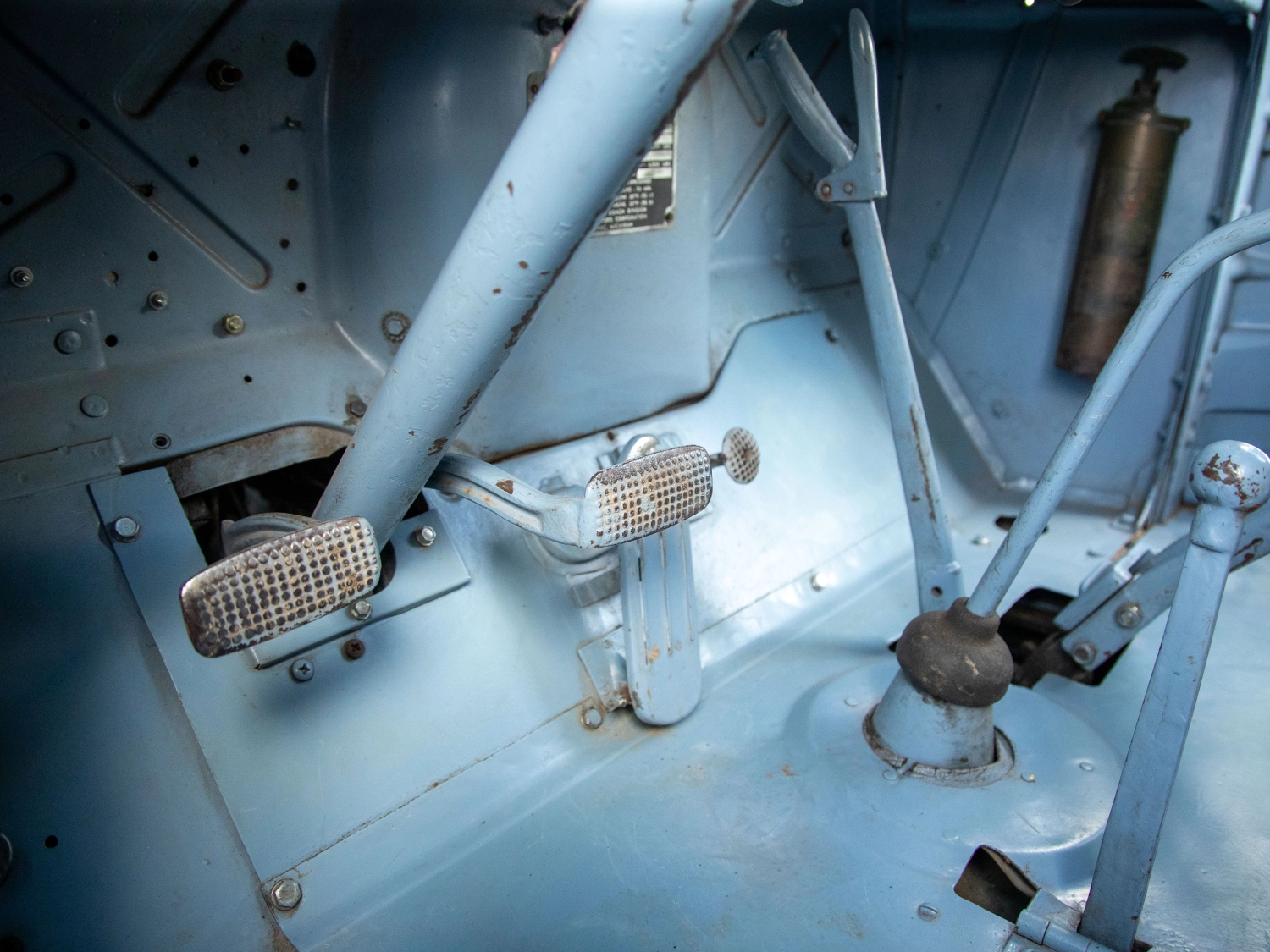
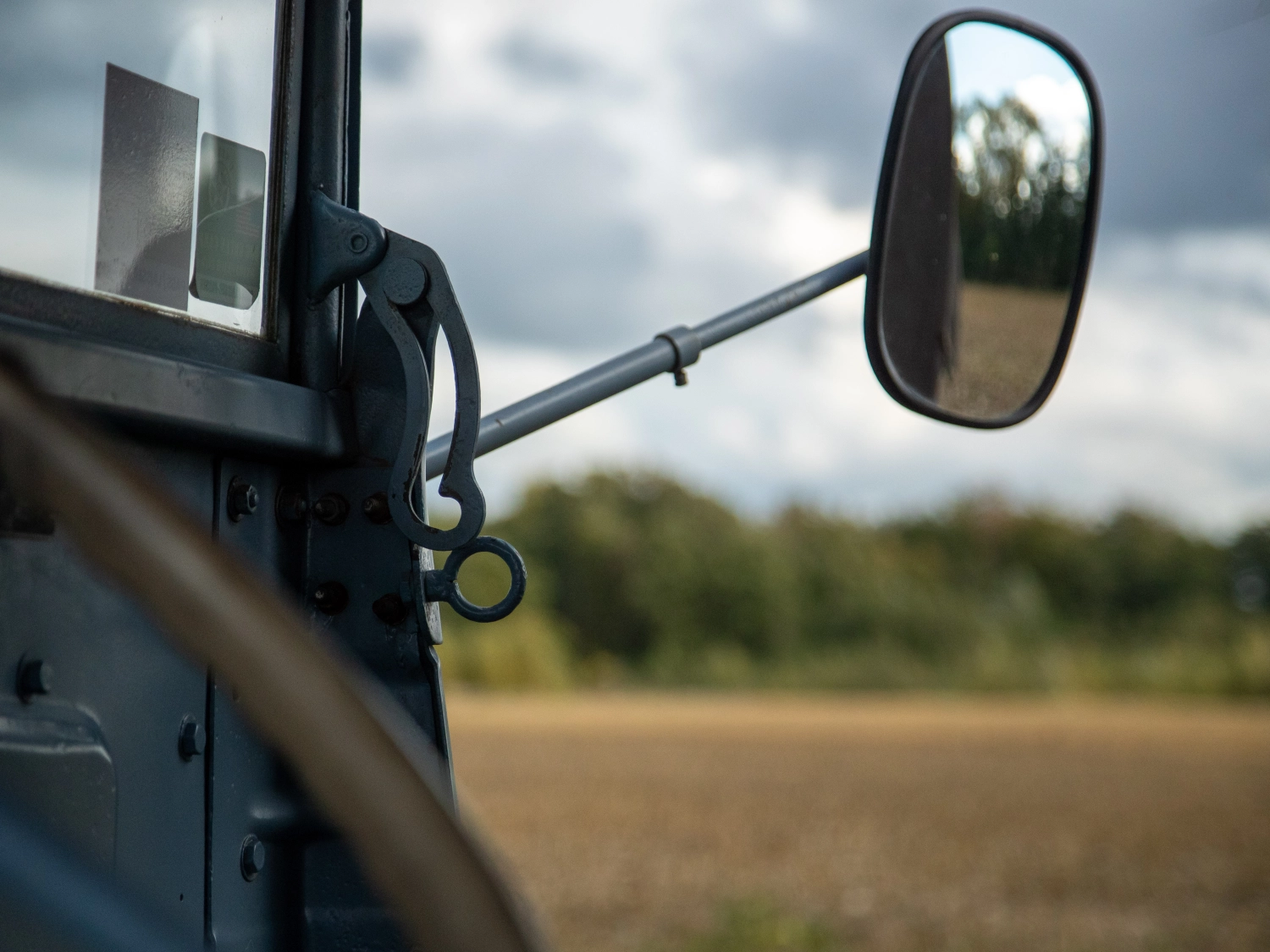
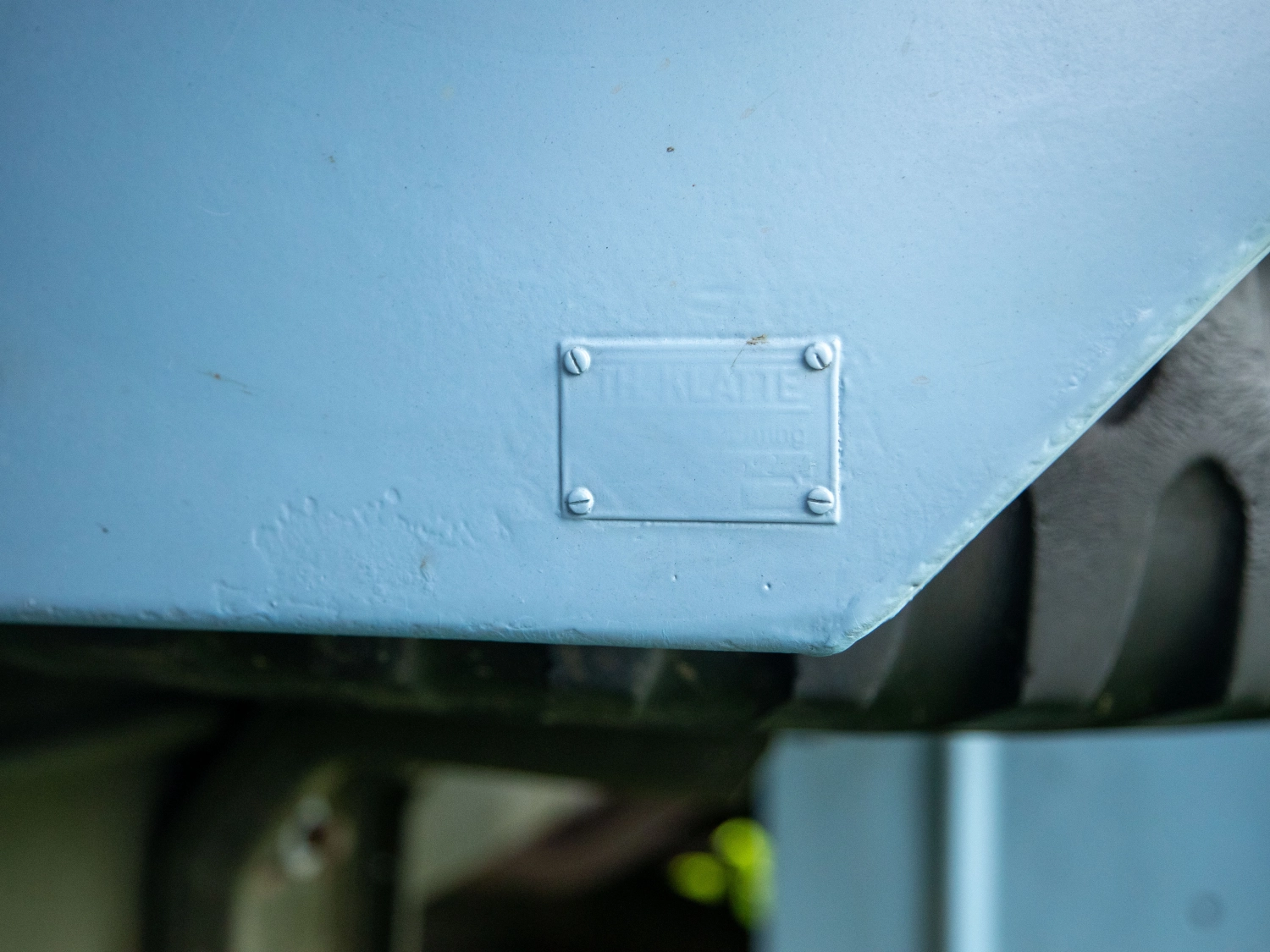

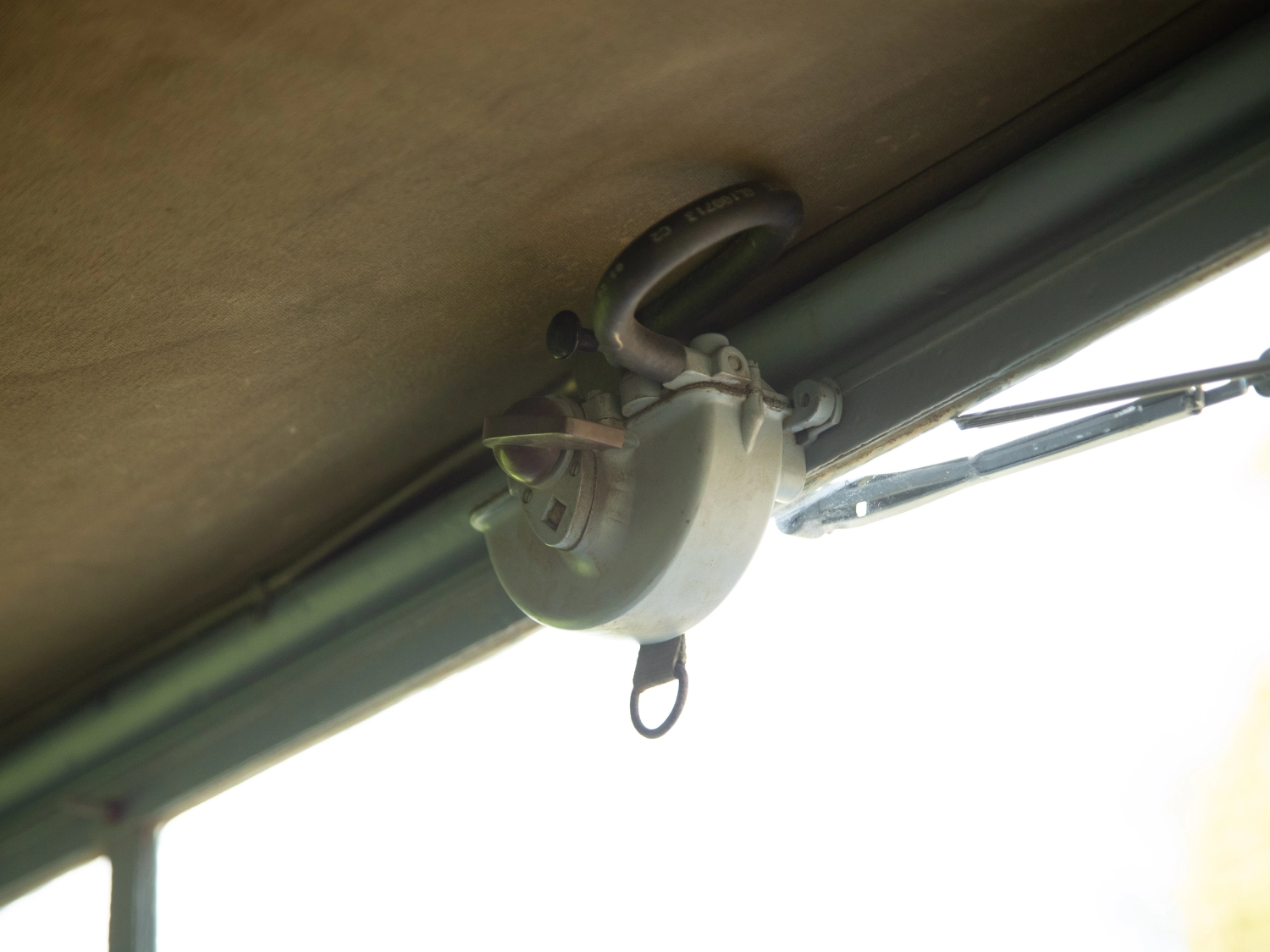
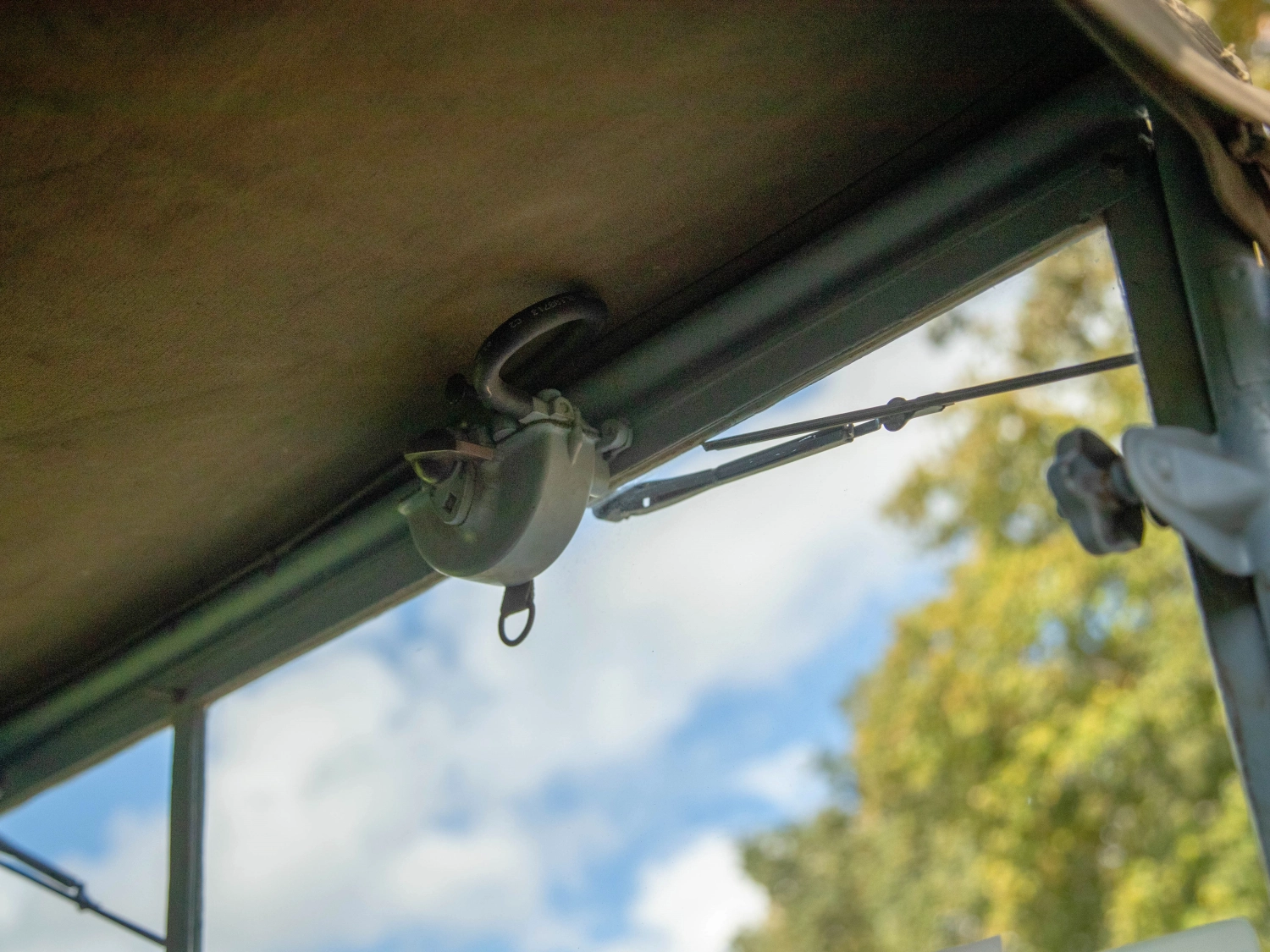
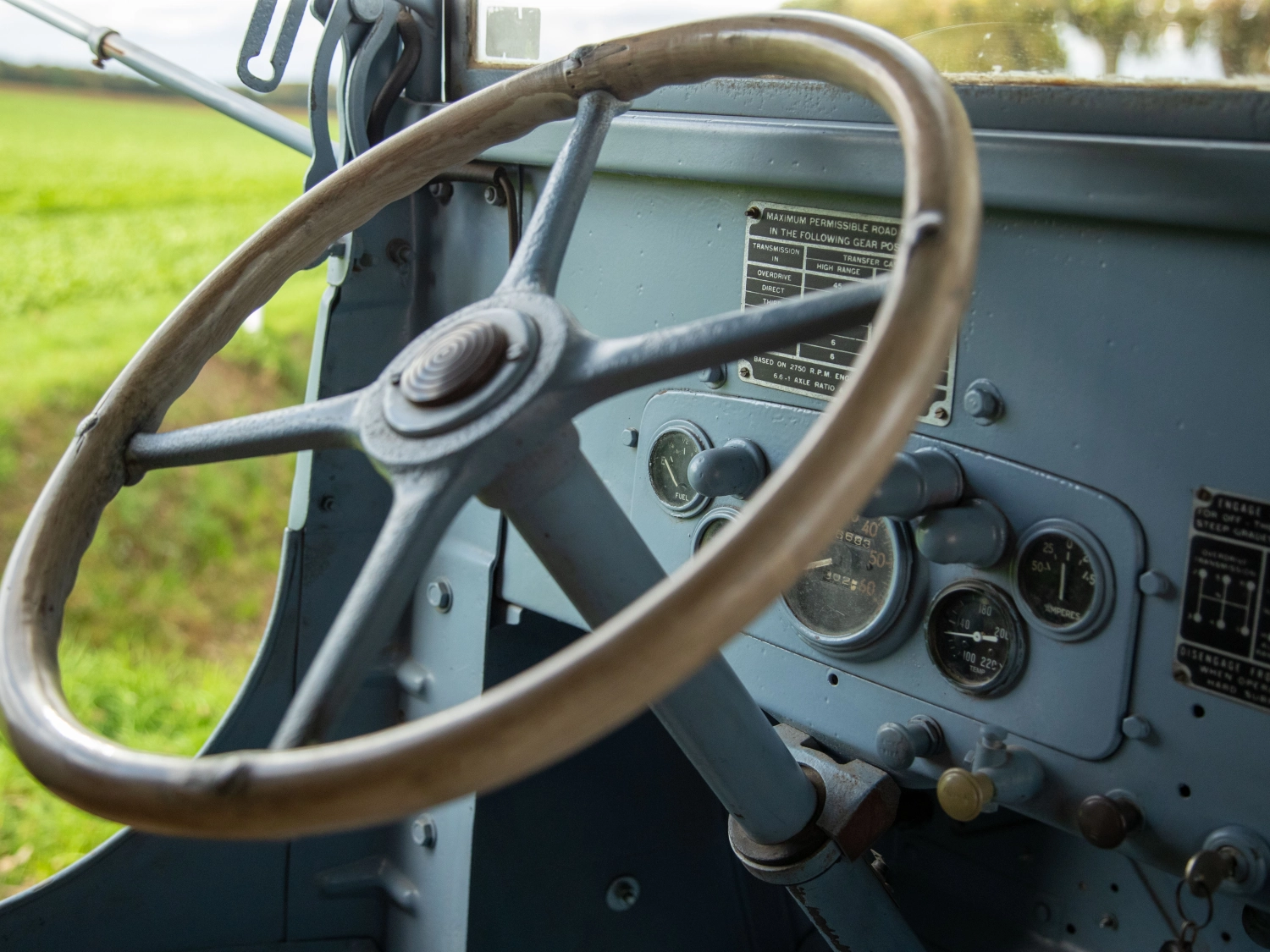
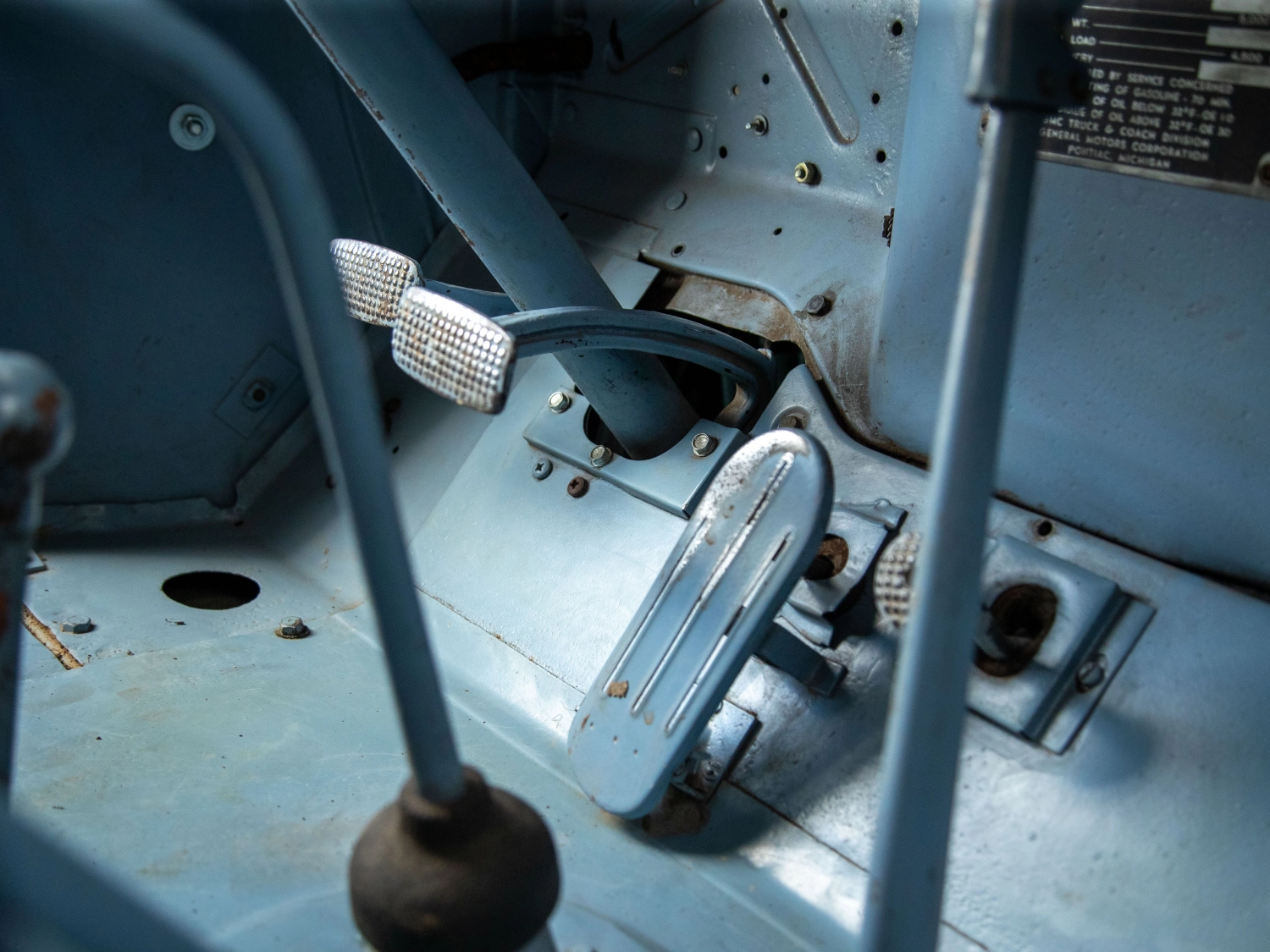
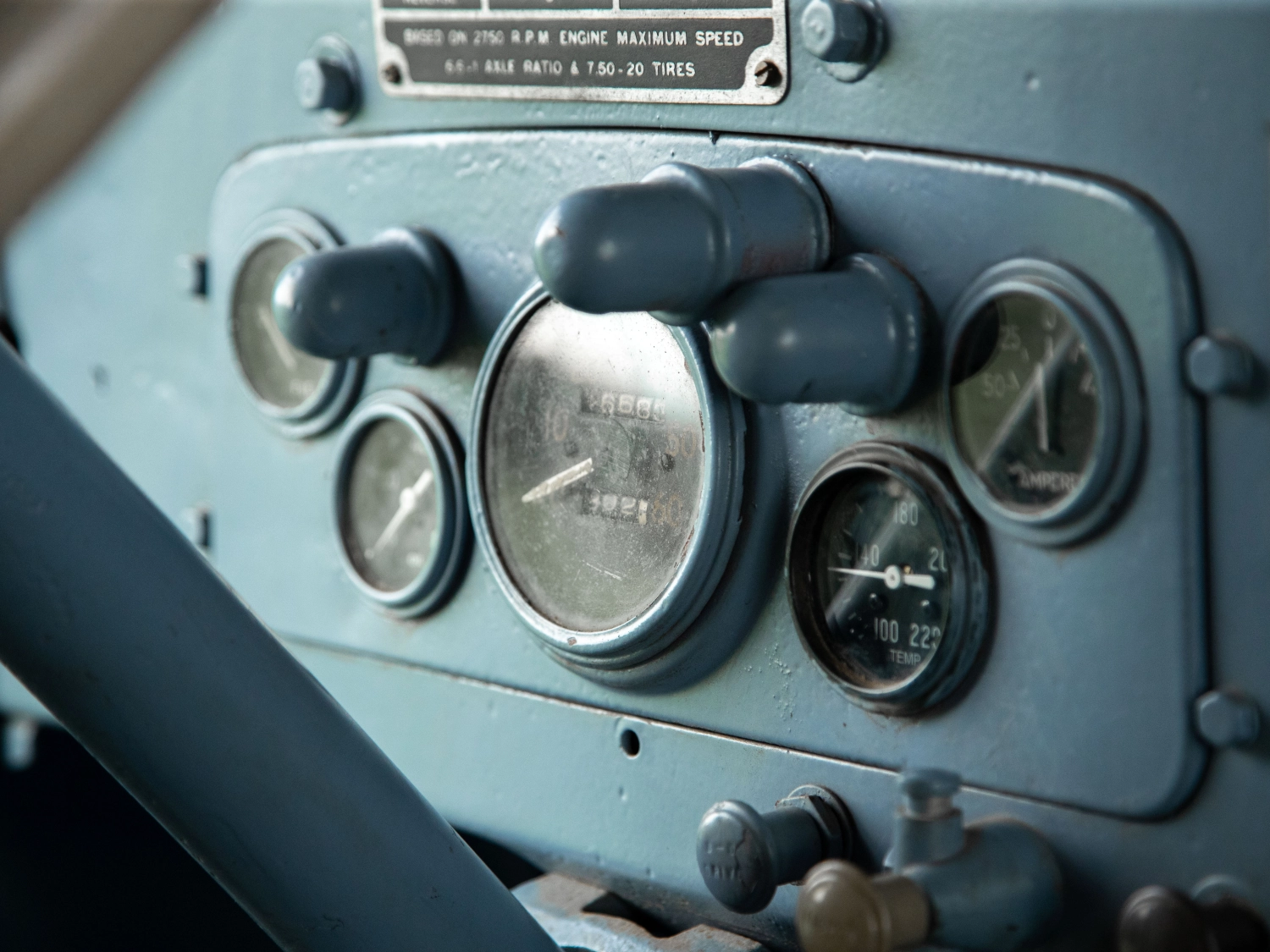
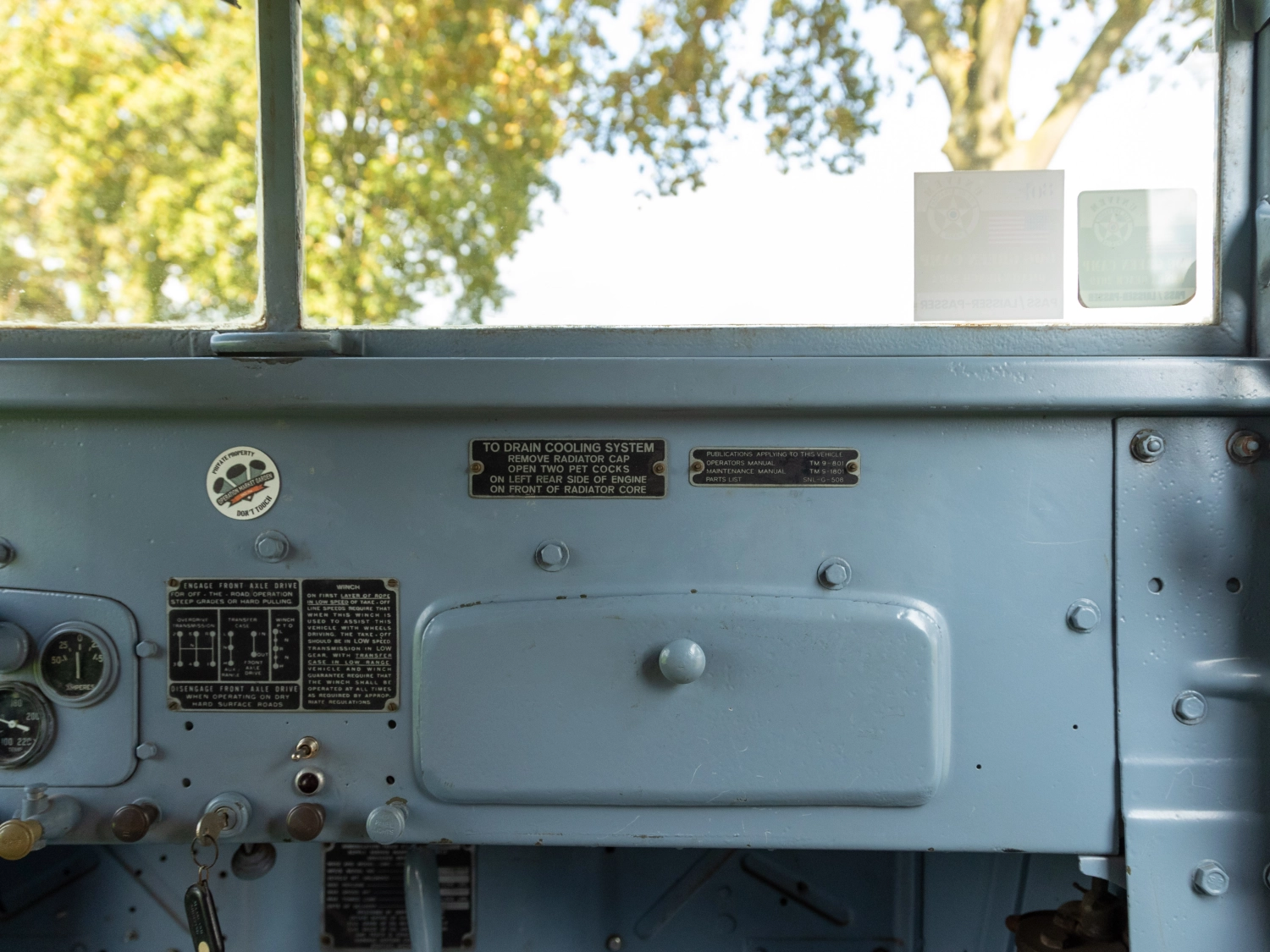
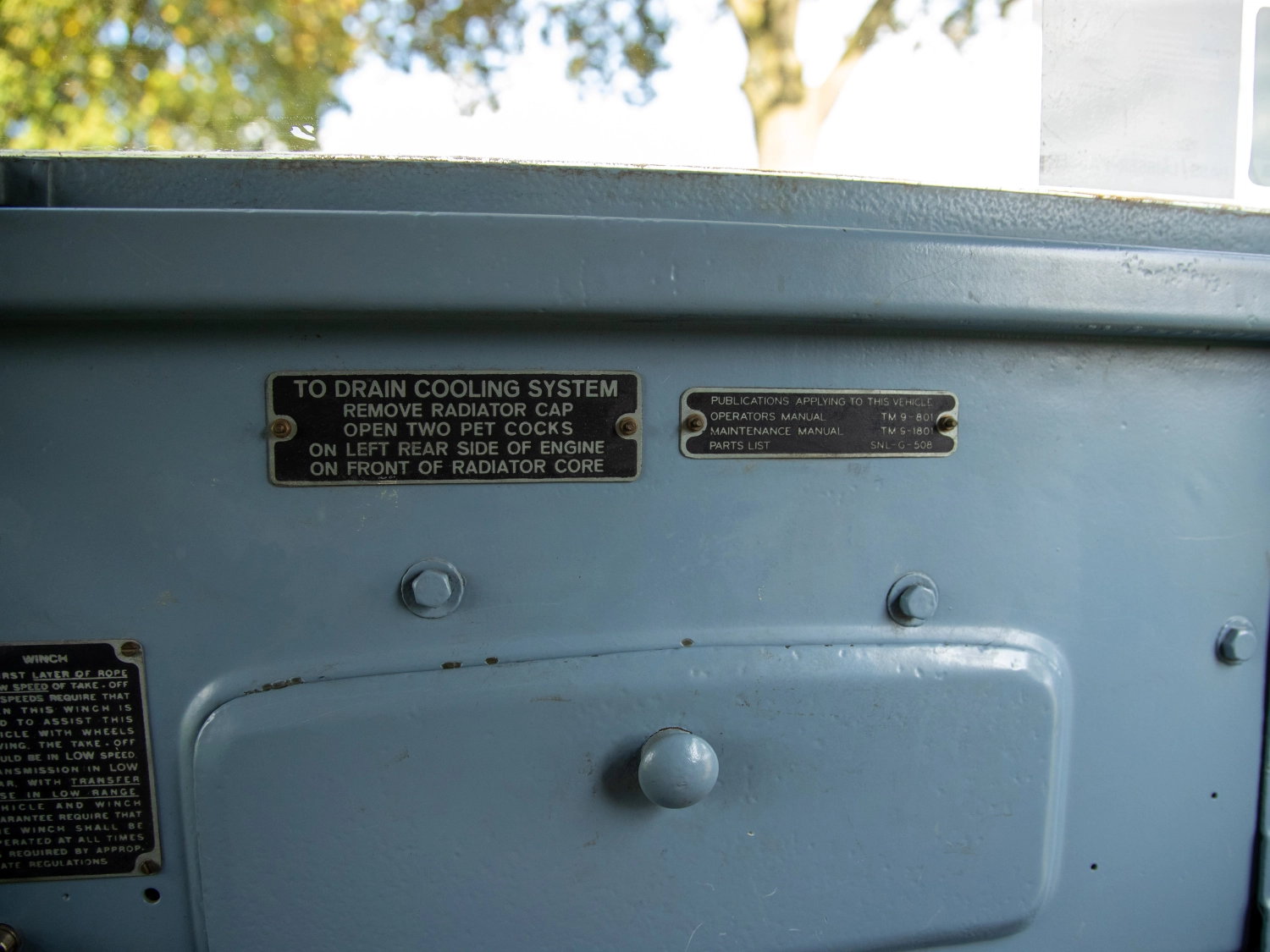
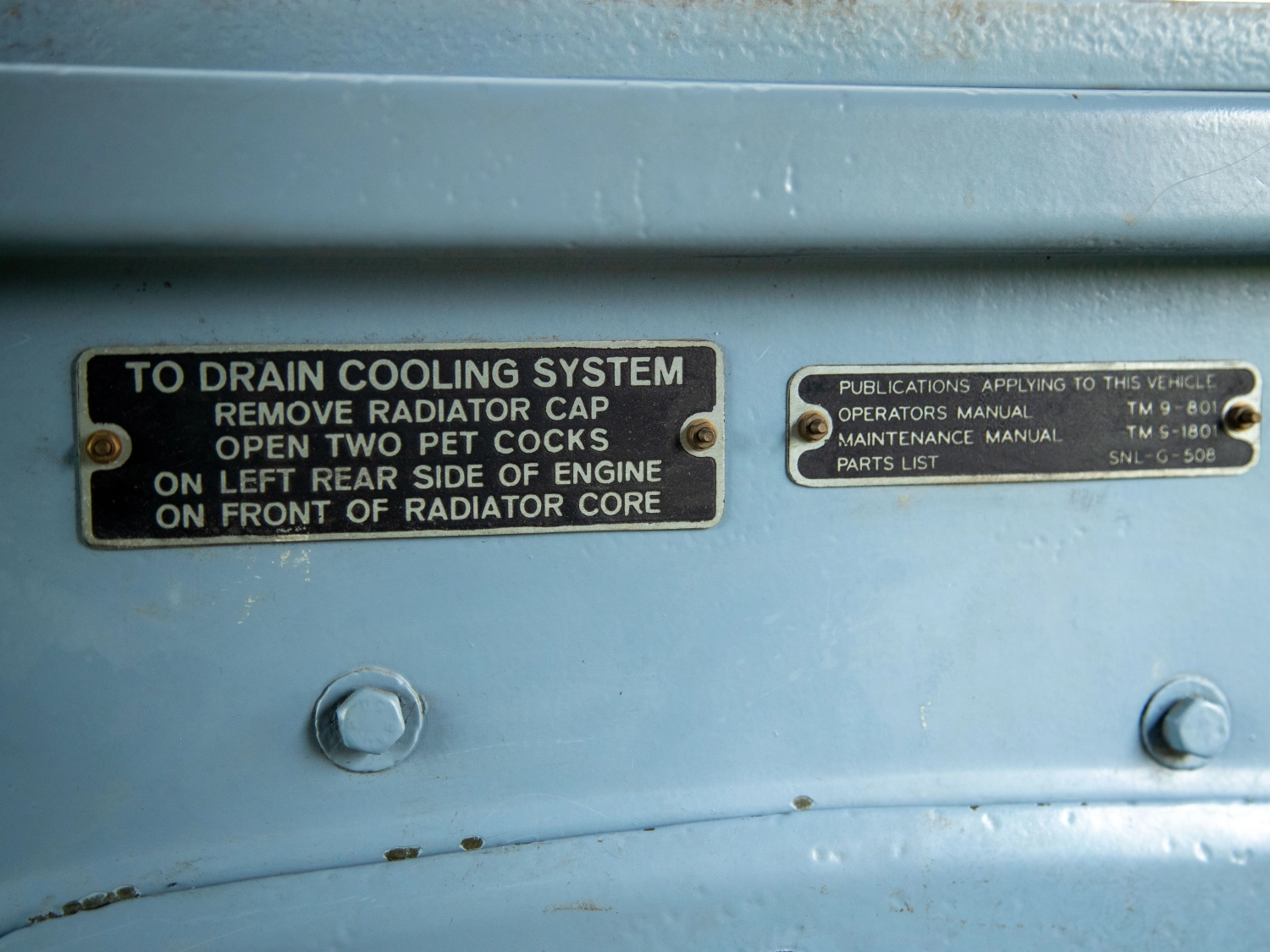
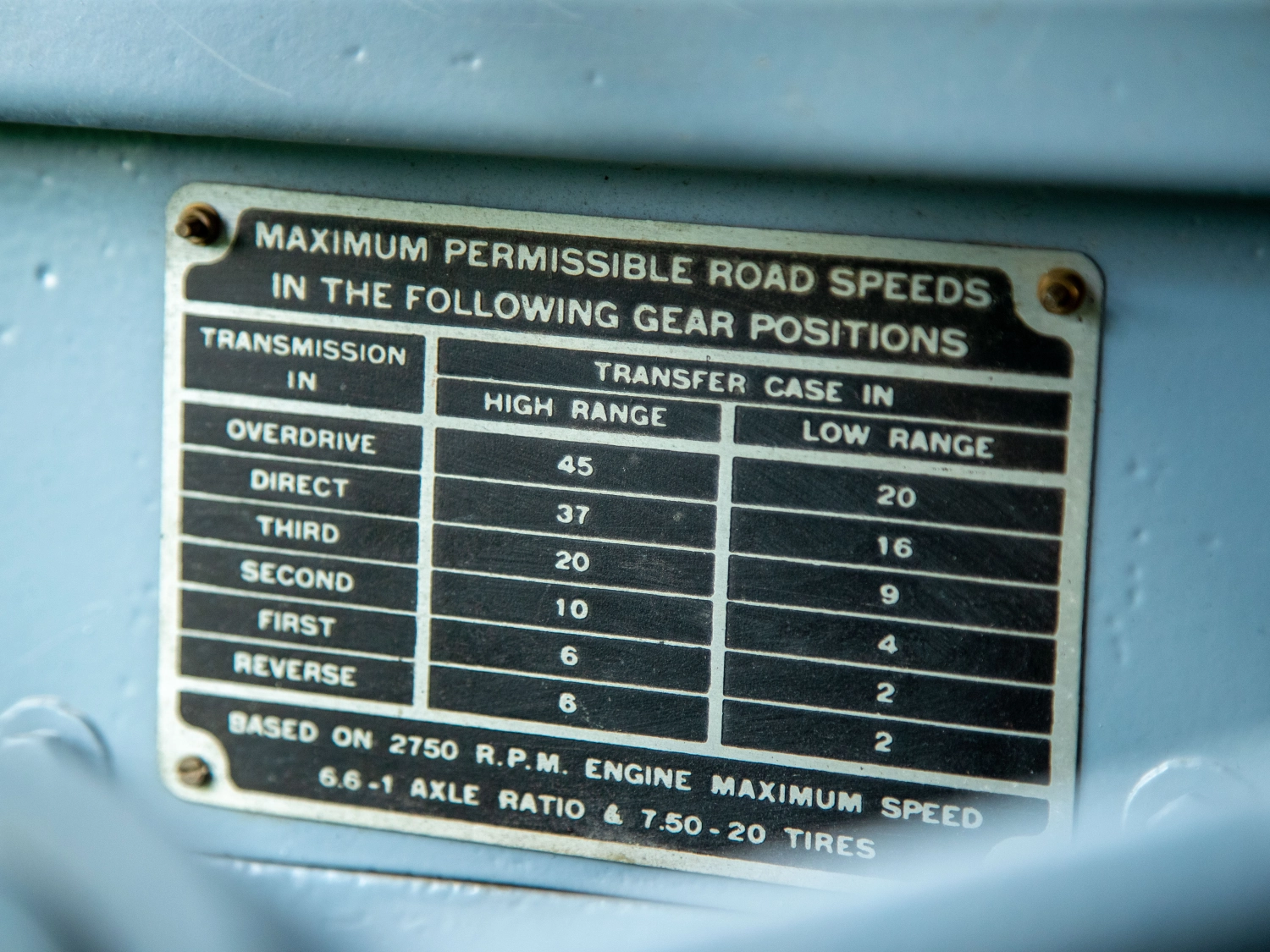
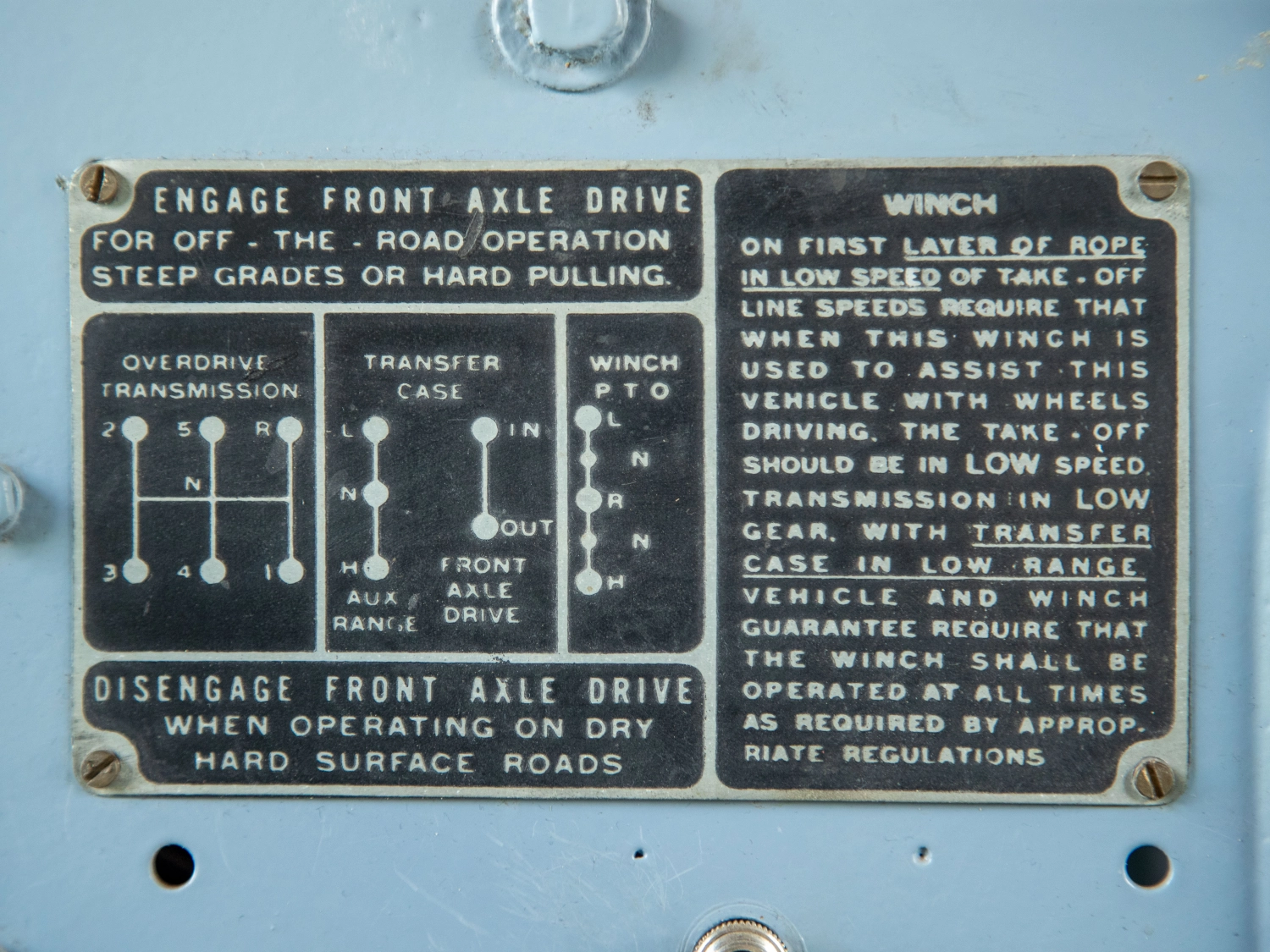
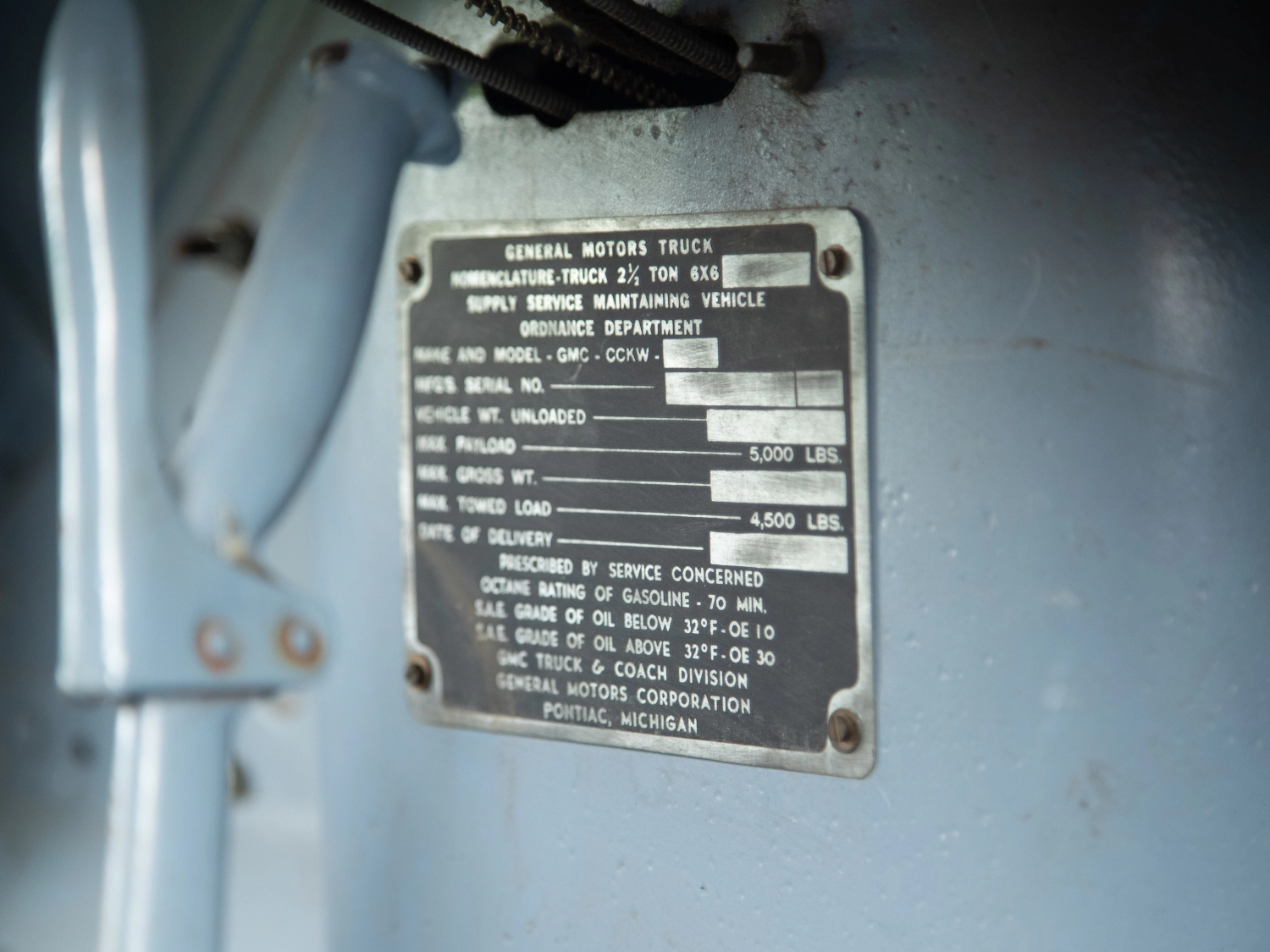
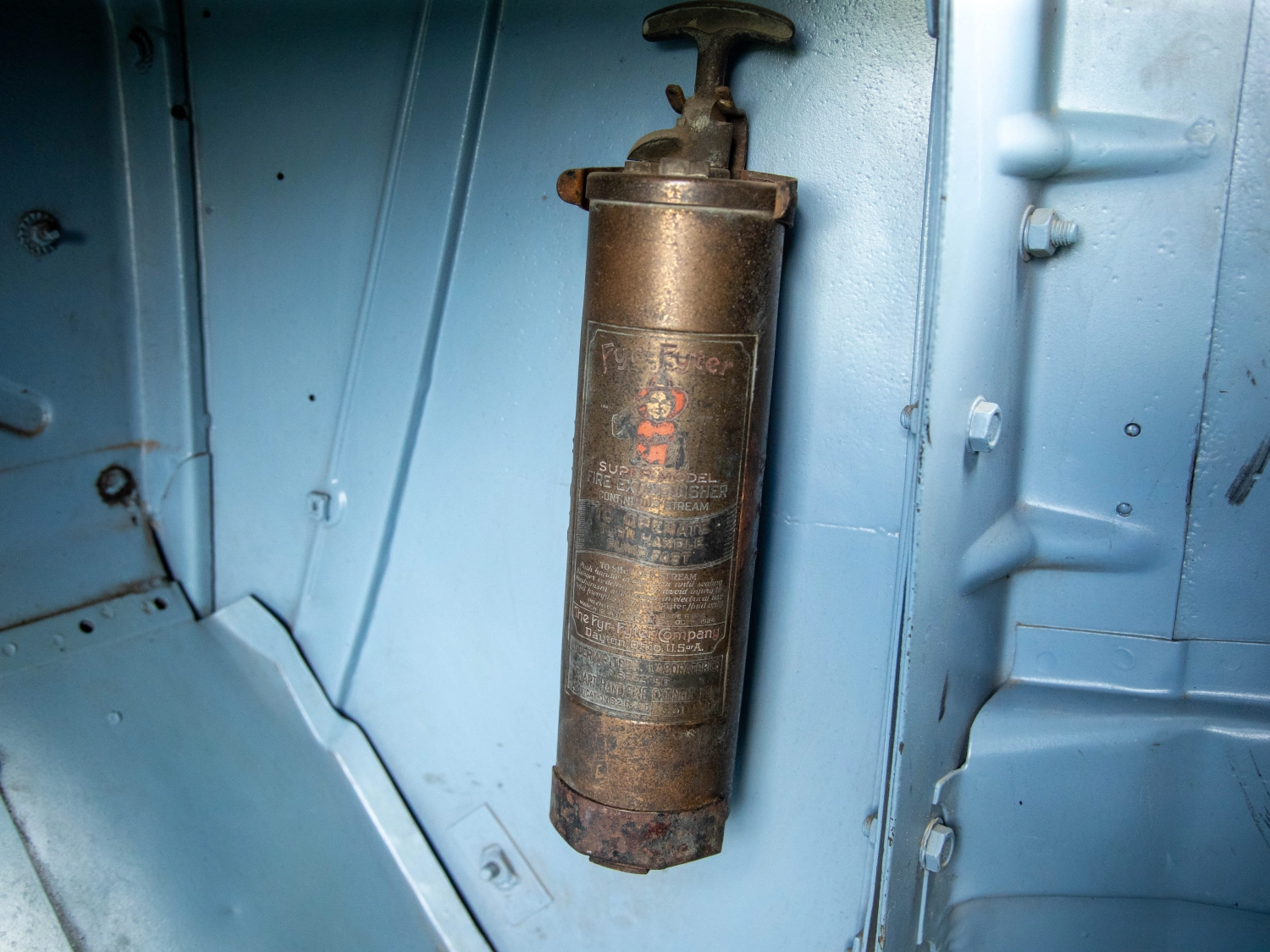
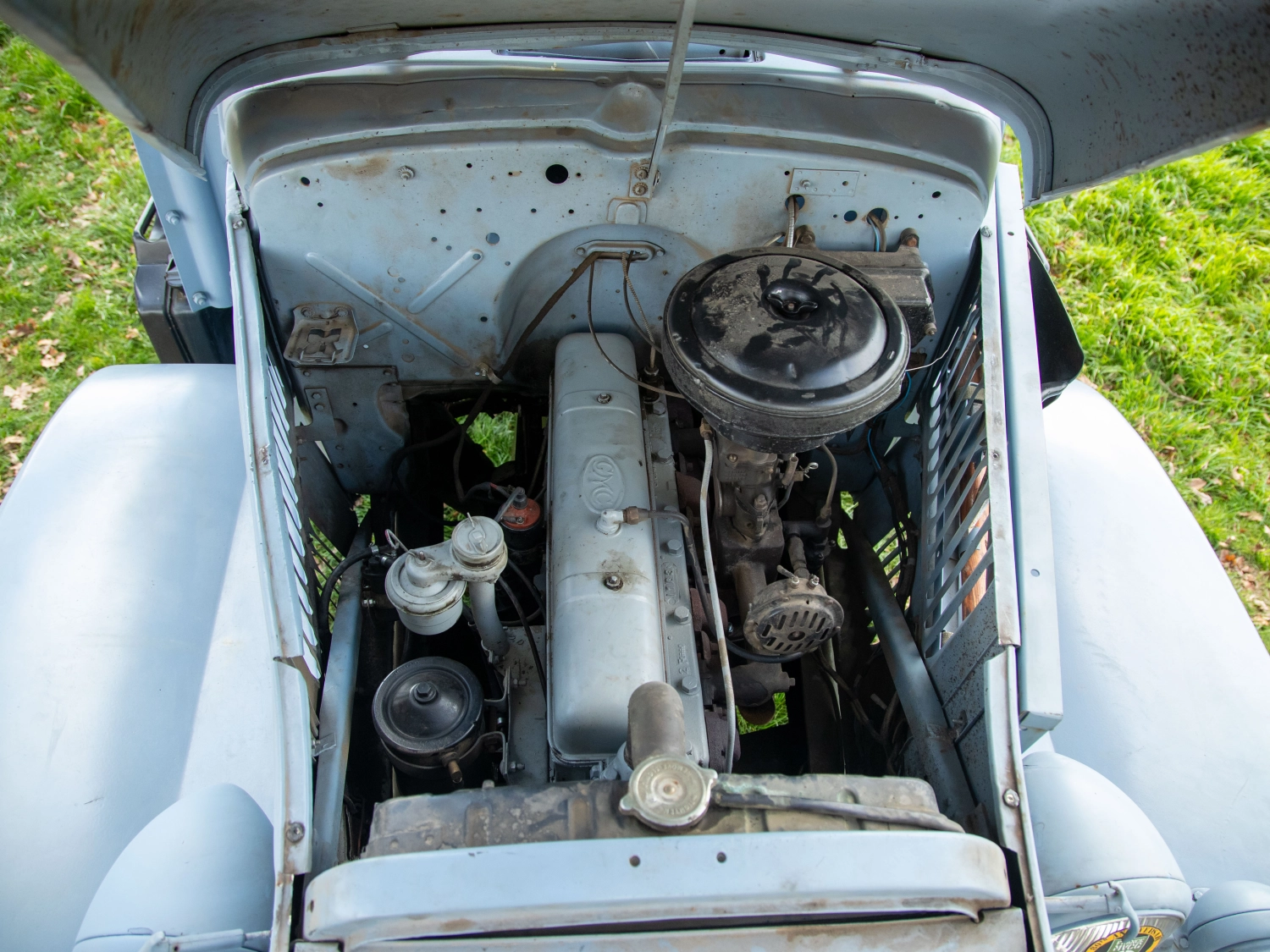
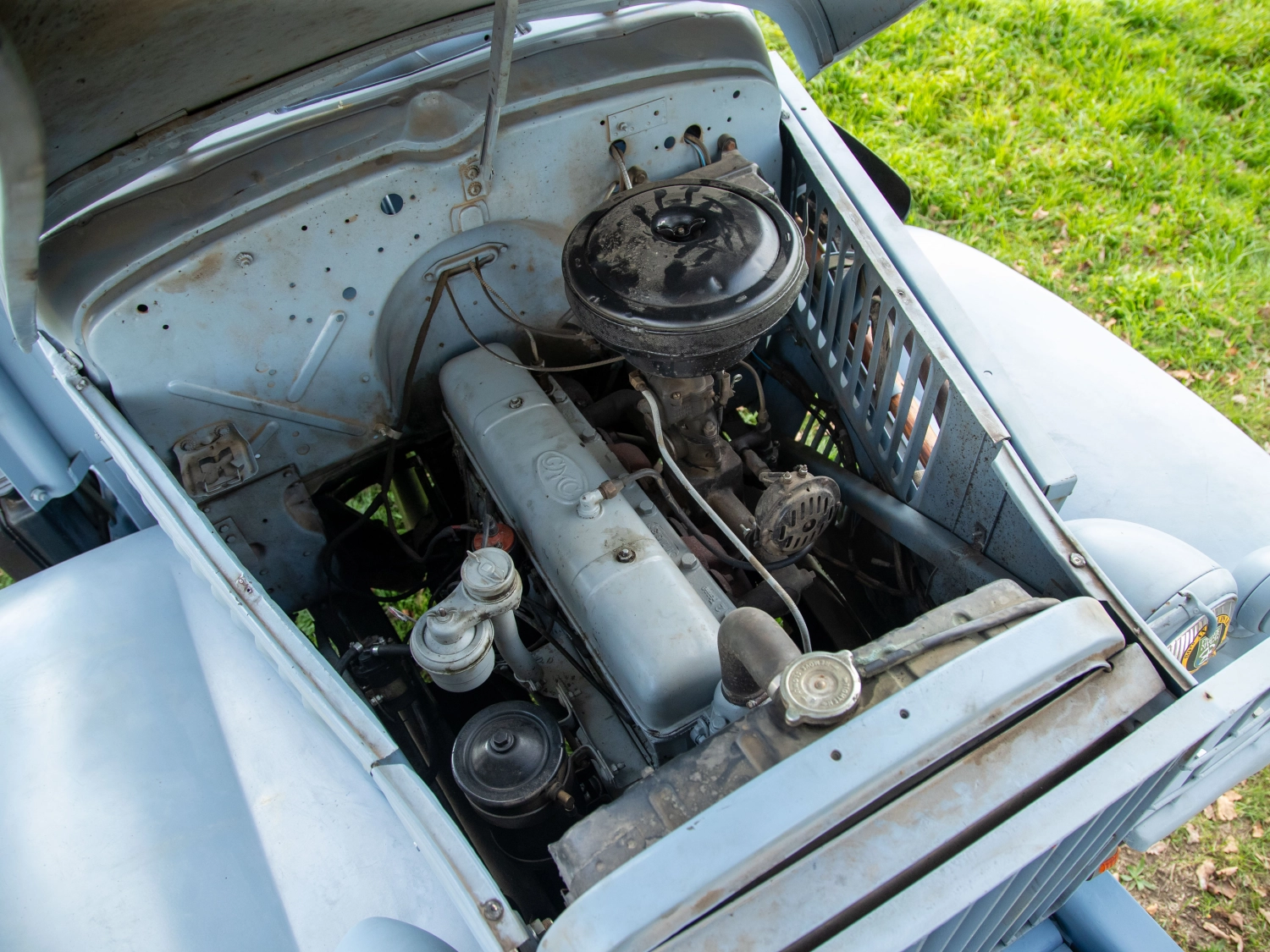
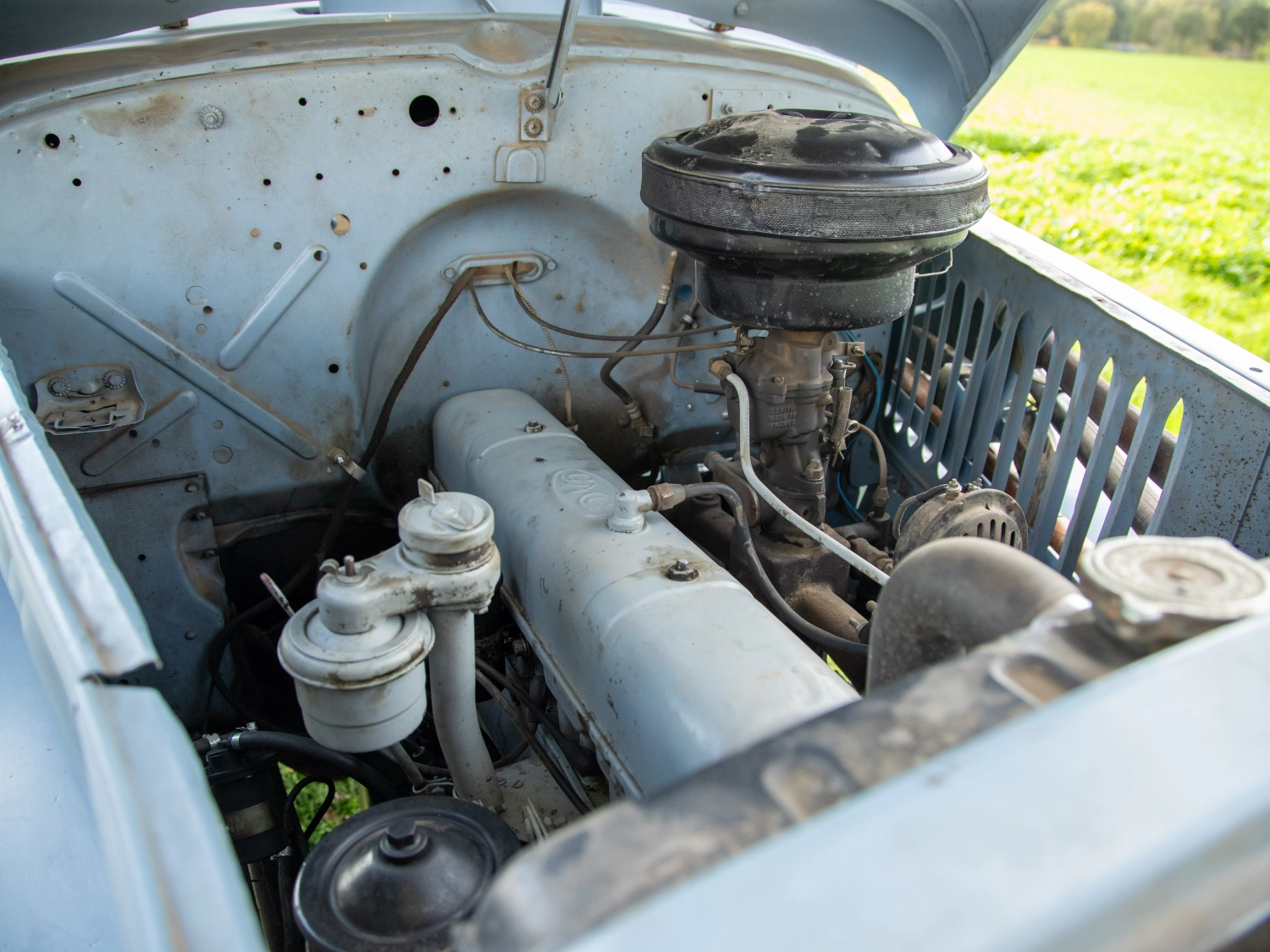
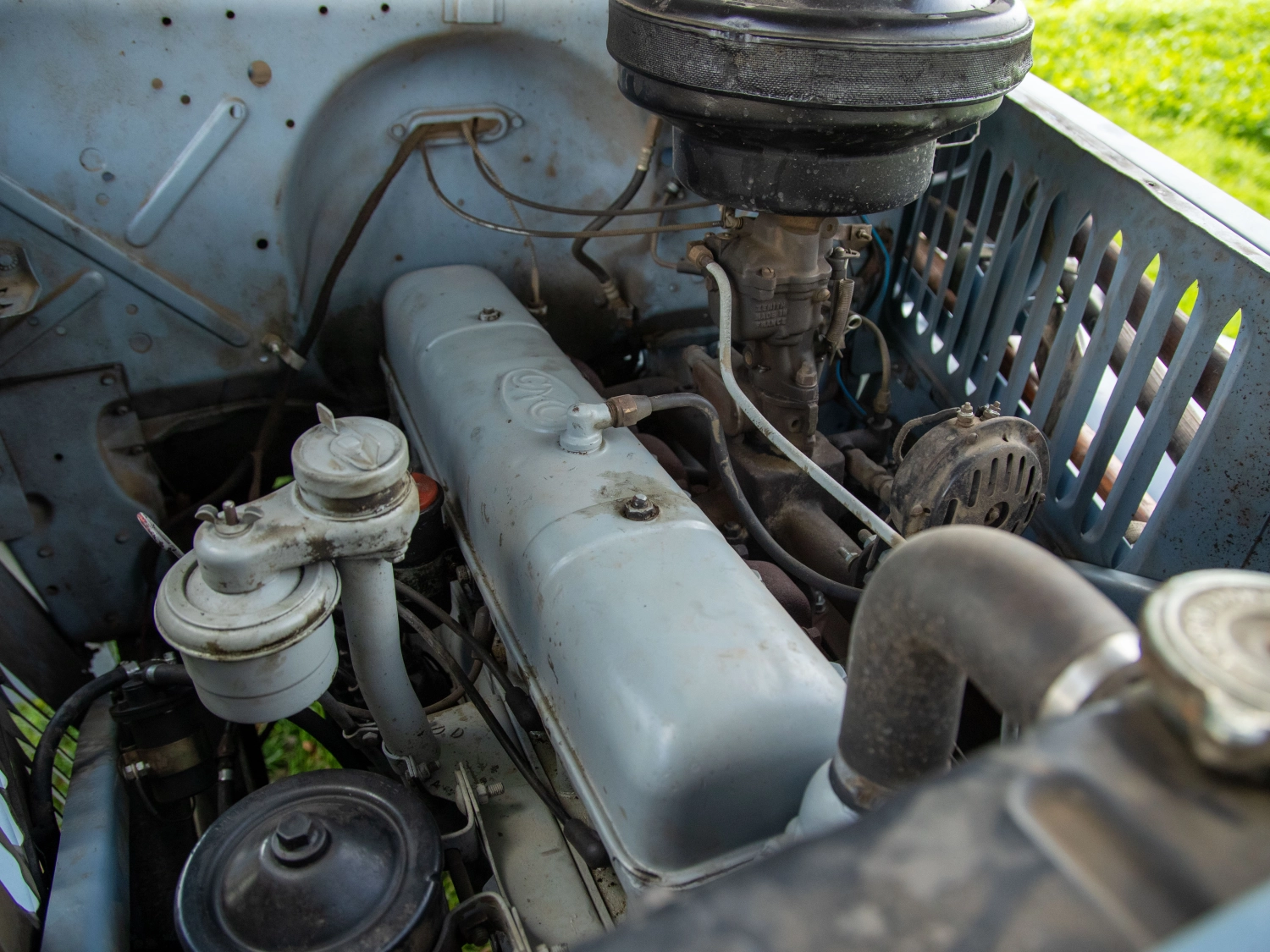
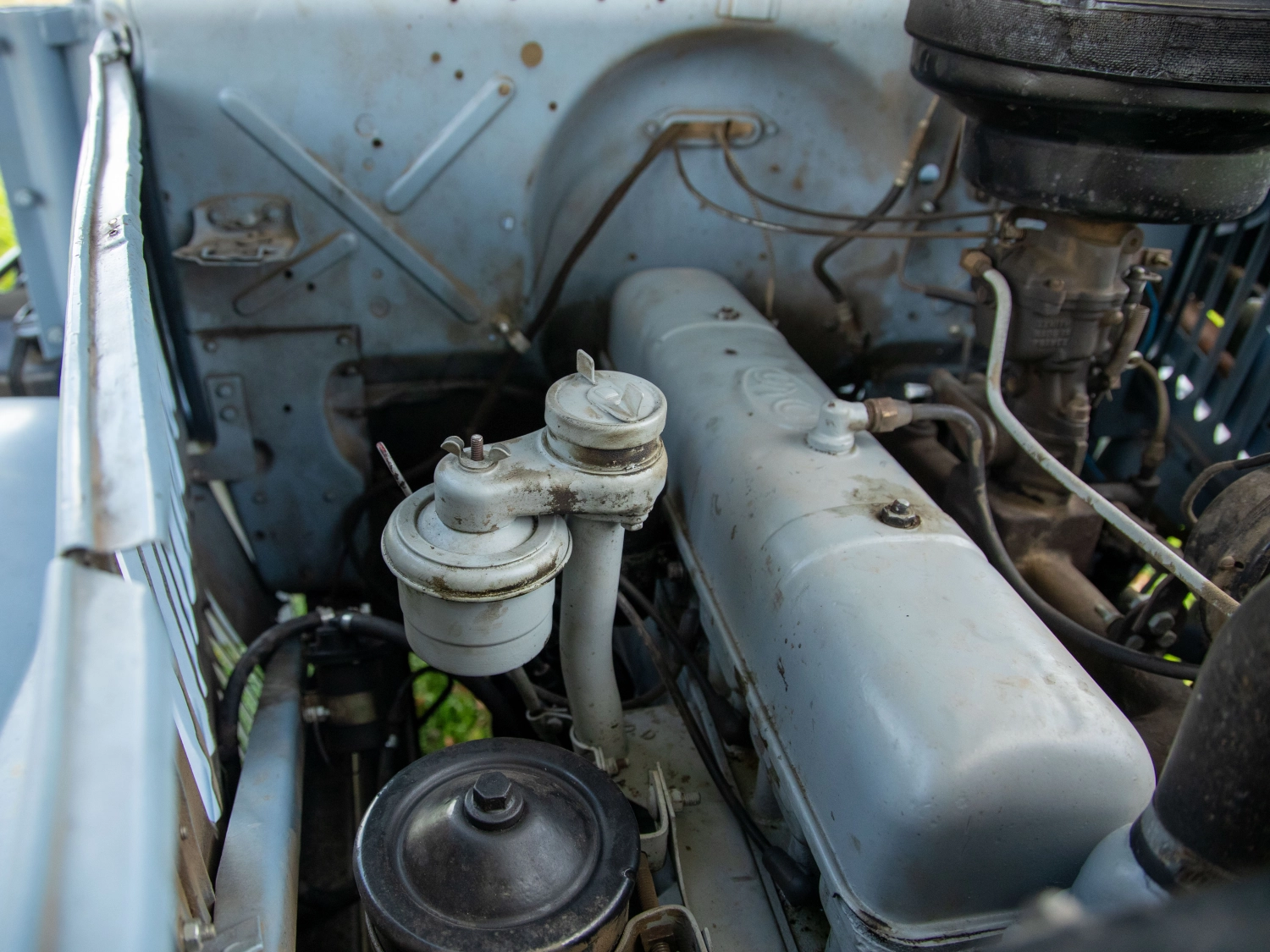
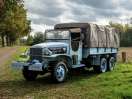
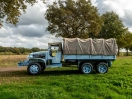
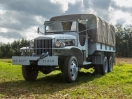
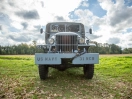
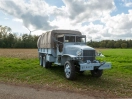
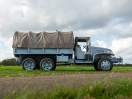
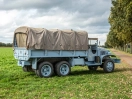
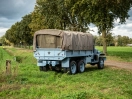
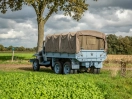
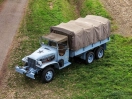
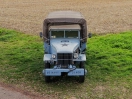
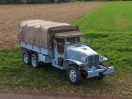
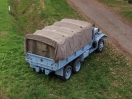
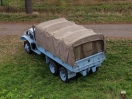
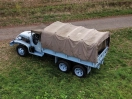
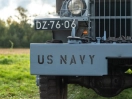
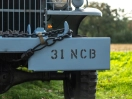
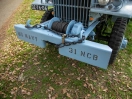
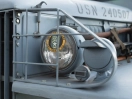
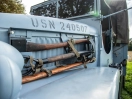
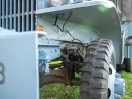
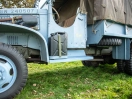
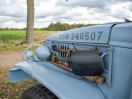
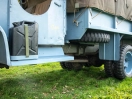
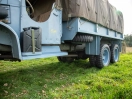
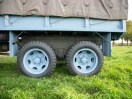
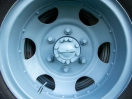
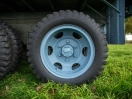
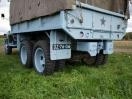
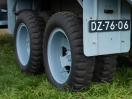
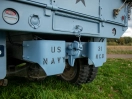
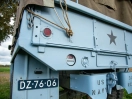
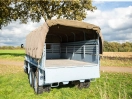
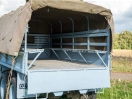
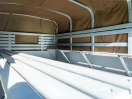
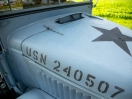
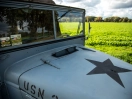
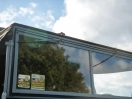
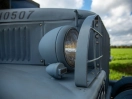
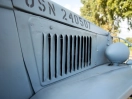
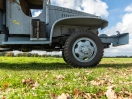
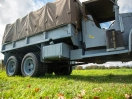
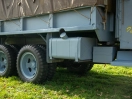
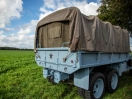
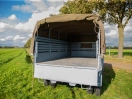
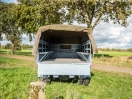
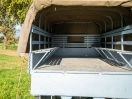
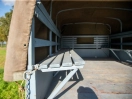
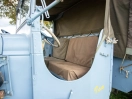
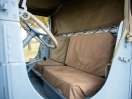
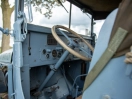
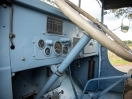
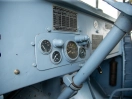
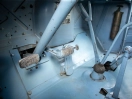


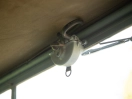
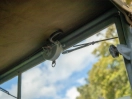
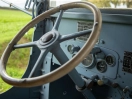
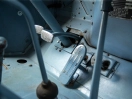
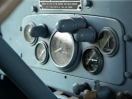
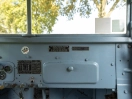
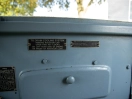
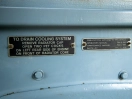
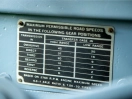
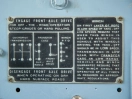
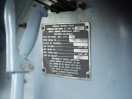
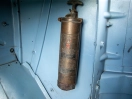
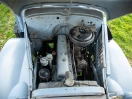
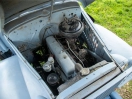
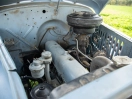
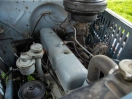
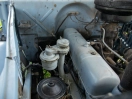
This GMC CCKW-353, produced in March 1943, represents the desirable 3rd-series “open cab” variant with front-mounted winch. It is finished in authentic U.S. Navy pattern as used by the 31st Naval Engineer Battalion (NCB). Originally delivered in standard olive green and later repainted Navy blue for maritime service, it has been faithfully restored to its wartime configuration, featuring the characteristic green chassis and blue body.
After active duty, this “Jimmy” continued its career with the Belgian Army until the late 1960s and was later restored and road-registered by a Belgian collector, who even drove it to Normandy in 1994. More recently, it took part in BAIV’s Normandy Campaigns of 2019 and 2024.
Being Navy blue, it definitely stands out among the many green “Jimmys” at events and parades.
This GMC CCKW-353 is a 3rd series truck produced in March 1943, featuring the desirable open cab configuration, a front-mounted winch, and finished in authentic U.S. Navy pattern. While its exact wartime record remains unknown, it undoubtedly served during the Western Campaign.
After the war, this vehicle continued its career in the Belgian Army, where it remained in service until the late 1960s. Upon decommissioning, it was acquired by a Belgian collector who restored it, registered it for road use, and proudly took it to Normandy in 1994.
Though the restoration dates back some years, the truck presents itself beautifully and is remarkably complete. BAIV also used this very GMC during the Normandy Campaigns in both 2019 and 2024, as well as at numerous other historic rallies and events.
A charming and authentic detail of this GMC is that it has been restored to its original wartime configuration, featuring a green chassis and Navy blue body. All GMC trucks left the factory in standard olive green, with the body color later adapted to the specific service branch. In this case, the vehicle was repainted in Navy blue for maritime use, reflecting its original U.S. Navy specification.
In summary, this is a fine and well-preserved example of the legendary “Jimmy” truck; fully operational, authentic, and ready to be delivered with a fresh service and maintenance check.
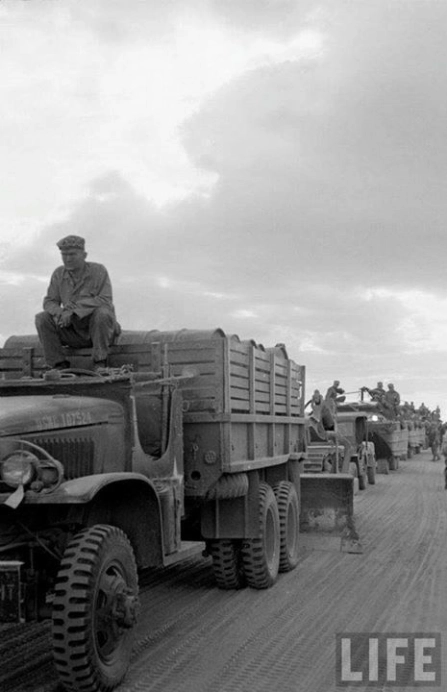
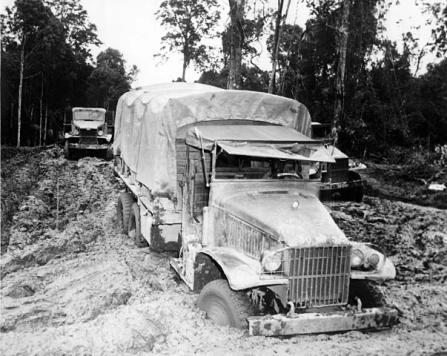
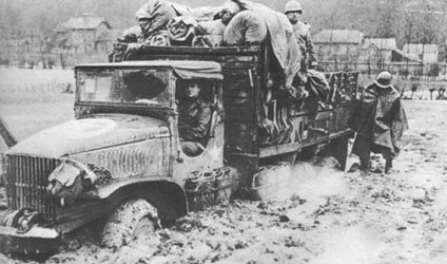
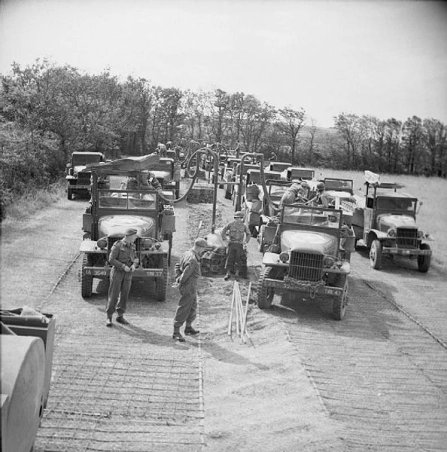
The GMC CCKW, affectionately known as the “Jimmy,” was one of the most important military transport vehicles of the Second World War. Built between 1941 and 1945, more than 518,000 examples rolled off the production line, serving as the logistical backbone of the Allied forces.
Powered by a rugged GMC 270 inline six-cylinder petrol engine, the CCKW featured a 5-speed transmission and a 2-speed transfer case, giving it exceptional off-road capability. With a range of around 480 km and a top speed of about 72 km/h, it proved itself on every front; from the deserts of North Africa to the muddy fields of Europe.
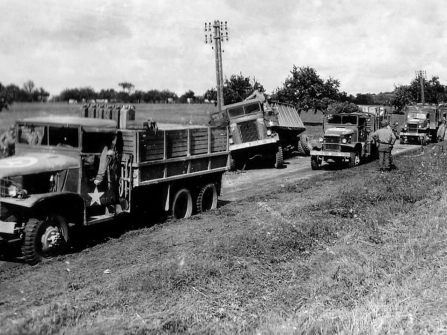
The truck was produced in many configurations, short and long wheelbase, open or closed cab, with or without winch, and adapted for countless roles such as cargo transport, tanker, workshop, and even ambulance. Perhaps its most famous service was in the Red Ball Express, the vital supply convoy system that kept Allied troops moving through France after D-Day.
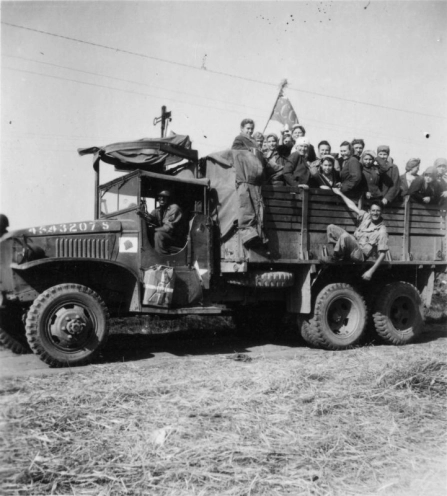
After the war, thousands of CCKWs continued to serve in armies around the world well into the 1960s. Today, these trucks stand as enduring symbols of reliability, versatility, and the immense logistical effort that helped secure victory.
Ivo Rigter Sr.
Founder & Co Owner of BAIV and Tracksandtrade
+31 6 518 22 502 ivosr.rigter@tracksandtrade.com