Ivo Rigter Sr.
Founder & Co Owner of BAIV and Tracksandtrade
+31 6 518 22 502 ivosr.rigter@tracksandtrade.com


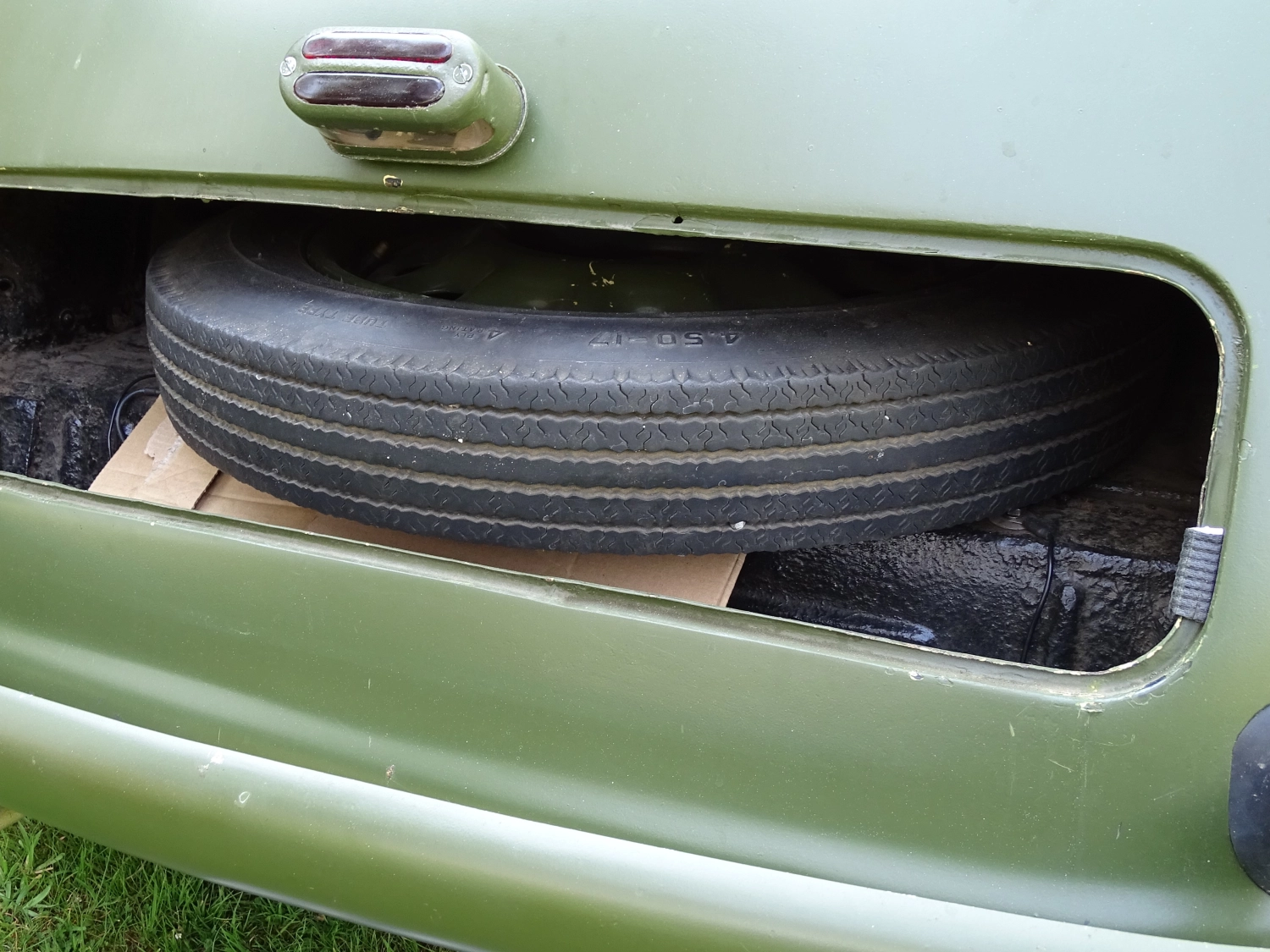


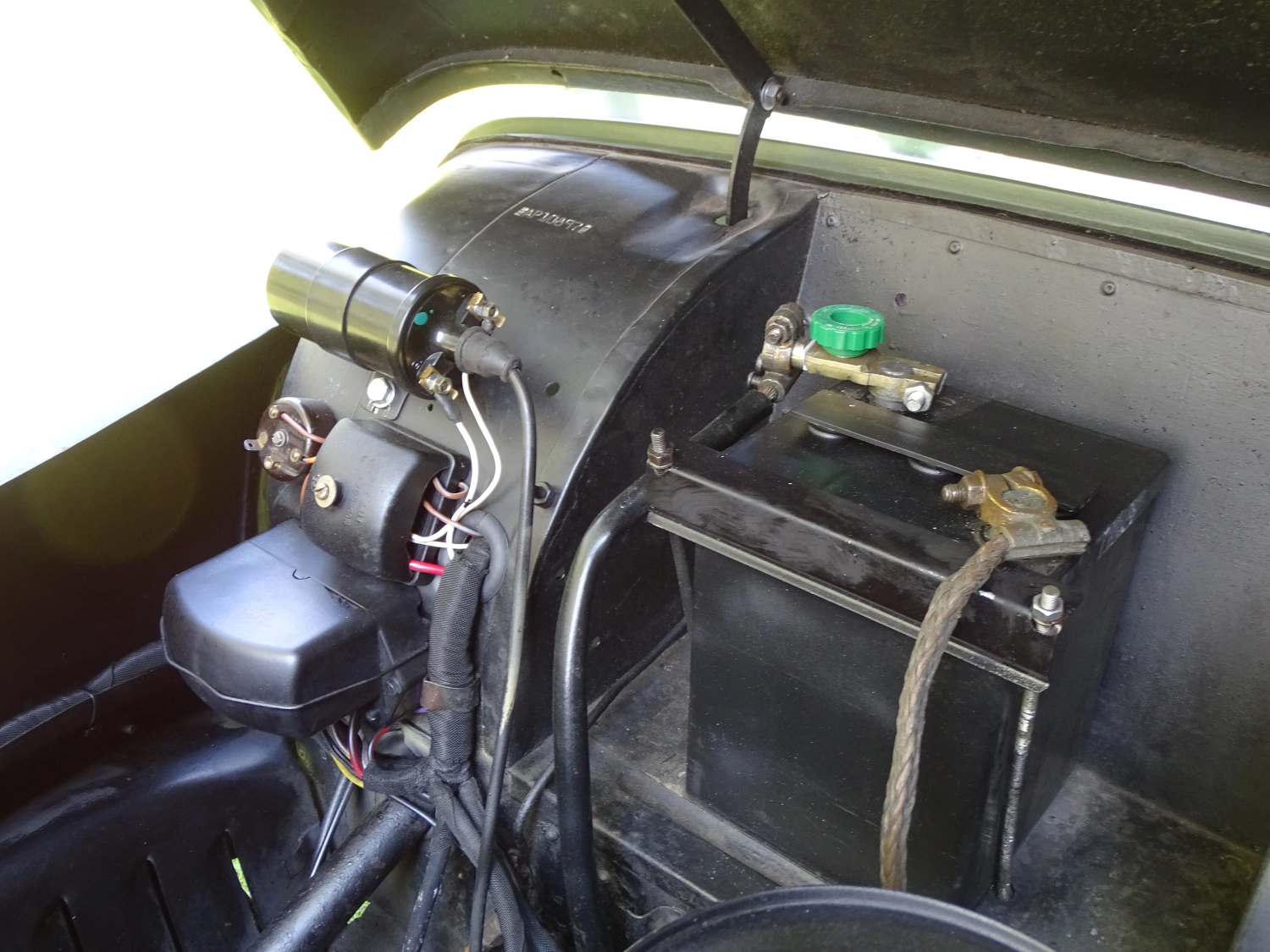




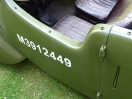

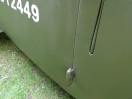


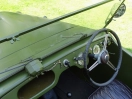


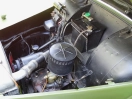


A wonderfully charming and authentic Austin 8 Tourer, originally built on a civilian chassis with a military body. Beautifully maintained and mechanically sound, this delightful open tourer combines history, elegance, and pure driving pleasure. Perfect for sunny drives in the country side and commemorative events.
This Austin 8 AP Tourer has enjoyed a well-documented and carefully maintained history over the past decade.
Originally sold at auction in England in 2013, the car was later acquired by a new owner in France in 2018, where it was brought back from civilian to military specification. During this transformation, several original military parts were sourced and fitted to ensure authenticity. To emphasize the vehicle’s originality, the current owner notes that upon purchasing the car, he discovered three small holes on the dashboard, to the right of the driver’s position. Based on extensive knowledge of blackout lighting systems used on British and Canadian military vehicles, it seems highly plausible that these holes once accommodated a blackout switch, as their position corresponds with known wartime configurations.
Note from the owner:
It is not excluded that the Austin features a civilian chassis with registration number, combined with an original military body.
There has been some discussion regarding the type of wheels fitted to the Austin Tourer. Civilian versions were equipped with open wheels featuring visible cut-outs, while the military versions typically had solid wheels. However, an original wartime photograph clearly shows an Austin Tourer with open wheels in German captive service (see history section). From this, it could be concluded that as early as 1940, certain military Tourers left the factory equipped with open wheels.
The gearbox was inspected, and new king pins and bushes were installed.
In 2019, the Austin proudly took part in the 75th Anniversary of the Normandy Landings, participating in the commemorative events in France. Later that same year, it was sold to the Netherlands, where it has been cherished and further improved.
In 2021, the current owner purchased the vehicle and invested in a series of thoughtful restorations:
the braking system was completely renewed, the electrics were rewired, and the exhaust system replaced.
By 2023, the car showed no oil consumption and no leaks, a testament to its excellent mechanical condition. The interior is in superb condition, and the car drives exceptionally well; a delightful, smooth, and reliable example of this rare tourer.
Numerous original WWII photographs show that, after Dunkirk, many captured Austin Tourers were requisitioned and put into active service by the German forces. Throughout the war, these vehicles were widely used in occupied territories for liaison and staff duties.
For collectors, this offers a fascinating opportunity: an authentic vehicle type once used by the Wehrmacht, allowing enthusiasts to enter the German WWII reenactment scene at a relatively modest investment.
Historical Background
At the outbreak of the Second World War, the British Army faced a severe shortage of military vehicles. To fill the gap, thousands of civilian and commercial vehicles were “impressed” into service. In fact, during the first year of the war, there were more converted civilian vehicles in use than purpose-built military ones.
In this early phase, car manufacturers quickly adapted their civilian models for military duty. Among the best-known were the “light utilities” from Austin, Hillman, Morris, and Standard. The Austin 8 Tourer was one of the earliest examples of such conversions, a civilian design only lightly modified for military use.
From Austin Seven to Austin Eight
The Austin Seven, already a familiar sight in army use throughout the 1930s, was the inspiration for its successor. In February 1939, Lord Herbert Austin and his new works manager, Leonard Lord (formerly of Morris), launched the Austin Eight, aiming to modernize the company’s image and expand its market presence.
The Eight was offered as a two- or four-door saloon, a light van, and an open tourer. Interestingly, when the model was introduced at the Berlin Motor Show on 17 February 1939, no car was on display; prompting Adolf Hitler, whose first car had reportedly been an Austin Seven, to ask, “What have you done with the Seven?” A week later, on 24 February, three Austin Eights were officially unveiled.
Wartime Production and Service
The Austin 8AP Tourer was produced in both two- and four-seat versions. The first military order came in April 1939, and by September that year, the War Department had issued a full production contract (V3621) for 2,800 units. Several follow-up contracts brought total production to around 9,500 vehicles before manufacturing ceased in mid-1940, shortly before the Battle of Britain.
The Tourers were primarily used for light communication and liaison duties, supplied to the Royal Army Service Corps (RASC) and the Royal Army Ordnance Corps (RAOC). Many were driven from the Longbridge factory to army depots by members of the Auxiliary Territorial Service (ATS), young women who formed the backbone of Britain’s wartime logistics. Within the army, these small but reliable cars were affectionately (and sometimes mockingly) nicknamed “fleas.”
Later in the war, as newer vehicles arrived, many Austin Eights found their way to the Home Guard, who made good use of them for local patrols and training.
In Service and Beyond
Photographic evidence shows that Austin 8 Tourers also served overseas — notably in North Africa and Malta, often painted in distinctive desert camouflage. Curiously, some of the best-known surviving images show the Tourer in captured German use, likely taken during or after the Dunkirk evacuation in France and Belgium.
Rugged, charming, and full of history, the Austin 8AP Tourer remains a wonderful reminder of the improvisation and ingenuity that defined the early years of Britain’s wartime vehicle production.


Ivo Rigter Sr.
Founder & Co Owner of BAIV and Tracksandtrade
+31 6 518 22 502 ivosr.rigter@tracksandtrade.com